What is Virtual Reality Gaming? Your Ultimate Guide
virtual reality gaming

What is Virtual Reality Gaming? Your Ultimate Guide

Step into new worlds and experience gaming like never before with this comprehensive look at virtual reality.

Start Your VR Journey

Key Takeaways

  • ✓ Virtual reality gaming simulates physical presence in a virtual environment.
  • ✓ It typically requires a VR headset and specialized controllers for interaction.
  • ✓ VR offers unparalleled immersion compared to traditional gaming.
  • ✓ The industry is rapidly evolving with new hardware and software innovations.

How It Works

1
Display & Optics

VR headsets house high-resolution screens and special lenses that create a wide field of view. These optics ensure the virtual world appears vast and detailed to your eyes.

2
Head Tracking

Sensors within the headset continuously track your head movements. This data is fed back to the game, allowing you to look around naturally within the virtual environment.

3
Input & Interaction

Specialized controllers, often tracked in 3D space, allow you to interact with the virtual world. These inputs translate your hand movements and button presses into in-game actions.

4
Rendering & Immersion

Powerful computers or dedicated hardware render the virtual world in real-time at high frame rates. This seamless rendering, combined with spatial audio, creates a deeply immersive experience.

The Core Technology Behind Immersive VR Experiences
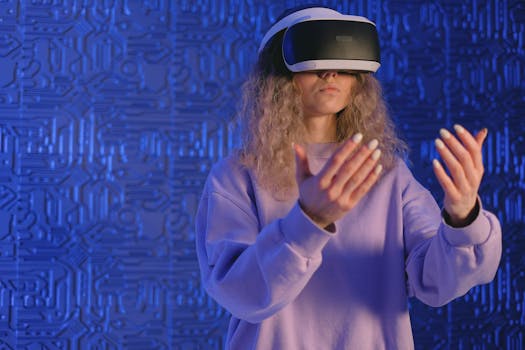
A woman experiencing virtual reality gaming with VR headset in a modern tech setting. Photo: SHVETS production / Pexels
Virtual reality gaming isn't just a buzzword; it's a technological marvel that redefines how we interact with digital worlds. At its heart, VR gaming relies on a sophisticated blend of hardware and software designed to trick your senses into believing you're somewhere else entirely. The primary component is the VR headset, which houses specialized displays and optics. These displays typically offer high resolutions and refresh rates, crucial for preventing motion sickness and delivering crisp visuals. Lenses within the headset magnify these displays and correct for distortion, creating a wide field of view that fills your peripheral vision, eliminating the black borders often seen in traditional screens. This visual trickery is paramount to creating a sense of 'presence' – the feeling of actually being in the virtual environment. Beyond just visuals, head tracking technology plays a vital role. Modern VR headsets employ various sensors, including accelerometers, gyroscopes, and magnetometers, often combined with external cameras or inside-out tracking systems, to precisely monitor the orientation and position of your head in real space. This means when you turn your head in the real world, your view in the virtual world instantly mirrors that movement. The latency, or delay, between your physical movement and the virtual response must be incredibly low – ideally under 20 milliseconds – to maintain the illusion and prevent discomfort. High latency is a significant contributor to motion sickness, so engineers constantly strive to minimize it. Furthermore, spatial audio, delivered through integrated headphones or external audio systems, contributes significantly to immersion. This technology simulates sounds coming from specific directions and distances within the virtual environment, making a rustle in the bushes or a distant explosion feel incredibly real and contributing to the overall sense of presence. The combination of these advanced technologies allows virtual reality gaming to offer experiences far beyond what traditional flat-screen gaming can provide, drawing players deeper into the narrative and action. Understanding these core components is the first step to appreciating the true potential of cutting-edge tech in entertainment.

A Deep Dive into the Gaming Experience and Genres
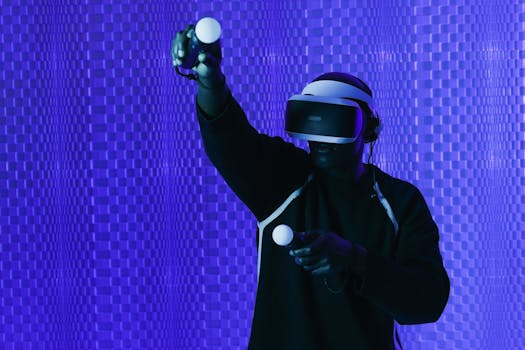
A man engaged in a virtual reality experience wearing VR goggles, holding controllers. Photo: SHVETS production / Pexels
The gaming experience offered by virtual reality is fundamentally different from traditional console or PC gaming. It moves beyond merely observing a game world on a screen to actively inhabiting it. This shift from observer to participant is what makes VR gaming so compelling. Instead of controlling a character with a joystick, you embody the character, using your own body movements to explore, interact, and fight. This level of agency opens up entirely new possibilities for game design and storytelling. Imagine dodging virtual bullets by physically ducking, aiming a bow by drawing back your arm, or solving puzzles by manipulating virtual objects with your own hands. These interactions create a much stronger emotional connection to the game world and its narrative. VR has also given rise to new gaming genres and breathed new life into existing ones. Horror games, for instance, become exponentially more terrifying when you're truly immersed in a dark, confined space, unable to look away from what lurks around the corner. Simulation games, such as flight simulators or driving games, achieve an unprecedented level of realism, as you sit virtually in the cockpit or driver's seat with a panoramic view. Puzzle games leverage the unique spatial awareness VR provides, often requiring players to physically move around and manipulate objects in 3D space. Even social games benefit immensely, allowing players to feel like they are truly in the same room as their friends, conversing and playing together in virtual environments. Action-adventure titles, rhythm games, and even creative applications like virtual sculpting or painting tools all find new dimensions in VR. The variety is constantly expanding, from intense first-person shooters that challenge your reflexes to serene exploration games that invite you to simply exist and discover. Developers are continually pushing the boundaries of what's possible, experimenting with locomotion methods, haptic feedback, and multi-sensory experiences to deepen immersion and broaden appeal across a diverse range of player preferences. This expansive landscape of experiences is what truly defines the future of interactive entertainment.

The Evolution of VR Gaming: From Niche to Mainstream Potential
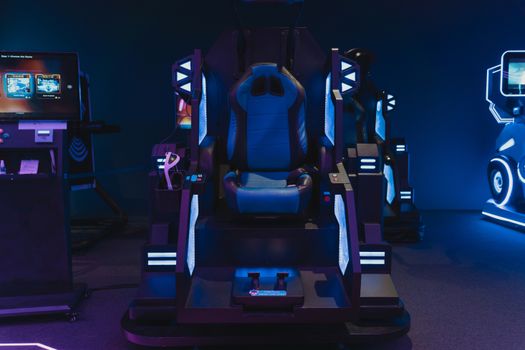
High-tech gaming simulator chair in an indoor arcade setting with neon lights. Photo: Tima Miroshnichenko / Pexels
The journey of virtual reality gaming has been a fascinating one, marked by periods of immense hype, technological limitations, and ultimately, significant breakthroughs. Early iterations of VR in the 1980s and 90s, while conceptually groundbreaking, were largely confined to expensive arcade machines or military simulations due to prohibitive costs, bulky hardware, and rudimentary graphics. These early systems often suffered from low resolution, high latency, and a severe lack of compelling content, preventing them from gaining mainstream traction. The promise was there, but the technology wasn't quite ready to deliver on it. However, a resurgence began in the early 2010s, fueled by advances in smartphone technology (which provided compact, high-resolution screens), more powerful and affordable computing, and the pioneering efforts of companies like Oculus. The launch of the Oculus Rift development kits sparked a new wave of interest and investment, demonstrating that consumer-grade VR was finally within reach. Today, we are witnessing a rapid acceleration in the development and adoption of VR gaming. Headsets have become lighter, more comfortable, and significantly more powerful, with standalone devices like the Meta Quest series eliminating the need for expensive gaming PCs, making VR accessible to a much broader audience. Graphics have improved dramatically, approaching photorealism in some titles, and tracking systems have become more accurate and less intrusive. Major gaming companies are now investing heavily in VR content, releasing AAA titles that showcase the medium's potential. Esports in VR are also emerging, with competitive games attracting dedicated player bases. Furthermore, advancements in haptic feedback suits, omnidirectional treadmills, and even olfactory devices are being explored to further enhance immersion, blurring the lines between the physical and virtual worlds. The ecosystem continues to grow, with a thriving community of independent developers alongside industry giants, constantly innovating and pushing the boundaries of what virtual reality gaming can be. This ongoing evolution suggests that VR is not just a passing fad but a foundational shift in how we will experience entertainment and interact with digital content in the years to come, solidifying its place as a cornerstone of modern technological innovation.

Navigating the VR Landscape: Tips for New Players and Common Pitfalls
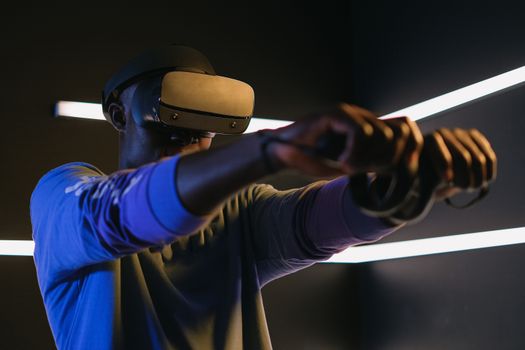
Man using VR headset and controllers in a futuristic room, engaged in gaming. Photo: SHVETS production / Pexels
Embarking on your virtual reality gaming journey can be incredibly exciting, but there are a few tips and potential pitfalls to be aware of to ensure the best possible experience. For new players, starting with games designed for beginners is crucial. Many VR platforms offer introductory experiences or 'comfort' settings that minimize intense motion, which can help you get your 'VR legs' and reduce the likelihood of motion sickness. Gradually build up to more dynamic games as you acclimate. Ensure your play space is clear of obstacles; nothing ruins immersion (or a good game) faster than tripping over a coffee table. Most VR systems require a designated area, so take the time to set it up properly and use any guardian or boundary systems provided by your headset. Here are some essential tips for new VR gamers: * **Start Slow:** Begin with stationary or 'teleport' locomotion games to ease into the experience. * **Stay Hydrated:** VR can be physically demanding; keep water nearby. * **Adjust Settings:** Experiment with IPD (interpupillary distance) and strap adjustments for comfort and clarity. * **Take Breaks:** Short breaks can prevent fatigue and motion sickness. * **Clean Your Lenses:** Use a microfiber cloth to keep your view crystal clear. * **Explore Demos:** Many platforms offer free demos to try before you buy. Common pitfalls include not having enough space, which can lead to accidental collisions, or neglecting to properly adjust your headset, resulting in blurry visuals or discomfort. Another frequent issue is pushing through motion sickness; if you feel queasy, take a break immediately. Your brain needs time to adapt to the discrepancy between what your eyes see and what your body feels. Lastly, remember that VR gaming often involves physical activity, so dress comfortably and be prepared to move. By being mindful of these aspects, you can significantly enhance your enjoyment and longevity in the virtual worlds.

Comparison

FeatureHigh-End PC VRStandalone VRConsole VR
Hardware CostHighMediumMedium
Graphics QualityExcellentGoodVery Good
Setup ComplexityHighLowMedium
PortabilityLowHighLow
Game LibraryVastGrowingSpecific
Required PC

What Readers Say

"I never truly understood what virtual reality gaming was until I tried it. The immersion is unbelievable; I feel like I'm actually inside the game world. It's a game-changer for my entertainment."

Sarah J. · Austin, TX

"VR gaming brought back the wonder of gaming I hadn't felt since childhood. The ability to physically interact with virtual environments is just mind-blowing. Highly recommend everyone tries it."

Mark D. · Seattle, WA

"After getting into virtual reality gaming, my traditional gaming habits have shifted completely. I spend hours exploring new worlds and getting active, burning calories without even realizing it!"

Emily R. · Miami, FL

"While virtual reality gaming is incredible, the initial cost of entry can be a bit steep, and some games still feel experimental. But when it works, it's an unparalleled experience that promises so much for the future."

David L. · Chicago, IL

"As a fitness enthusiast, virtual reality gaming has become my new favorite workout. Beat Saber and Supernatural are fantastic for getting moving and having fun simultaneously. It's exercise disguised as play!"

Jessica M. · Denver, CO

Frequently Asked Questions

What specifically is virtual reality gaming?

Virtual reality gaming is a form of digital entertainment that simulates a physical presence in a virtual environment. It uses specialized hardware, primarily a VR headset, to immerse the player visually and aurally, allowing them to interact with the game world as if they were physically present within it, rather than just observing it on a screen.

Is virtual reality gaming safe for everyone?

While generally safe, some individuals may experience motion sickness, eye strain, or discomfort, especially during initial use or with intense experiences. It's recommended to take breaks, ensure proper headset fit, and start with less intense games. Most manufacturers advise against use by young children due to potential eye development concerns.

How do I start playing virtual reality games?

To start, you'll need a VR headset. Options range from standalone devices like the Meta Quest to PC-tethered headsets like the Valve Index or PlayStation VR for consoles. Once you have a headset, set up your play space according to the manufacturer's instructions, download games from the respective store, and follow in-game tutorials to learn controls and mechanics.

How much does virtual reality gaming cost?

The cost varies significantly. Standalone headsets can range from $300-$600. PC-tethered systems, including the headset and a powerful gaming PC, can cost $1000-$2500+. Console VR systems like PS VR require a PlayStation console and the headset, typically costing $500-$800 for the full setup. Game prices are comparable to traditional games.

How does VR gaming compare to traditional console gaming?

VR gaming offers unparalleled immersion and presence, making you feel like you're inside the game world, physically interacting with it. Traditional console gaming, while highly engaging, keeps you as an observer interacting via a controller. VR often requires more physical movement and provides a 360-degree view, fundamentally changing the gameplay experience compared to a flat screen.

Who should try virtual reality gaming?

Anyone looking for a deeply immersive and novel gaming experience should try VR gaming. It appeals to tech enthusiasts, gamers seeking new challenges, those interested in unique storytelling, and even individuals looking for active and engaging forms of exercise. It's particularly appealing for simulation and horror genre fans.

Can virtual reality gaming cause eye strain or motion sickness?

Yes, some users may experience eye strain due to prolonged focus on close screens, or motion sickness (cybersickness) if there's a discrepancy between visual motion and physical sensation. Taking frequent breaks, ensuring proper headset fit, and gradually increasing exposure to intense VR experiences can help mitigate these effects.

What is the future trend for virtual reality gaming?

The future of VR gaming points towards lighter, higher-resolution headsets with wider fields of view, more accurate eye and hand tracking, and enhanced haptic feedback. We can expect more wireless freedom, deeper integration of AI, and a growing library of AAA titles, pushing VR from a niche interest to a mainstream entertainment platform, potentially merging with augmented reality.

Virtual reality gaming is more than just a technological trend; it's a paradigm shift in how we experience digital entertainment. Step into the future of play and discover the incredible worlds waiting for you. Dive in and redefine your gaming journey today!

Topics: virtual reality gamingVR gamingimmersive gamingVR headsetsfuture of gaming
Leo List

IE Escorts NO Escorts US Escorts NZ Escorts AU Escorts
Brampton weed
Adultwork EstrelaBet Vai de Bet R7 Bet Betão Galera Bet Rainbet Bet9ja Shop SportyBet BetKing Sisal Loto Foot Hollywoodbets YesPlay Odibets RushBet Jugabet BetWarrior BetCity MSport betPawa Fortebet