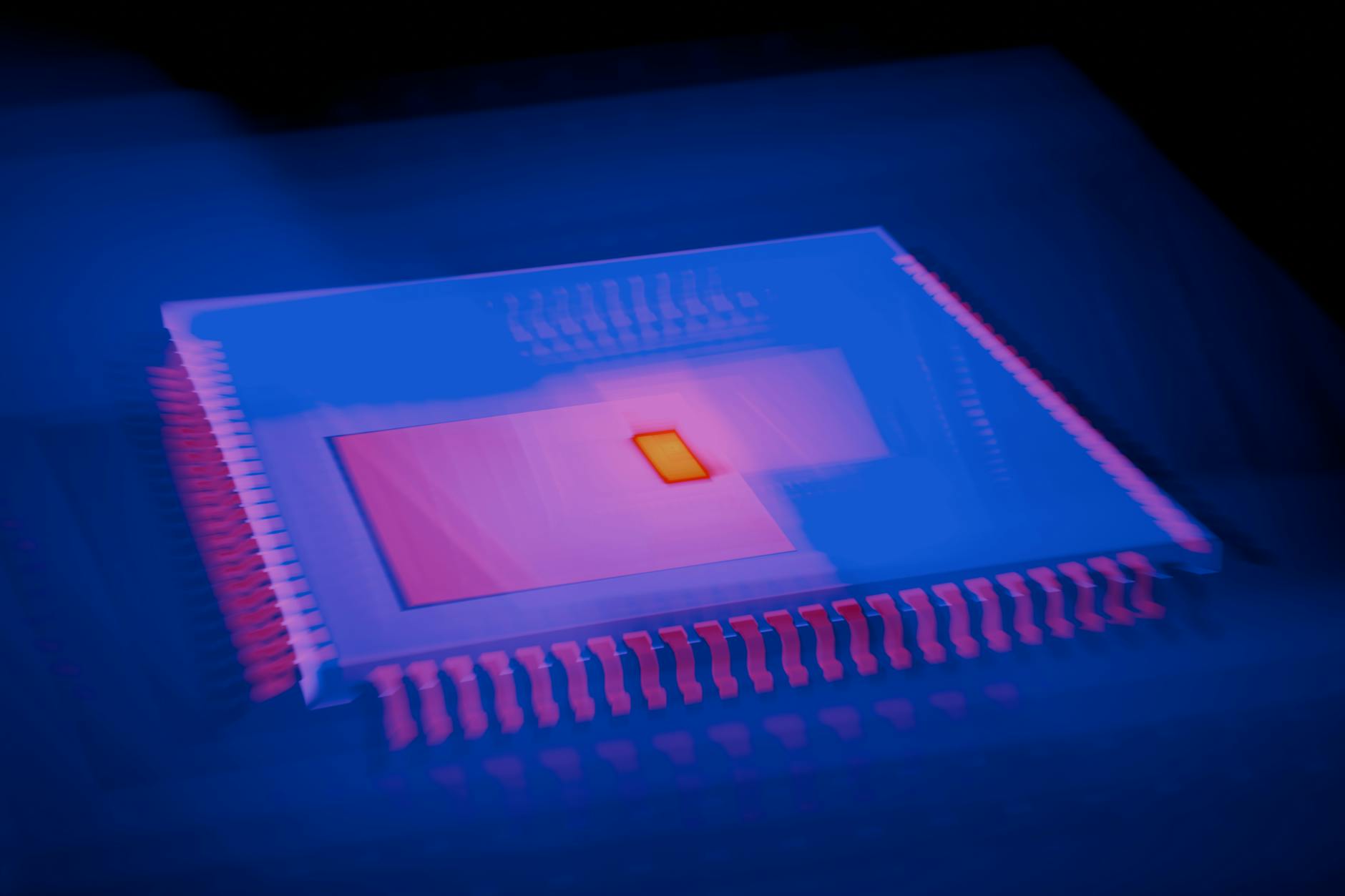
What is Quantum Computing Future: A Transformative Horizon
what is quantum computing future

What is Quantum Computing Future: A Transformative Horizon

Unlocking unprecedented computational power to solve humanity's greatest challenges and redefine technological possibilities.

Discover the Quantum Leap

Key Takeaways

  • ✓ Quantum computing leverages quantum-mechanical phenomena like superposition and entanglement.
  • ✓ It promises to solve problems intractable for even the most powerful classical supercomputers.
  • ✓ Potential applications span medicine, materials science, finance, and artificial intelligence.
  • ✓ Significant challenges in hardware stability and error correction remain before widespread adoption.

How It Works

1
Qubits vs. Bits

Unlike classical bits (0 or 1), qubits can exist in superposition, representing 0, 1, or both simultaneously. This exponential increase in information storage is fundamental to quantum computing's power.

2
Superposition and Entanglement

Superposition allows qubits to hold multiple states at once, while entanglement links qubits so their states are correlated regardless of distance. These phenomena enable parallel computations and complex data processing.

3
Quantum Gates and Algorithms

Quantum gates manipulate qubit states, analogous to logic gates in classical computers. Specialized quantum algorithms, like Shor's and Grover's, are designed to leverage these quantum properties for specific problem types.

4
Measurement and Decoherence

Measuring a qubit collapses its superposition into a definite 0 or 1. Decoherence, the loss of quantum properties due to environmental interaction, is a major challenge requiring sophisticated error correction techniques.

The Fundamental Shift: From Bits to Qubits and Beyond
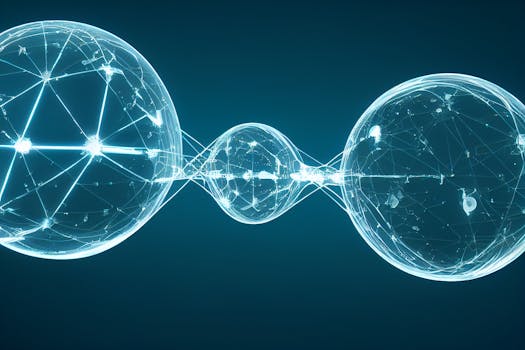
Modern digital spheres interconnected by glowing lines, showcasing a futuristic network concept. Photo: Merlin Lightpainting / Pexels
To truly grasp what is quantum computing future, we must first understand its foundational departure from classical computing. For decades, our digital world has been built upon the binary bit – a fundamental unit of information that exists in one of two states: 0 or 1. This simple, yet powerful, concept underpins every computer, smartphone, and data center we use today. However, as we push the boundaries of computational complexity, tackling problems that involve an astronomical number of variables and possibilities, the limitations of classical bits become apparent. This is where quantum computing steps in, introducing a paradigm shift with its use of qubits. Qubits, or quantum bits, are not bound by the classical binary constraint. Instead, they leverage two astonishing phenomena from quantum mechanics: superposition and entanglement. Superposition allows a single qubit to exist in a combination of both 0 and 1 states simultaneously. Imagine a coin spinning in the air – it's neither heads nor tails until it lands. A qubit in superposition is like that spinning coin, holding all possibilities until it is measured. This isn't just a minor improvement; it's an exponential leap. With just two qubits, you can represent four states at once (00, 01, 10, 11). With three, eight states. And with N qubits, you can represent 2^N states simultaneously. This exponential scaling is what gives quantum computers their immense potential power, allowing them to process vast amounts of information in parallel in ways classical computers simply cannot. Adding to this power is entanglement, often described by Einstein as 'spooky action at a distance.' When two or more qubits become entangled, they become intrinsically linked, meaning the state of one qubit instantaneously influences the state of another, no matter the physical distance between them. This interconnectedness allows quantum computers to perform highly correlated operations, leading to faster and more efficient problem-solving for certain types of calculations. For example, if you know the state of one entangled qubit, you instantly know something about the state of its entangled partner. This property is crucial for building powerful quantum algorithms and for quantum communication. The interplay between superposition and entanglement forms the bedrock of quantum computation, enabling a fundamentally different approach to problem-solving. While the underlying physics is complex, the practical implication is clear: quantum computers can explore a multitude of solutions simultaneously, vastly accelerating the search for optimal answers in complex systems. Understanding these core concepts is the first step in appreciating the profound implications for the future of technology and what is quantum computing future holds for us. It's not merely faster computing; it's a different way of computing, opening doors to previously unimaginable possibilities.

Transformative Applications: Where Quantum Will Reshape Industries
Retro Quantum ProDrive hard disk drive on a light background, showcasing vintage computer technology. Photo: Nicolas Foster / Pexels
The theoretical prowess of quantum computing translates into practical applications that promise to disrupt and revolutionize a multitude of industries. When we consider what is quantum computing future, its impact on sectors like medicine, materials science, finance, and artificial intelligence stands out as particularly profound. The ability to simulate complex systems with unprecedented accuracy will unlock breakthroughs that have long eluded classical computation. In the realm of medicine and drug discovery, quantum computers could drastically accelerate the development of new pharmaceuticals. Drug discovery is an arduous and incredibly expensive process, often taking over a decade and billions of dollars. A significant bottleneck is simulating molecular interactions at the quantum level. Understanding how molecules bind and react is essential for designing effective drugs, but these simulations are computationally intensive. Quantum computers, with their ability to model quantum phenomena directly, could accurately simulate molecular structures and interactions, predicting drug efficacy and potential side effects much faster. This could lead to personalized medicine, where treatments are tailored to an individual's genetic makeup, and the rapid development of vaccines for emerging diseases. Imagine designing a new protein or enzyme from scratch, knowing precisely how it will fold and function – this is the promise quantum computing holds for biotechnology. Materials science is another field poised for a quantum revolution. Designing new materials with specific properties – say, a superconductor that works at room temperature, or a battery with vastly improved energy density – currently relies heavily on trial and error or approximations. Quantum computers can simulate the behavior of electrons in atoms and molecules with high fidelity, allowing scientists to design novel materials from the atomic level up. This could lead to breakthroughs in energy storage, more efficient catalysts for industrial processes, lighter and stronger aerospace materials, and even new components for quantum computers themselves. The ability to model quantum chemistry precisely will open up an entirely new era of material innovation. The financial sector is also keenly interested in what is quantum computing future. Complex financial models, risk assessment, portfolio optimization, and fraud detection all involve processing vast amounts of data and performing intricate calculations. Quantum algorithms could offer significant speedups in these areas. For instance, in portfolio optimization, quantum algorithms might find the optimal balance of assets to maximize returns while minimizing risk, even with an extremely large number of variables. For financial modeling, the ability to simulate market dynamics with greater accuracy could lead to more robust prediction models. Cryptography, which underpins much of our digital security, is both a threat and an opportunity. While Shor's algorithm could theoretically break widely used public-key encryption schemes, quantum cryptography offers new, intrinsically secure methods for communication. Finally, artificial intelligence and machine learning stand to benefit immensely. Many advanced AI algorithms, especially in deep learning, require massive computational resources. Quantum machine learning algorithms could process larger datasets, identify more complex patterns, and train models faster than classical methods. This could lead to more sophisticated AI in areas like image recognition, natural language processing, and autonomous systems. Quantum computers might even enable new forms of AI that leverage quantum principles for entirely new approaches to learning. The intersection of AI and quantum computing, often termed 'quantum AI,' is a frontier with boundless potential, promising to accelerate the development of truly intelligent machines. These applications are not merely incremental improvements; they represent a fundamental paradigm shift that will redefine the capabilities and horizons of these critical industries.

Overcoming Hurdles: The Road to Practical Quantum Supremacy

Retro Quantum ProDrive hard disk drive on a light background, showcasing vintage computer technology. Photo: Nicolas Foster / Pexels
While the promise of what is quantum computing future is immense, the journey from theoretical potential to widespread practical application is fraught with significant scientific and engineering challenges. Achieving 'quantum supremacy' – the point where a quantum computer can perform a task that no classical computer can in a feasible amount of time – has been demonstrated for specific, highly specialized problems. However, moving beyond these proof-of-concept demonstrations to truly useful, fault-tolerant quantum computers requires overcoming several formidable hurdles. One of the primary challenges lies in the inherent fragility of qubits. Unlike classical bits that are robust and stable, qubits are extremely sensitive to their environment. Even tiny fluctuations in temperature, electromagnetic fields, or vibrations can cause them to lose their quantum properties, a phenomenon known as decoherence. When a qubit decoheres, it loses its superposition and entanglement, collapsing into a classical state, and any ongoing computation is corrupted. To combat this, quantum computers must operate in extremely controlled environments, often at temperatures just a fraction of a degree above absolute zero (colder than deep space) and shielded from all external interference. Building and maintaining such environments for an increasing number of qubits is a monumental engineering feat. Another critical hurdle is error correction. Because qubits are so fragile, errors are much more prevalent in quantum systems than in classical ones. A single error can propagate rapidly, rendering the entire computation useless. Classical computers use redundant bits for error correction, but quantum error correction is far more complex. It requires not just detecting errors but correcting them without disturbing the delicate quantum state of the qubits. This often means using multiple physical qubits to encode a single logical qubit, vastly increasing the resource requirements. Developing robust and efficient quantum error correction codes is an active area of research and is considered essential for building truly fault-tolerant quantum computers capable of solving complex problems reliably. Scaling up the number of qubits is also a significant challenge. Current quantum processors typically have tens or a few hundred qubits. To tackle truly transformative problems, researchers believe thousands, if not millions, of stable, interconnected qubits will be necessary. Integrating more qubits onto a chip, maintaining their individual coherence, and enabling precise control over each one is incredibly difficult. Different hardware architectures, such as superconducting qubits, trapped ions, photonic qubits, and topological qubits, are being explored, each with its own advantages and disadvantages in terms of coherence times, connectivity, and scalability. No single technology has yet emerged as the definitive winner, and research continues globally into developing more stable and scalable quantum hardware. Moreover, the development of suitable quantum software and algorithms is lagging behind hardware advancements. Writing code for quantum computers requires a fundamentally different mindset and skill set than classical programming. The lack of standardized programming languages, development tools, and a robust ecosystem of quantum software engineers also presents a bottleneck. Bridging this gap between hardware capabilities and software development is crucial for realizing the full potential of what is quantum computing future. Despite these challenges, progress is rapid, with governments and corporations investing heavily, signaling a strong belief in the eventual triumph of quantum technology. The advancement of these technologies is a global race.

Navigating the Quantum Era: Tips for Businesses and Researchers

Man working on a laptop analyzing business data and financial graphs indoors. Photo: www.kaboompics.com / Pexels
As we stand on the precipice of the quantum era, understanding what is quantum computing future is not just for physicists anymore; it's becoming crucial for businesses, researchers, and policymakers alike. Navigating this complex and rapidly evolving landscape requires a strategic approach. Here are some key tips for engaging with and preparing for the quantum future: * **Stay Informed and Educated:** The first step is continuous learning. Quantum computing is a complex field, but resources are becoming more accessible. Follow leading research institutions, tech companies, and industry analysts. Attend webinars, read reports, and engage with experts. Understanding the basics, the current state of the art, and realistic timelines is paramount. * **Identify Potential Use Cases:** Businesses should begin identifying specific problems within their operations that might be intractable for classical computers but amenable to quantum solutions. This could involve complex optimization, drug discovery, financial modeling, or AI applications. Don't wait for fully developed quantum computers; start thinking about how your data and processes could be re-imagined in a quantum context. * **Invest in Quantum Talent:** The talent pool for quantum computing is small but growing. Consider training existing employees in quantum principles or recruiting individuals with backgrounds in quantum physics, computer science, and mathematics. Building an internal team, even a small one, can help translate quantum advancements into business value. * **Experiment with Quantum Simulators and Cloud Platforms:** You don't need a quantum computer in your basement. Many major tech companies offer quantum computing resources via the cloud (Quantum-as-a-Service, or QaaS). Experiment with quantum simulators and small-scale quantum processors to gain hands-on experience, test algorithms, and understand their capabilities and limitations. This low-risk approach allows for early exploration and familiarization. * **Collaborate and Partner:** Quantum computing is a collaborative field. Consider partnering with universities, research labs, or quantum startups. These collaborations can provide access to cutting-edge research, specialized expertise, and early access to new quantum hardware and software. Sharing knowledge and resources can accelerate progress for all parties. * **Develop a Quantum Strategy:** For larger organizations, it's wise to develop a formal quantum strategy. This involves assessing the potential impact on your industry, identifying key opportunities and threats, allocating resources for research and development, and defining a roadmap for quantum adoption. A well-defined strategy ensures that your organization is not caught off guard by quantum advancements. * **Understand Ethical and Security Implications:** Quantum computing brings new ethical considerations, particularly concerning data privacy and the potential to break current encryption standards. Businesses must proactively engage with these issues, exploring quantum-safe cryptography and developing ethical guidelines for quantum AI applications. Preparing for 'post-quantum cryptography' is a prudent step. By following these tips, businesses and researchers can proactively prepare for the quantum era, transforming potential disruption into a strategic advantage and shaping a positive future for quantum technology.

Comparison

FeatureClassical ComputersQuantum Computers (Future)Quantum Simulators
Information UnitBit (0 or 1)Qubit (0, 1, or superposition)Simulates Qubits on Classical Hardware
Processing PowerSequential, limited by transistorsParallel, exponential scalingLimited by classical hardware specs
Problem SolvingExcellent for defined, sequential tasksIdeal for optimization, simulation, cryptographyUseful for algorithm development & testing
Error RatesVery LowCurrently High (requires correction)Dependent on classical simulation accuracy
Environmental NeedsStandard room conditionsExtreme cold, isolation (for most types)Standard room conditions
AvailabilityWidespreadLimited (cloud access, research)Widespread (software)
CostAccessibleExtremely High (for hardware)Software costs, cloud usage fees

What Readers Say

"The insights into what is quantum computing future provided a crystal-clear roadmap for our biotech startup. We're now actively exploring quantum chemistry simulations, a field we previously thought was decades away from practical use. Truly eye-opening!"

Dr. Anya Sharma · Boston, MA

"As a financial analyst, understanding the potential for quantum optimization was critical. This article broke down complex concepts into actionable knowledge, helping me identify new research avenues for our quantitative trading strategies."

Mark Jenkins · San Francisco, CA

"My team and I were struggling to define our quantum strategy. This piece offered a comprehensive overview and practical tips, leading us to invest in quantum education for our developers and explore cloud-based quantum platforms with renewed focus."

Sarah Chen · Austin, TX

"While the article is incredibly informative about what is quantum computing future, I'd love to see even more detailed examples of specific quantum algorithms in action. Still, an excellent resource for anyone trying to grasp this complex topic."

David Miller · Seattle, WA

"I'm a materials scientist, and the section on quantum computing's impact on material design was precisely what I needed. It validated our internal discussions about atomic-level simulations and has inspired new research proposals."

Emily Rodriguez · Chicago, IL

Frequently Asked Questions

What is the primary difference between classical and quantum computing?

The primary difference lies in how they process information. Classical computers use bits (0 or 1), while quantum computers use qubits, which can exist in multiple states simultaneously (superposition) and be interconnected (entanglement). This allows quantum computers to process exponentially more information and solve certain problems much faster.

Is quantum computing going to replace all classical computers?

No, it's highly unlikely quantum computing will replace all classical computers. Quantum computers are specialized tools designed to solve specific, highly complex problems that are intractable for classical machines. Classical computers will continue to be essential for everyday tasks, general-purpose computing, and even for controlling quantum hardware. They will likely work in conjunction.

How can I get started learning about quantum computing?

You can start by exploring online courses from platforms like Coursera or edX, which offer introductions to quantum computing. Many major tech companies also provide free quantum development kits and simulators that allow you to write and run simple quantum algorithms without needing a physical quantum computer. Reading introductory books and articles is also a great starting point.

How expensive are quantum computers, and when will they be affordable?

Currently, quantum computers are extremely expensive, costing millions of dollars for research-grade systems, and are primarily accessible via cloud services. It's unlikely they will ever become affordable for personal use in the same way classical computers are. Their value lies in solving high-impact, enterprise-level problems, and their cost will be justified by the breakthroughs they enable for businesses and research institutions.

How does quantum computing compare to artificial intelligence?

Quantum computing is a computational method, while artificial intelligence is a field of study focused on creating intelligent machines. They are not competing technologies but rather complementary. Quantum computers can accelerate and enhance AI algorithms, particularly in areas like machine learning, by processing larger datasets and identifying more complex patterns, leading to more powerful and sophisticated AI systems.

Who should be concerned about what is quantum computing future?

Anyone involved in fields requiring complex simulations (drug discovery, materials science), optimization (finance, logistics), or data security (cryptography) should be concerned. Businesses, researchers, governments, and cybersecurity professionals need to understand its potential impact to prepare for opportunities and mitigate risks, especially regarding current encryption standards.

What are the biggest risks associated with quantum computing?

The biggest risks include the potential to break current public-key encryption standards, which secure much of our online communication and data. This necessitates a transition to 'post-quantum cryptography.' There are also ethical considerations around the power of quantum AI and the potential for misuse, similar to classical AI, requiring careful governance and responsible development.

What specific trends will define the near-term future of quantum computing?

In the near term, we'll see continued advancements in qubit stability and coherence times, incremental increases in the number of operational qubits, and significant progress in error correction techniques. The development of more accessible quantum software tools and hybrid quantum-classical algorithms will also be key, bridging the gap between current and future capabilities.

The quantum computing future is not a distant dream; it's a rapidly approaching reality. By understanding its principles, potential, and challenges, you can position yourself or your organization to harness this transformative technology and lead the next wave of innovation.

Topics: what is quantum computing futurequantum technology impactfuture of computingquantum algorithm applicationsquantum supremacy
Leo List
Brampton weed
Adultwork EstrelaBet Vai de Bet R7 Bet Betão Galera Bet Rainbet Bet9ja Shop SportyBet BetKing Sisal Loto Foot Hollywoodbets YesPlay Odibets RushBet Jugabet BetWarrior BetCity MSport betPawa Fortebet