
What is Quantum Computing Applications? Unlocking Tomorrow's Tech
Dive into the revolutionary world of quantum computing and its transformative applications across various industries.
Discover Quantum's ImpactKey Takeaways
- ✓ Quantum computing leverages quantum-mechanical phenomena like superposition and entanglement.
- ✓ It promises to solve problems intractable for classical computers, impacting numerous fields.
- ✓ Early applications focus on drug discovery, material science, and financial modeling.
- ✓ Quantum computers are not replacements but powerful complements to classical systems.
How It Works
Unlike classical bits (0 or 1), quantum bits (qubits) can exist in multiple states simultaneously due to superposition. This allows them to process vast amounts of information in parallel.
Entanglement links qubits, meaning the state of one instantly influences the state of another, regardless of distance. This creates exponentially more complex computational possibilities.
Specialized algorithms like Shor's and Grover's are designed to exploit these quantum properties. They offer exponential speedups for certain problems compared to classical approaches.
By leveraging superposition and entanglement, quantum computers can tackle challenges currently beyond classical capabilities. This includes optimizing complex systems and simulating molecular interactions.
Understanding the Fundamentals of Quantum Computing
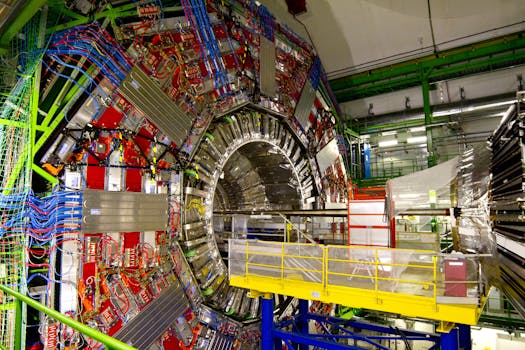 Photo: Ramaz Bluashvili / Pexels
Another critical quantum phenomenon is 'entanglement.' When two or more qubits become entangled, they become linked in such a way that they share the same fate, no matter how far apart they are. Measuring the state of one entangled qubit instantaneously affects the state of the other(s). This spooky action at a distance, as Einstein famously called it, allows quantum computers to perform incredibly complex correlations and calculations that are impossible with classical systems. Entanglement is not just a curiosity; it's a computational resource that allows quantum algorithms to achieve their remarkable speedups. Together, superposition and entanglement form the bedrock of quantum computing, enabling new types of algorithms that can explore vast solution spaces much more efficiently. This foundational understanding is key to appreciating the groundbreaking nature of quantum technology and its potential to revolutionize various sectors. As we move forward, the development of robust and stable qubits remains a significant challenge, but the progress made in recent years has been astounding, paving the way for the exploration of practical applications.
Revolutionizing Scientific Discovery: What is Quantum Computing Applications in Research
 Photo: Pachon in Motion / Pexels
In drug discovery, this means accelerating the identification of new drug candidates. Instead of laboriously testing thousands of compounds in a lab, quantum simulations can quickly screen potential molecules, predict their binding affinities to target proteins, and optimize their structures for efficacy and safety. This could drastically reduce the time and cost associated with bringing new medicines to market, potentially leading to breakthroughs in treating diseases like cancer, Alzheimer's, and viral infections. Similarly, in materials science, quantum computing can help design novel materials with tailored properties. Imagine creating superconductors that work at room temperature, highly efficient catalysts for industrial processes, or batteries with vastly improved energy density. By simulating the quantum properties of materials from the atomic level up, researchers can predict how different compositions and structures will behave, leading to the creation of materials previously thought impossible. The ability to model complex chemical reactions with high fidelity also opens doors for optimizing industrial processes, reducing waste, and developing more sustainable manufacturing methods. The potential to unlock new frontiers in physics, from understanding high-energy particles to exploring the nature of dark matter, also makes quantum computing an invaluable tool for fundamental scientific inquiry. These applications are not just theoretical; leading pharmaceutical companies and research institutions are already investing heavily in quantum research, anticipating a future where quantum simulations are standard practice.
Transforming Industries: Broad Applications of Quantum Computing
 Photo: Leeloo The First / Pexels
The field of artificial intelligence and machine learning is set to experience a significant boost from quantum computing. Quantum machine learning algorithms can process and analyze data in ways that classical algorithms cannot, potentially leading to more powerful AI. This includes improving pattern recognition, accelerating training times for complex neural networks, and enhancing the capabilities of deep learning models. Imagine AI systems that can understand and respond to natural language with unprecedented accuracy, or autonomous vehicles that can navigate complex, unpredictable environments more safely. Optimization problems are ubiquitous across industries, from logistics and supply chain management to manufacturing and scheduling. Quantum optimization algorithms can find more efficient routes for delivery networks, optimize production schedules in factories, and manage complex resource allocation, leading to significant cost savings and increased efficiency. For instance, airlines could optimize flight schedules and crew assignments with greater precision, reducing delays and fuel consumption. The energy sector could benefit from quantum optimization to manage smart grids more effectively, balancing supply and demand from diverse sources. Even in areas like climate modeling, quantum computers could process vast environmental datasets to predict climate patterns with greater accuracy, aiding in mitigation and adaptation strategies. The sheer computational power and unique processing capabilities offered by quantum computing positions it as a transformative force across virtually every sector, promising advancements that are currently beyond our reach with classical technology. For more insights into emerging tech trends, consider exploring further.
Challenges and Future Prospects: Navigating the Quantum Landscape
Photo: Ramaz Bluashvili / Pexels
Another challenge is the development of robust and scalable quantum hardware. Current quantum computers are still relatively small, with a limited number of qubits, and are prone to errors (often referred to as Noisy Intermediate-Scale Quantum, or NISQ, devices). Achieving 'quantum supremacy' – where a quantum computer performs a task provably beyond the capabilities of any classical computer – has been demonstrated, but building fault-tolerant quantum computers capable of solving practical, large-scale problems requires a much greater number of stable, interconnected qubits. Furthermore, the development of effective quantum algorithms is still in its nascent stages. While algorithms like Shor's and Grover's offer theoretical speedups, designing practical algorithms for real-world problems, especially those that can leverage the limited qubits available today, requires deep expertise in both quantum mechanics and computer science. The talent pool for quantum computing is relatively small, and there's a significant need for more researchers, engineers, and developers to advance the field.
Despite these challenges, the future prospects for quantum computing are incredibly promising. Significant investments from governments, tech giants, and startups are fueling rapid advancements. We are likely to see a phased approach to quantum adoption, starting with 'quantum-inspired' algorithms running on classical hardware, then moving to specialized quantum co-processors for specific tasks, and eventually, fully fault-tolerant universal quantum computers. The next decade will likely see the maturation of quantum software development kits, making quantum programming more accessible. As error rates decrease and qubit counts increase, we can expect to see quantum computers tackling increasingly complex problems that are truly intractable for classical systems, transforming industries and unlocking scientific discoveries in ways we can only begin to imagine today. The journey is long, but the destination promises a new era of computational power.
Comparison
| Feature | Quantum Computing | Classical Supercomputing | Specialized AI Hardware |
|---|---|---|---|
| Computational Paradigm | Qubits (Superposition, Entanglement) | Bits (Binary 0s and 1s) | Parallel Processors (GPUs, ASICs) |
| Problem Type Strength | Optimization, Simulation, Cryptography | Large-scale Data Processing, Numerical Simulation | Machine Learning, Deep Learning |
| Scalability | Exponential (with stable qubits) | Linear (with more processors) | Linear (with more chips) |
| Error Rates | Currently High (Decoherence) | Very Low | Low to Moderate |
| Energy Consumption | High for cooling/isolation, Low for computation | Very High | Moderate to High |
| Maturity Level | Emerging (NISQ era) | Mature, Widely Available | Mature, Rapidly Evolving |
| Key Applications | Drug Discovery, Material Science, Financial Modeling | Weather Prediction, Scientific Research, Big Data Analytics | Image Recognition, Natural Language Processing, Autonomous Driving |
What Readers Say
"Understanding what is quantum computing applications has completely shifted my perspective on drug discovery. The potential for simulating molecular interactions with such precision could cut years off our R&D cycle and lead to life-saving medications faster."
Dr. Anya Sharma · Boston, MA"As a financial analyst, the insights into quantum optimization for portfolio management were eye-opening. This technology promises to bring a new level of sophistication to risk assessment and investment strategies that we've only dreamed of."
Michael Chen · San Francisco, CA"This article clarified so much about what is quantum computing applications in AI. The idea of quantum machine learning accelerating neural network training and improving pattern recognition has direct implications for our autonomous vehicle development, potentially making our systems significantly safer and more efficient."
Sarah Jenkins · Austin, TX"While the challenges like decoherence are clearly significant, the presented applications in materials science are incredibly compelling. Imagining new superconductors or catalysts emerging from quantum simulations is a powerful motivator for continued research and investment in this field."
David Miller · Seattle, WA"My team in logistics is constantly battling optimization problems. Learning about what is quantum computing applications in supply chain management offers a glimpse into a future where we can achieve efficiencies and cost savings that are currently impossible with classical algorithms."
Emily Rodriguez · New York, NYFrequently Asked Questions
What is the primary advantage of quantum computing over classical computing?
The primary advantage lies in quantum computing's ability to leverage superposition and entanglement. This allows it to process vastly more information simultaneously and explore solution spaces exponentially larger than classical computers, making certain complex problems solvable that are otherwise intractable.
Are quantum computers going to replace classical computers?
No, quantum computers are not expected to replace classical computers. Instead, they are specialized tools designed to solve specific types of extremely complex problems. Classical computers will continue to be essential for everyday tasks, while quantum computers will act as powerful accelerators for particular computational challenges.
How can businesses start preparing for quantum computing?
Businesses can start by educating their teams on quantum fundamentals, identifying potential quantum-advantage problems within their operations, and exploring partnerships with quantum research institutions or solution providers. Investing in quantum-ready talent and understanding the evolving landscape of quantum software development kits is also crucial.
What is the current cost of using quantum computing resources?
Accessing quantum computing resources is currently expensive, often provided through cloud platforms by companies like IBM, Google, and Microsoft on a pay-per-use or subscription model. Direct ownership of quantum hardware is prohibitively expensive for most, but costs are expected to decrease as the technology matures.
How does quantum computing compare to AI and machine learning?
Quantum computing can enhance AI and machine learning. While AI/ML are software paradigms, quantum computing is a hardware paradigm that can accelerate and improve AI/ML algorithms. Quantum machine learning (QML) aims to develop algorithms that run on quantum computers to solve AI problems more efficiently or effectively than classical methods.
Who should be interested in what is quantum computing applications?
Researchers in chemistry, physics, and materials science; financial institutions for risk modeling and optimization; pharmaceutical companies for drug discovery; cybersecurity experts for encryption; and anyone involved in complex optimization, simulation, or advanced AI development should be keenly interested.
What are the biggest risks associated with the rise of quantum computing?
One of the biggest risks is the potential to break current encryption standards, which could compromise data security globally. This necessitates the development and adoption of post-quantum cryptography. Other risks include the high cost of development and the ethical implications of such powerful computational capabilities.
What does the future hold for quantum computing applications?
The future holds a gradual but transformative integration of quantum computing. We can expect to see 'quantum advantage' in specific industrial applications, leading to breakthroughs in medicine, materials, and finance. Eventually, fault-tolerant quantum computers will unlock entirely new possibilities, redefining computational limits.
The world of what is quantum computing applications is rapidly expanding, promising to redefine industries and solve some of humanity's most complex challenges. Dive deeper into this transformative technology and prepare your organization for the quantum era. The future of innovation is here.