✓ Blockchain is a decentralized, distributed ledger technology.
✓ It stores data in 'blocks' linked together cryptographically.
✓ Transactions are immutable and transparent, once recorded.
✓ No single entity controls the entire network, ensuring security and resistance to censorship.
How It Works
1
Transaction Initiation
A participant initiates a transaction, which could be a cryptocurrency transfer, data record, or smart contract execution. This transaction is then broadcast to the network.
2
Block Creation
Validated transactions are grouped into a 'block' by network participants called 'miners' or 'validators'. This block also contains a cryptographic hash of the previous block, linking them.
3
Network Consensus
The newly created block is broadcast to all nodes in the network. These nodes verify the block's validity using consensus mechanisms (e.g., Proof of Work, Proof of Stake).
4
Block Addition & Immutability
Once a consensus is reached, the block is added to the existing blockchain, forming a permanent and immutable record. This new block is then replicated across all participating nodes.
Understanding the Core Components of Blockchain Technology
Photo: RDNE Stock project / Pexels
At its heart, blockchain technology is a revolutionary way of recording and sharing information. Imagine a digital ledger that isn't stored in one central location, but rather distributed across a vast network of computers. This fundamental concept of decentralization is what sets blockchain apart from traditional data management systems. To truly grasp what is blockchain technology explained, we must dissect its core components: blocks, chains, and the underlying cryptographic principles.
First, let's talk about 'blocks.' In simple terms, a block is a collection of data. This data can vary widely depending on the type of blockchain. For a cryptocurrency like Bitcoin, a block contains a list of transactions, including sender, receiver, and amount. For other applications, it might include medical records, supply chain data, or voting information. Each block has a unique identifier, known as a 'hash,' which is a complex string of numbers and letters generated by a cryptographic algorithm. This hash acts like a digital fingerprint, uniquely identifying the block and its contents. Even a tiny change in the block's data will result in a completely different hash, making tampering immediately detectable.
Next, the 'chain' aspect refers to how these blocks are linked together. When a new block is created and validated, it contains not only its own data and hash but also the hash of the *previous* block. This creates a chronological and immutable chain. If someone were to try and alter data in an old block, its hash would change. Since the next block in the chain contains the *original* hash of the altered block, the link would be broken, and the tampering would be evident to the entire network. This interlocking mechanism is crucial for the security and integrity of the blockchain.
Finally, cryptography is the unsung hero of blockchain technology. It's the science of secure communication in the presence of adversaries. In blockchain, cryptography is used for several key functions: hashing, which we've already discussed, and digital signatures. Digital signatures use public-key cryptography to verify the authenticity of transactions and the identity of participants. When you send a transaction, you 'sign' it with your private key. Anyone on the network can then use your public key to verify that the transaction indeed came from you and hasn't been altered. This ensures non-repudiation and trust in a trustless environment. Understanding these foundational elements is the first step in appreciating the profound implications of blockchain technology.
Decentralization and Consensus Mechanisms: The Backbone of Trust
Photo: Morthy Jameson / Pexels
The power of blockchain doesn't just lie in its linked blocks; it's fundamentally rooted in its decentralized nature and the ingenious consensus mechanisms that govern its operation. Unlike traditional systems where a central authority (like a bank or government) maintains a single, authoritative ledger, a blockchain distributes this ledger across thousands, or even millions, of computers worldwide. This means there's no single point of failure that can be exploited or censored. If one computer goes offline, the network continues to function seamlessly because countless other copies of the ledger exist.
This distribution of the ledger is what gives blockchain its remarkable resilience and resistance to manipulation. No single entity has control over the entire network, which fosters a new kind of trust – trust in the system itself, rather than in a specific intermediary. Imagine trying to alter a record on a blockchain: you would not only have to change that record on your copy of the ledger but also simultaneously change it on a majority of all other copies across the globe, all while maintaining the correct cryptographic links. This is computationally infeasible, making the data on a blockchain incredibly secure and virtually tamper-proof.
To ensure that all these distributed ledgers remain consistent and agree on the true state of transactions, blockchain networks employ 'consensus mechanisms.' These are algorithms that dictate how new blocks are validated and added to the chain. The most famous consensus mechanism is Proof of Work (PoW), pioneered by Bitcoin. In PoW, participants (miners) compete to solve complex mathematical puzzles. The first one to solve the puzzle gets to add the next block to the chain and is rewarded for their effort. This process is energy-intensive but highly secure, as it's incredibly expensive to try and outcompete the entire network.
Another prominent mechanism is Proof of Stake (PoS), which is gaining popularity due to its energy efficiency. In PoS, instead of solving puzzles, validators are chosen to create new blocks based on the amount of cryptocurrency they 'stake' or lock up as collateral. The more they stake, the higher their chance of being selected. If a validator attempts to add an invalid block, they risk losing their staked collateral, providing a strong economic incentive for honest behavior. There are many other consensus mechanisms, such as Delegated Proof of Stake (DPoS), Proof of Authority (PoA), and more, each with its own trade-offs in terms of security, scalability, and decentralization. These mechanisms are vital for maintaining the integrity and agreement across the distributed network, solidifying the trustless nature of blockchain technology.
Beyond Cryptocurrency: Diverse Applications of Blockchain
Photo: Morthy Jameson / Pexels
While Bitcoin and other cryptocurrencies brought blockchain into the mainstream, equating blockchain solely with digital money is a significant oversight. The underlying technology – a secure, immutable, and decentralized ledger – has far-reaching implications across virtually every industry. Understanding these diverse applications is key to fully appreciating what is blockchain technology explained and its transformative potential.
One of the most promising areas is supply chain management. Traditional supply chains are often opaque, making it difficult to track goods from origin to consumer, verify authenticity, or quickly identify points of failure. Blockchain can create a transparent and tamper-proof record of every step a product takes: sourcing raw materials, manufacturing, shipping, customs, and delivery. This allows for instant verification of provenance, reduces fraud, improves accountability, and can even help in quickly recalling contaminated goods. Consumers could scan a QR code on a product and see its entire journey, fostering greater trust.
Another impactful application is in healthcare. Patient medical records are sensitive and often siloed across different providers, making comprehensive care challenging. Blockchain can provide a secure, interoperable system where patients have more control over their data, granting access to specific providers as needed. This enhances privacy, streamlines information sharing, and can improve diagnostic accuracy and treatment plans. Similarly, in identity management, blockchain can enable self-sovereign identity, where individuals control their digital identities and share verifiable credentials without relying on central authorities.
Financial services, beyond just cryptocurrencies, are also being revolutionized. Blockchain can streamline cross-border payments, making them faster, cheaper, and more transparent by cutting out intermediaries. It can also be used for asset tokenization, representing real-world assets (like real estate, art, or commodities) as digital tokens on a blockchain, making them more liquid and divisible. Smart contracts, self-executing contracts with the terms of the agreement directly written into code, are another powerful application. These contracts automatically execute when predefined conditions are met, eliminating the need for intermediaries and reducing the risk of human error or manipulation. From voting systems to intellectual property rights management, and even in gaming and metaverse development, blockchain's ability to create trust and transparency in a digital world is unlocking unprecedented possibilities, pushing the boundaries of what's possible in a connected society.
Challenges and Future Outlook of Blockchain Adoption
Photo: Morthy Jameson / Pexels
Despite its immense potential, blockchain technology is not without its challenges. Understanding these hurdles is crucial for a balanced perspective on its future adoption and growth. One of the primary concerns is scalability. Early blockchains, particularly public ones like Bitcoin and Ethereum (prior to its 2.0 upgrade), have faced limitations in processing a high volume of transactions per second compared to centralized systems like Visa. This can lead to network congestion and higher transaction fees. While solutions like sharding, layer-2 protocols, and different consensus mechanisms are being developed, achieving enterprise-level scalability remains an ongoing challenge.
Energy consumption, especially for Proof of Work blockchains, is another significant environmental concern. The computational power required to secure these networks translates into substantial electricity usage. This has driven the shift towards more energy-efficient consensus mechanisms like Proof of Stake, but the debate around blockchain's environmental footprint continues. Regulatory uncertainty also poses a major hurdle. Governments worldwide are grappling with how to classify and regulate blockchain-based assets and applications, leading to a patchwork of laws that can hinder innovation and adoption. Clear and consistent regulatory frameworks are needed to foster widespread trust and investment.
Usability and user experience (UX) are further areas requiring improvement. Interacting with blockchain technology often involves complex concepts like seed phrases, private keys, and gas fees, which can be daunting for the average user. For mass adoption, interfaces need to become as intuitive and seamless as traditional web applications. Finally, interoperability – the ability for different blockchains to communicate and share data – is essential for a truly interconnected blockchain ecosystem. Currently, many blockchains operate in silos, limiting their collective potential. Projects focused on cross-chain communication are working to bridge these gaps.
Despite these challenges, the future outlook for blockchain technology remains incredibly bright. We are seeing continuous innovation addressing these pain points, from more scalable and energy-efficient protocols to user-friendly applications and clearer regulatory guidance. As the technology matures, its integration into various sectors will likely accelerate, leading to:
* **Increased enterprise adoption:** More companies will leverage blockchain for supply chain, finance, and data management.
* **New business models:** Decentralized Autonomous Organizations (DAOs) and Web3 applications will reshape how organizations operate and services are delivered.
* **Enhanced security and privacy:** Blockchain will continue to offer robust solutions for data protection and digital identity.
* **Greater financial inclusion:** Providing access to financial services for unbanked populations.
While the path forward may have bumps, the foundational promise of a more transparent, secure, and equitable digital world powered by blockchain technology is a compelling vision that continues to drive innovation and investment.
Comparison
Feature
Blockchain
Traditional Database (Centralized)
Distributed Database (Non-Blockchain)
Control
Decentralized
Centralized
Distributed (often centralized control)
Immutability
✓ (highly)
✗ (can be altered)
✗ (can be altered)
Transparency
High (public/permissioned)
Low (controlled access)
Configurable
Security
Cryptographically secured
Access control, firewalls
Access control, replication
Trust Model
Trustless (protocol-based)
Trust in intermediary
Trust in central administrator
Consensus
Required (e.g., PoW, PoS)
N/A (single authority)
Replication/sync mechanisms
Data Structure
Blocks linked by hashes
Tables, rows, columns
Various models
What Readers Say
★★★★★
"This article on what is blockchain technology explained broke down complex concepts into digestible insights. I finally understand the difference between PoW and PoS and its real-world impact beyond crypto."
Sarah Chen · Austin, TX
★★★★★
"As a business owner, I was looking for a clear explanation of blockchain's use in supply chains. This guide delivered, providing concrete examples and making the benefits very clear."
Mark Johnson · Miami, FL
★★★★★
"I used to think blockchain was just Bitcoin, but this article expanded my understanding tremendously. It helped me see how it could impact healthcare and data privacy, which is highly relevant to my field."
Aisha Khan · Seattle, WA
★★★★★
"A very thorough explanation of blockchain technology. While some parts were still quite technical, the analogies helped a lot. The section on challenges was particularly insightful for a realistic view."
David Lee · Boston, MA
★★★★★
"From the core components to future trends, this guide covers it all. It's an excellent resource for anyone trying to get a solid grip on blockchain – perfect for my upcoming tech presentation."
Emily Rodriguez · Denver, CO
Frequently Asked Questions
What is the primary benefit of blockchain technology?
The primary benefit of blockchain technology is its ability to create a secure, transparent, and immutable record of transactions or data without the need for a central authority. This decentralization enhances trust, reduces the risk of fraud, and can streamline processes across various industries.
Is blockchain only used for cryptocurrencies like Bitcoin?
No, blockchain technology extends far beyond cryptocurrencies. While Bitcoin was its first widely known application, blockchain is now being utilized for supply chain management, healthcare records, digital identity, voting systems, intellectual property, and many other areas requiring secure and transparent data management.
How does blockchain ensure data security and prevent tampering?
Blockchain ensures security through several mechanisms: cryptographic hashing, which links blocks immutably; digital signatures, which verify transaction authenticity; and decentralization, which distributes the ledger across many nodes, making it computationally infeasible for a single entity to alter records without detection by the network.
Is blockchain an expensive technology to implement?
The cost of implementing blockchain technology can vary significantly. Public blockchains like Bitcoin have high transaction fees and energy costs for mining. However, private or permissioned blockchains can be more cost-effective to set up and maintain, depending on the scale and specific use case. Initial investment in development and infrastructure can be substantial, but long-term benefits in efficiency and security often outweigh these costs.
How does blockchain compare to a traditional database?
Blockchain differs from a traditional database primarily in its decentralization, immutability, and consensus mechanism. A traditional database is centrally controlled and records can be altered, whereas a blockchain is distributed, records are cryptographically linked and nearly impossible to tamper with, and all participants must agree on new additions.
Who should learn about blockchain technology?
Anyone interested in the future of digital security, data management, finance, supply chains, and technology in general should learn about blockchain. This includes developers, business leaders, investors, policymakers, and even the general public, as it's poised to impact various aspects of daily life.
Are there any risks associated with using blockchain?
Yes, risks include scalability limitations, regulatory uncertainty, potential for smart contract vulnerabilities if not coded correctly, and the irreversible nature of transactions (if you send crypto to the wrong address, it's often lost). Energy consumption for some networks is also a concern.
What are the future trends for blockchain technology?
Future trends include increased adoption in enterprise solutions, advancements in scalability and interoperability (connecting different blockchains), the rise of Web3 and the metaverse, continued exploration of central bank digital currencies (CBDCs), and further integration of AI and IoT with blockchain for enhanced data integrity and automation.
Now that you have a comprehensive understanding of what is blockchain technology explained, you're equipped to navigate its complexities and appreciate its vast potential. Continue your learning journey and explore how this groundbreaking technology is shaping the digital future.

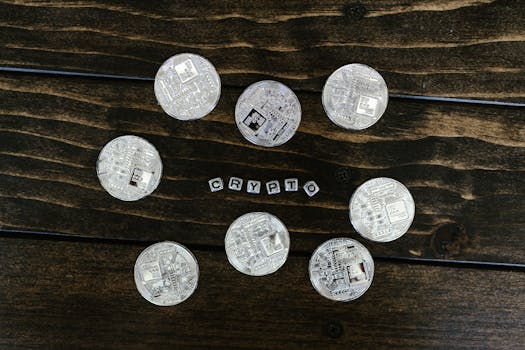 Photo: RDNE Stock project / Pexels
 Photo: Morthy Jameson / Pexels
 Photo: Morthy Jameson / Pexels
 Photo: Morthy Jameson / Pexels