
What is Augmented Reality vs Virtual Reality? A Deep Dive
Unpack the distinctions between AR and VR, and discover how these transformative technologies are reshaping our world.
Explore the Immersive WorldKey Takeaways
- ✓ Augmented Reality overlays digital content onto the real world.
- ✓ Virtual Reality creates an entirely simulated, immersive environment.
- ✓ AR typically uses smartphones or transparent glasses; VR requires headsets.
- ✓ Interaction with the real world is key for AR; VR isolates you from it.
- ✓ Both technologies are integral components of the broader 'Extended Reality' (XR) spectrum.
How It Works
AR technology uses cameras and sensors to capture the real-world environment. It then processes this data to identify surfaces, objects, and spatial relationships.
VR systems completely block out the real world, presenting users with a computer-generated environment. This is achieved through specialized headsets with high-resolution screens and optics.
Both AR and VR rely heavily on motion tracking, gyroscopes, accelerometers, and sometimes external sensors. This allows for precise positioning and orientation within their respective digital or mixed environments.
AR renders digital objects and overlays them onto the live camera feed or through transparent lenses. VR renders entire 3D worlds, displaying them directly to the user's eyes within the headset.
Understanding the Fundamental Differences: AR vs VR
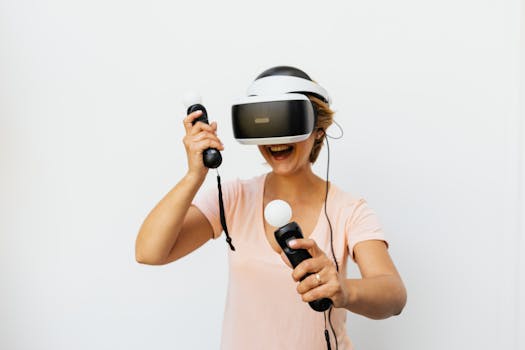 Photo: https://kaboompics.com/ / Pexels
The Technology Under the Hood: Hardware and Software Driving AR and VR Experiences
 Photo: Darlene Alderson / Pexels
Applications Across Industries: Where AR and VR Shine Brightest
 Photo: Ila Bappa Ibrahim / Pexels
The Future of Immersive Tech: Trends, Challenges, and Ethical Considerations
 Photo: Darlene Alderson / Pexels
Comparison
| Feature | Augmented Reality (AR) | Virtual Reality (VR) | Mixed Reality (MR) |
|---|---|---|---|
| Interaction with Real World | Enhances/overlays digital content onto the real world | Replaces the real world with a simulated one | Blends digital and real worlds, allowing interaction between them |
| User's Awareness of Surroundings | Fully aware of physical surroundings | Isolated from physical surroundings | Aware of physical surroundings with digital elements integrated |
| Primary Hardware | Smartphones, tablets, transparent AR glasses | VR headsets (tethered or standalone) | Advanced MR headsets (e.g., HoloLens, Vision Pro) |
| Level of Immersion | Lower (digital content alongside reality) | High (complete digital world) | Medium to High (seamless blend) |
| Typical Applications | Navigation, retail try-ons, industrial repair, mobile gaming | Gaming, training simulations, virtual tours, therapy | Collaborative design, complex industrial tasks, advanced education |
| Required Processing Power | Moderate to High (for real-time environmental mapping) | High (for rendering entire 3D worlds) | Very High (for real-time blending and interaction) |
What Readers Say
"This article finally clarified what is augmented reality vs virtual reality for me! I always mixed them up, but the explanations of how AR overlays digital content and VR creates whole new worlds made perfect sense. Super helpful breakdown!"
Sarah J. · Austin, TX"As someone working in tech, I appreciated the depth of this piece. The details on hardware and software for both AR and VR were spot on. It's a great resource for anyone wanting to understand these immersive technologies beyond the surface level."
Mark D. · Seattle, WA"I used to think AR was just a gimmick, but after reading this, I see its potential for education and practical uses. The comparison table was incredibly useful, helping me categorize the tech I see around me. Excellent, well-structured information!"
Emily R. · Chicago, IL"A very informative article that broke down complex concepts into digestible insights. While I'm still weighing the long-term ethical implications of XR, the article did a good job of presenting them. A solid overview for anyone interested."
David K. · Miami, FL"I'm an aspiring game developer, and understanding the core differences between AR and VR is crucial. This article provided exactly what I needed, offering clear distinctions and inspiring new ideas for my projects. Thank you for this comprehensive guide!"
Lisa M. · San Francisco, CAFrequently Asked Questions
What is the single biggest difference between Augmented Reality (AR) and Virtual Reality (VR)?
The biggest difference is their relationship with the real world. AR overlays digital information onto your existing physical environment, allowing you to see and interact with both. VR, conversely, completely replaces your real-world view with an entirely simulated, digital environment, immersing you fully within it.
Do I need special equipment to experience AR or VR?
For VR, you almost always need a dedicated VR headset, which can range from mobile-powered devices to PC-tethered systems. For AR, you can often experience basic forms using devices you already own, like smartphones and tablets, through apps that utilize their cameras. More advanced AR experiences, however, do require specialized AR glasses.
How can I try out Augmented Reality for myself?
The easiest way to try AR is through your smartphone. Many apps, like Snapchat filters, Pokémon GO, IKEA Place, or Google Maps' Live View navigation, utilize AR. Simply download one of these apps and follow its instructions to see digital objects superimposed onto your real-world view through your phone's camera.
Is one technology more expensive than the other?
Generally, getting started with basic AR is often less expensive as it frequently leverages existing smartphone technology. Dedicated VR headsets, especially high-end models, can be a significant investment, ranging from a few hundred to over a thousand dollars. Advanced AR glasses also come with a high price tag, often geared towards enterprise use rather than consumer markets.
How does Mixed Reality (MR) fit into the AR vs. VR discussion?
Mixed Reality (MR) is often considered a spectrum that bridges AR and VR. It allows digital objects to be not just overlaid onto the real world (like AR) but to interact with it in a truly integrated way, responding to and being occluded by physical objects. MR can also allow users to transition seamlessly between fully augmented and fully virtual environments within the same device, offering a more dynamic blend of realities.
Who should consider using Augmented Reality versus Virtual Reality?
Individuals or businesses looking to enhance real-world tasks, provide contextual information, or offer interactive digital overlays in existing environments (e.g., retail, field service, education) should consider AR. Those seeking complete immersion, realistic simulations for training, gaming, or remote collaboration in entirely new spaces should lean towards VR.
Are there any health or safety concerns with AR or VR use?
Yes, both technologies have potential concerns. VR can cause motion sickness, eye strain, and disorientation for some users due to the complete immersion. AR, while less prone to motion sickness, requires users to remain aware of their physical surroundings to avoid collisions. Prolonged use of either can lead to eye fatigue or potential psychological impacts, emphasizing the need for moderation and proper usage guidelines.
What does the future hold for AR and VR?
The future points towards greater convergence into Extended Reality (XR), with more lightweight, powerful, and affordable devices. We can expect more seamless integration of AI, enhanced haptic feedback, and more natural user interfaces. The expansion of these technologies into everyday life, from smart glasses replacing smartphones to highly immersive metaverses, is a likely trajectory, alongside ongoing ethical and privacy discussions.
By understanding what is augmented reality vs virtual reality, you're better equipped to navigate the exciting world of immersive technology. Whether you're a consumer, developer, or business owner, recognizing their distinct capabilities will help you unlock their full potential and prepare for the future of digital interaction.