
What is Artificial Intelligence? Your Guide

3D rendered abstract design featuring a digital brain visual with vibrant colors.Photo: Google DeepMind / Pexels

What is Artificial Intelligence? Your Ultimate Guide

Unlock the mysteries of AI, from its fundamental concepts to its transformative influence on industries and daily life.

Explore AI Now

Key Takeaways

  • ✓ AI is a broad field of computer science that gives machines the ability to mimic human intelligence.
  • ✓ Machine learning, a subset of AI, involves systems learning from data without explicit programming.
  • ✓ Deep learning is a more advanced subset of machine learning, using neural networks inspired by the human brain.
  • ✓ AI is already integrated into daily life, from smartphone assistants to medical diagnostics.

How It Works

1
Data Collection and Preparation

AI systems require vast amounts of data to learn. This data is collected from various sources, cleaned, and formatted for optimal processing.

2
Algorithm Selection and Training

Developers choose suitable algorithms (e.g., neural networks, decision trees) based on the task. The AI then 'trains' by analyzing patterns and relationships within the prepared data.

3
Model Evaluation and Refinement

After training, the AI model is tested with new, unseen data to assess its accuracy and performance. Adjustments are made to parameters and algorithms to improve results.

4
Deployment and Application

Once refined, the AI model is integrated into real-world applications. It then uses its learned knowledge to perform tasks, make predictions, or assist in decision-making.

Demystifying Artificial Intelligence: The Core Concepts

A robotic hand reaching into a digital network on a blue background, symbolizing AI technology.Photo: Tara Winstead / Pexels
Artificial Intelligence, often referred to simply as AI, is a branch of computer science focused on creating machines that can perform tasks typically requiring human intelligence. This encompasses a wide range of capabilities, from understanding natural language and recognizing patterns to making decisions and learning from experience. At its heart, AI aims to simulate and replicate human cognitive functions, allowing machines to solve problems, adapt to new situations, and even exhibit creativity. It's not about replacing human intelligence, but rather augmenting it and tackling challenges that are either too complex, too repetitive, or too dangerous for humans to handle efficiently. The journey of AI began with ambitious dreams of creating thinking machines, evolving through various stages of development, from early symbolic AI to modern data-driven approaches. Understanding what is artificial intelligence starts with recognizing its fundamental components and aspirations. Central to modern AI is the concept of algorithms. These are sets of rules or instructions that a computer follows to solve a problem or perform a task. In the context of AI, these algorithms are designed to process information, identify patterns, and learn from data. For instance, an AI algorithm for image recognition might be trained on millions of images of cats and dogs, learning to differentiate between the two based on specific visual features. This learning process is iterative; the more data the AI processes, the more refined and accurate its understanding becomes. This capability to learn and improve without explicit programming is what truly distinguishes advanced AI systems from traditional software. It allows AI to handle complex, dynamic environments where predefined rules would be insufficient. The power of AI lies in its ability to extract meaningful insights from vast datasets, often identifying correlations and trends that would be imperceptible to the human eye. Another crucial aspect of AI is its interdisciplinary nature. It draws heavily from fields like computer science, mathematics, statistics, linguistics, psychology, and even philosophy. This convergence of disciplines is necessary because replicating intelligence requires understanding not just how computers process information, but also how humans think, perceive, and make decisions. For example, natural language processing (NLP), a key area of AI, combines computational linguistics with machine learning to enable computers to understand and generate human language. Similarly, computer vision combines image processing techniques with AI algorithms to allow machines to 'see' and interpret visual information. The continuous advancement in these underlying fields directly contributes to the rapid progress we see in AI capabilities. As we delve deeper into the intricacies of AI, it becomes clear that its potential is limited only by our imagination and our ability to harness its power responsibly. From automating mundane tasks to driving scientific discovery, AI is reshaping our world at an unprecedented pace, promising a future where machines and humans collaborate to achieve extraordinary feats.

The Spectrum of AI: From Narrow to General Intelligence
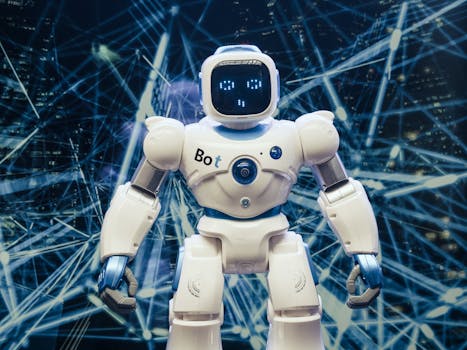
A modern humanoid robot with luminous features set against a digital network backdrop.Photo: Kindel Media / Pexels
When we talk about what is artificial intelligence, it's vital to differentiate between its various types, as not all AI is created equal. The most common form of AI today is Narrow AI, also known as Weak AI. This type of AI is designed and trained for a specific task. Examples include virtual assistants like Siri or Alexa, recommendation engines on streaming platforms, facial recognition software, and spam filters. These systems excel at their designated functions but cannot perform tasks outside their programming. For instance, an AI designed to play chess cannot suddenly write a novel or diagnose a medical condition. Narrow AI operates within a predefined scope, making it highly efficient and effective for its specific purpose, but lacking broader cognitive abilities or understanding. Beyond Narrow AI, the theoretical spectrum includes Artificial General Intelligence (AGI), or Strong AI. AGI refers to AI that possesses human-level cognitive abilities across a wide range of tasks. An AGI system would be able to understand, learn, and apply knowledge to solve any intellectual task that a human being can. This includes reasoning, problem-solving, abstract thinking, and learning from minimal data. While AGI is a long-standing goal in the field of AI research, it remains largely theoretical and is not yet a reality. Developing AGI poses immense challenges, requiring breakthroughs in areas like common sense reasoning, emotional intelligence, and self-awareness, which are complex and not fully understood even in human cognition. Many researchers believe that achieving true AGI is still decades, if not centuries, away. Further along the theoretical timeline is Artificial Superintelligence (ASI). This concept describes an AI that surpasses human intelligence in virtually every field, including scientific creativity, general wisdom, and social skills. An ASI would not only be able to perform tasks better than humans but would also be capable of innovating and creating at a level far beyond human comprehension. This level of AI raises profound ethical and philosophical questions about control, purpose, and the future of humanity. While ASI is currently a topic primarily discussed in science fiction, the progression from Narrow AI towards AGI and eventually ASI is a key area of long-term strategic thinking for AI researchers and policymakers. Understanding these distinctions is crucial for setting realistic expectations about AI's current capabilities and its future potential, ensuring we approach its development with both ambition and caution. The practical applications of current Narrow AI are already transforming industries, while the pursuit of AGI continues to inspire groundbreaking research.

The Pillars of Modern AI: Machine Learning and Deep Learning

Visual abstraction of neural networks in AI technology, featuring data flow and algorithms.Photo: Google DeepMind / Pexels
To truly grasp what is artificial intelligence today, one must understand its foundational technologies: Machine Learning (ML) and Deep Learning (DL). Machine Learning is a subset of AI that enables systems to learn from data without being explicitly programmed. Instead of writing code for every possible scenario, ML algorithms are fed large datasets, and they learn to identify patterns, make predictions, or perform actions based on those patterns. This learning process often involves statistical methods, allowing the system to adapt and improve its performance over time as it encounters more data. There are several types of machine learning, including supervised learning (where the AI learns from labeled data), unsupervised learning (where it finds patterns in unlabeled data), and reinforcement learning (where it learns through trial and error, receiving rewards or penalties). Deep Learning is a more advanced and specialized subset of Machine Learning. It's inspired by the structure and function of the human brain, utilizing artificial neural networks with multiple layers (hence 'deep'). Each layer in a deep neural network processes information at a different level of abstraction, allowing the network to learn intricate patterns and representations from raw data. For example, in image recognition, an initial layer might detect edges, a subsequent layer might identify shapes, and a final layer combines these features to recognize an object like a face or a car. This hierarchical learning capability makes deep learning incredibly powerful for complex tasks such as speech recognition, natural language processing, and advanced image analysis. The rise of deep learning, fueled by massive datasets and powerful computing resources, has been a primary driver of the recent explosion in AI capabilities. Technologies like convolutional neural networks (CNNs) for image processing and recurrent neural networks (RNNs) for sequential data (like language) have revolutionized what machines can achieve. The ability of deep learning models to automatically discover complex features from data, often without human intervention, sets it apart from traditional machine learning methods where feature engineering (manually selecting relevant features) was often a bottleneck. This shift has unlocked new possibilities across countless industries, from enabling self-driving cars to developing highly accurate medical diagnostic tools. The synergy between vast data, powerful algorithms, and increased computational power continues to push the boundaries of what is possible with AI, making deep learning a cornerstone of current and future AI advancements. Exploring these technologies is key to understanding AI's practical implications.

Navigating the Future: Ethical Considerations and Societal Impact

Abstract digital visualization of AI, featuring colorful 3D elements and modern design.Photo: Google DeepMind / Pexels
As we continue to explore what is artificial intelligence, it's impossible to ignore the profound ethical considerations and societal impact that come with its rapid development. The widespread adoption of AI brings both immense promise and significant challenges. On the positive side, AI has the potential to revolutionize healthcare, making diagnoses more accurate and drug discovery faster. It can automate dangerous or repetitive jobs, freeing humans for more creative and meaningful work. AI can also help address global challenges like climate change, resource management, and education by optimizing systems and providing data-driven insights. The efficiency and predictive power of AI can lead to unprecedented advancements in nearly every sector. However, the ethical landscape of AI is complex and requires careful navigation. One major concern is bias. If AI systems are trained on biased data, they will perpetuate and even amplify those biases, leading to unfair or discriminatory outcomes in areas like hiring, lending, or criminal justice. Ensuring fairness and transparency in AI algorithms is paramount. Another critical issue is privacy. AI systems often require access to vast amounts of personal data, raising questions about data security, consent, and how this information is used and protected. The potential for surveillance and misuse of AI technologies necessitates robust regulatory frameworks and ethical guidelines. The impact on employment is also a frequent topic of discussion. While AI can create new jobs and industries, it will undoubtedly automate many existing ones, leading to workforce displacement and the need for significant reskilling and upskilling initiatives. Society must prepare for these shifts to ensure a just transition. Furthermore, the development of autonomous AI systems, especially in critical applications like warfare, raises deep ethical dilemmas about accountability, control, and the nature of decision-making when human oversight is reduced. Addressing these challenges requires a multi-faceted approach involving technologists, ethicists, policymakers, and the public to ensure that AI is developed and deployed responsibly, for the benefit of all humanity. Thoughtful consideration of these issues is crucial for shaping a future where AI serves as a powerful tool for progress, rather than a source of unforeseen problems. **Key Ethical Considerations:** * **Bias and Fairness:** Ensuring AI systems do not perpetuate or amplify existing societal biases. * **Privacy and Data Security:** Protecting personal information used by AI systems. * **Transparency and Explainability:** Understanding how AI makes decisions, especially in critical applications. * **Accountability:** Determining who is responsible when AI systems make errors or cause harm. * **Job Displacement:** Preparing for the economic and social impact of AI-driven automation. * **Autonomous Weapons Systems:** The moral implications of AI making life-or-death decisions. * **Misinformation and Manipulation:** The potential for AI to generate convincing fake content. These points highlight the ongoing need for dialogue and proactive measures to guide AI development responsibly.

Comparison

FeatureNarrow AI (Weak AI)Artificial General Intelligence (AGI)Artificial Superintelligence (ASI)
Scope of TasksSingle, specific taskBroad range of human-level tasksSurpasses human intelligence in all tasks
Learning CapabilityLearns for specific taskLearns any intellectual taskLearns and innovates beyond human capacity
Current StatusWidespread realityTheoretical, research goalHighly theoretical, speculative
Human OversightOften requires significantPotentially lessMinimal to none

What Our Readers Say

5 ★★★★★

"This article provided an exceptionally clear and comprehensive overview of what is artificial intelligence. As an AI researcher, I appreciate the depth without sacrificing accessibility. It's a fantastic resource for students and professionals alike."

5 ★★★★★

"I always found AI intimidating, but this guide breaks down complex concepts like machine learning and deep learning into understandable terms. I finally feel like I grasp the core of what is artificial intelligence and its real-world impact."

5 ★★★★★

"Before reading, I only knew AI from movies. Now, I understand how my smartphone uses AI for photos and how streaming services recommend shows. This article demystified what is artificial intelligence and connected it to my daily life, making it much more tangible."

4 ★★★★☆

"The explanation of Narrow vs. General AI was particularly insightful. While it covered a lot, I would have loved a deeper dive into specific ethical dilemmas. Still, an excellent foundation for understanding what is artificial intelligence."

5 ★★★★★

"As a small business owner, the discussion on AI's impact on employment was highly relevant. Understanding what is artificial intelligence helps me strategize for the future of my company and workforce. Very practical and forward-thinking."

Frequently Asked Questions

What is the simplest definition of artificial intelligence?
Artificial intelligence (AI) refers to the simulation of human intelligence in machines that are programmed to think like humans and mimic their actions. It encompasses learning, reasoning, problem-solving, perception, and language understanding, enabling machines to perform tasks that typically require human cognition.
Is AI going to take all human jobs?
While AI will undoubtedly automate many repetitive or data-intensive tasks, leading to shifts in the job market, it is also expected to create new jobs and industries. The consensus among experts is that AI will augment human capabilities rather than fully replace them, requiring a focus on reskilling and lifelong learning.
How can I start learning about artificial intelligence?
You can start by taking online courses from platforms like Coursera or edX, reading introductory books on AI and machine learning, or exploring open-source projects. Focus on foundational concepts in mathematics, statistics, and programming (especially Python) to build a strong base.
Is investing in AI technology worth it for a small business?
Yes, for many small businesses, investing in AI can be highly beneficial. AI can optimize customer service through chatbots, personalize marketing efforts, automate inventory management, or provide valuable data insights, leading to increased efficiency and competitive advantage, often with scalable solutions.
What is the difference between AI, Machine Learning, and Deep Learning?
AI is the broad concept of machines mimicking human intelligence. Machine Learning is a subset of AI where systems learn from data without explicit programming. Deep Learning is a more specialized subset of Machine Learning that uses multi-layered neural networks to learn complex patterns, inspired by the human brain's structure.
Who should be concerned about the ethical implications of AI?
Everyone should be concerned about the ethical implications of AI, from developers and policymakers who create and regulate it, to businesses that deploy it, and the general public who are impacted by its applications. Responsible AI development requires collective awareness and proactive engagement from all stakeholders.
Are there risks associated with using AI in sensitive areas like healthcare?
Yes, while AI offers immense potential in healthcare, risks include data privacy breaches, algorithmic bias leading to misdiagnosis, and the need for robust validation to ensure accuracy. Proper regulation, ethical guidelines, and human oversight are crucial to mitigate these risks and ensure patient safety.
What are the major trends shaping the future of AI?
Key trends include the development of more powerful generative AI (like large language models), advancements in AI ethics and explainability, greater integration of AI at the edge (on devices), continued progress in robotics and autonomous systems, and the increasing use of AI for scientific discovery and climate solutions.

Understanding what is artificial intelligence is no longer optional; it's essential for navigating our rapidly evolving world. Dive deeper into its applications and implications, and empower yourself with the knowledge to thrive in an AI-driven future.

Topics: artificial intelligenceAI definitiontypes of AIAI applicationsfuture of AI
Leo List
Brampton weed
Adultwork