What is 5G Technology? Your Ultimate Guide to the Future

Illuminated 5G sign with modern geometric ceiling and warm lighting.Photo: Z z / Pexels

What is 5G Technology? Your Ultimate Guide to the Future

Dive deep into the fifth generation of cellular technology and understand its revolutionary potential for speed, efficiency, and connectivity.

Explore 5G Now

Key Takeaways

  • ✓ 5G is the 5th generation mobile network, designed to deliver higher multi-Gbps peak data speeds, ultra-low latency, more reliability, massive network capacity, increased availability, and a more uniform user experience to more users.
  • ✓ It operates across three main frequency bands: low-band (wide coverage), mid-band (speed and coverage balance), and high-band/mmWave (highest speeds, shortest range).
  • ✓ Key enhancements over 4G include significantly faster download and upload speeds (up to 10-100x faster), near-instantaneous response times, and the ability to connect a vast number of devices simultaneously.
  • ✓ 5G is not just about faster phones; it's a foundational technology for advanced applications like autonomous vehicles, smart cities, remote surgery, and the Internet of Things (IoT).

How It Works

1
New Radio & Spectrum

5G utilizes a new radio interface (5G NR) designed for greater efficiency and flexibility. It can operate across a wider range of spectrum, including existing 4G bands, new mid-bands, and high-frequency millimeter-wave (mmWave) bands.

2
Massive MIMO Antennas

Massive Multiple-Input, Multiple-Output (MIMO) antennas use dozens or even hundreds of small antennas to send and receive more data simultaneously. This significantly increases network capacity and spectral efficiency, allowing more users to connect with higher speeds.

3
Beamforming & Network Slicing

Beamforming directs radio signals precisely to user devices, reducing interference and improving signal quality. Network slicing allows operators to create multiple virtual networks on a single physical 5G infrastructure, tailoring services for specific applications (e.g., IoT, critical communications).

4
Edge Computing Integration

5G networks are designed to integrate with edge computing, bringing data processing closer to the source. This dramatically reduces latency, making real-time applications like autonomous driving and augmented reality more feasible and responsive.

Understanding the Core Elements of 5G Technology
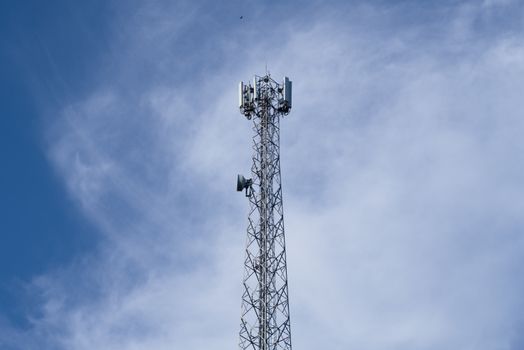
A tall metal communications tower stands against a backdrop of a clear blue sky with scattered clouds.Photo: Qeis Ismail / Pexels
To truly grasp what is 5G technology, we must first dissect its fundamental components. Unlike its predecessors, 5G isn't merely an incremental upgrade; it's a paradigm shift built on several innovative technologies working in concert. At its heart lies the 5G New Radio (5G NR), a global standard for a unified, more capable 5G air interface. This new radio technology is designed to operate across a broad spectrum of frequencies, from low-band (sub-1 GHz) for wide-area coverage, through mid-band (1-6 GHz) offering a balance of speed and range, to high-band or millimeter-wave (mmWave, 24-100 GHz) which delivers blistering speeds over shorter distances. The flexibility to utilize this diverse spectrum is crucial for 5G's adaptability to various use cases, from rural connectivity to dense urban environments. This spectrum utilization is far more efficient than previous generations, allowing for greater data throughput and capacity. Another cornerstone of 5G is Massive MIMO (Multiple-Input, Multiple-Output) antenna technology. Where 4G might use 2, 4, or 8 antennas, Massive MIMO employs dozens, sometimes even hundreds, of tiny antennas on a single base station. This allows the base station to send and receive multiple data streams simultaneously, dramatically increasing network capacity and efficiency. Imagine a bustling highway with many lanes versus a single-lane road; Massive MIMO effectively creates many more 'lanes' for data. Complementing Massive MIMO is 'beamforming,' a sophisticated signal processing technique. Instead of broadcasting signals in all directions, beamforming intelligently directs focused radio energy towards specific user devices. This targeted approach reduces interference, improves signal quality, and extends the range of high-frequency mmWave signals, which are typically more susceptible to obstructions. Beyond the radio access network, 5G introduces architectural advancements like network slicing. This capability allows mobile network operators to create multiple virtual networks on top of a single physical 5G infrastructure. Each 'slice' can be optimized for a specific service or application, with tailored latency, bandwidth, and reliability characteristics. For instance, a slice for autonomous vehicles would prioritize ultra-low latency and high reliability, while a slice for IoT sensors might focus on massive connectivity and energy efficiency. This flexibility is a game-changer for businesses and industries, enabling them to customize their network experience. Furthermore, the integration of edge computing with 5G is pivotal. Edge computing brings data processing and storage closer to the source of data generation, at the 'edge' of the network. When combined with 5G's ultra-low latency, this means data can be processed almost instantaneously, which is critical for applications like real-time analytics, augmented reality, and industrial automation where every millisecond counts. These combined innovations empower 5G to deliver on its promise of transforming not just mobile communication, but a vast array of industries and services.

The Transformative Impact and Key Benefits of 5G

A tall metal communications tower stands against a backdrop of a clear blue sky with scattered clouds.Photo: Qeis Ismail / Pexels
The transition to 5G technology represents more than just a speed boost for our smartphones; it heralds a new era of connectivity with profound implications across various sectors. Understanding what is 5G technology truly means requires looking beyond its technical specifications to its real-world impact. The most immediate and noticeable benefit for consumers is the sheer speed. 5G offers theoretical peak speeds of up to 10 gigabits per second (Gbps), which is 10 to 100 times faster than 4G LTE. This translates to downloading a full-length HD movie in seconds, experiencing seamless streaming of 8K video, and virtually eliminating buffering. But speed is only one part of the equation. Perhaps even more revolutionary is 5G's ultra-low latency. Latency, the delay before a transfer of data begins following an instruction, can be reduced to as low as 1 millisecond (ms) in optimal 5G conditions. To put this in perspective, the human brain typically processes visual information in about 10-13 ms. This near-instantaneous response time is critical for applications where real-time control and feedback are essential. Think of remote surgery, where a surgeon could operate on a patient miles away with virtually no lag, or autonomous vehicles that need to react to road conditions in milliseconds. Industrial automation, where robots communicate and coordinate with split-second precision, will also be revolutionized. These capabilities move us from reactive systems to truly proactive and intelligent environments. Another significant advantage of 5G is its massive capacity for connectivity. 5G networks are designed to support a million devices per square kilometer, a massive leap from 4G's capacity. This is vital for the exponential growth of the Internet of Things (IoT), where everything from smart home appliances and wearable health monitors to industrial sensors and city infrastructure will be connected. This high device density support means that urban areas and large-scale industrial deployments can connect countless sensors and actuators without network congestion, enabling truly smart environments and efficient resource management. Furthermore, 5G promises enhanced reliability and availability. Through advanced network design, including redundant pathways and sophisticated error correction, 5G aims to provide a more consistent and dependable connection, even in challenging environments. This reliability is crucial for mission-critical applications that cannot afford downtime. For instance, public safety networks, smart grid management, and emergency services will benefit immensely from 5G's robust infrastructure. The energy efficiency of 5G is also noteworthy; while it offers higher performance, 5G is designed to be more energy-efficient per bit transmitted, which is important for both sustainability and extending the battery life of connected IoT devices. These combined benefits paint a picture of a future where connectivity is not just faster, but also smarter, more responsive, and omnipresent, unlocking possibilities previously confined to science fiction.

Real-World Applications and the Future of 5G Technology

Businessman engaging with virtual reality technology indoors, pointing finger.Photo: Henri Mathieu-Saint-Laurent / Pexels
The theoretical capabilities of 5G technology truly come alive when we consider its diverse and transformative real-world applications. Beyond faster phone downloads, understanding what is 5G technology means recognizing its role as an enabling platform for a host of next-generation innovations. One of the most talked-about applications is in the realm of autonomous vehicles. Self-driving cars require constant, ultra-low latency communication with other vehicles, traffic infrastructure, and cloud-based systems to navigate safely and efficiently. 5G provides the necessary backbone for vehicle-to-everything (V2X) communication, enabling cars to 'talk' to each other, traffic lights, and even pedestrians' devices, leading to safer roads and optimized traffic flow. This will redefine urban mobility and logistics. The future of transportation is intrinsically linked to 5G's robust capabilities. Healthcare is another sector poised for a significant revolution. Remote surgery, powered by 5G's low latency, could allow specialists to operate on patients in underserved areas from thousands of miles away, closing geographical gaps in medical expertise. Telemedicine will become more immersive and effective with high-definition video consultations and real-time vital sign monitoring transmitted over 5G networks. Wearable health devices will continuously collect and transmit data, enabling proactive health management and personalized care. Smart hospitals, equipped with 5G, will optimize operations, track assets, and improve patient experiences through connected devices and AI-driven insights. For industries, particularly manufacturing and logistics, 5G ushers in the era of Industry 4.0. Smart factories will leverage 5G to connect thousands of IoT sensors, robotic arms, and automated guided vehicles (AGVs) wirelessly, enabling flexible production lines, predictive maintenance, and real-time quality control. The absence of cumbersome cables allows for greater agility and reconfigurability on the factory floor. Similarly, in logistics, 5G-enabled drones and autonomous robots can streamline warehouse operations, inventory management, and last-mile delivery, leading to unprecedented efficiencies and cost savings. Smart cities are perhaps the most comprehensive application of 5G. From intelligent traffic management systems that dynamically adjust to congestion, to smart streetlights that dim or brighten based on pedestrian presence, 5G forms the nervous system of an interconnected urban environment. It will enable efficient waste management, real-time environmental monitoring, and enhanced public safety through connected surveillance and rapid emergency response systems. Furthermore, augmented reality (AR) and virtual reality (VR) experiences will become mainstream, facilitated by 5G's high bandwidth and low latency. Imagine immersive educational experiences, realistic remote collaboration, and interactive entertainment that blurs the lines between the physical and digital worlds. The potential for innovation across every facet of life is immense, making 5G a critical infrastructure for the 21st century and beyond.

Common Misconceptions and Challenges in 5G Deployment

A tall metal communications tower stands against a backdrop of a clear blue sky with scattered clouds.Photo: Qeis Ismail / Pexels
While the promise of 5G technology is vast, it's crucial to address common misconceptions and understand the challenges involved in its widespread deployment. One prevalent myth is that 5G is solely about faster internet for phones. As discussed, while speed is a key benefit, the true power of 5G lies in its low latency, massive connectivity, and network slicing capabilities, which unlock transformative applications far beyond consumer mobile devices. Another misconception often circulates regarding health risks. Numerous international and national regulatory bodies, including the World Health Organization (WHO) and the FCC, have consistently stated that current scientific evidence does not establish any adverse health effects from 5G technologies when operating within established safety guidelines. The electromagnetic frequencies used by 5G are non-ionizing, meaning they do not have enough energy to directly damage DNA. However, deploying 5G is not without its hurdles. One of the primary challenges is infrastructure build-out. Especially for high-band (mmWave) 5G, which offers the fastest speeds but has a limited range and is easily obstructed by buildings or even foliage, a much denser network of small cells is required. This means installing thousands, if not millions, of new antennas on streetlights, utility poles, and buildings, which is a massive logistical and financial undertaking. Permitting, zoning regulations, and aesthetic concerns can significantly slow down deployment in urban areas. Another challenge is the cost of upgrading existing network infrastructure and acquiring new spectrum. While carriers have invested billions, the continuous investment needed to expand coverage and capacity is substantial. The interoperability between different generations (2G, 3G, 4G, 5G) and the complexity of managing a hybrid network also pose operational challenges. Furthermore, ensuring robust cybersecurity for a vastly expanded and interconnected 5G-enabled IoT ecosystem is paramount. With billions of new devices coming online, the attack surface for cyber threats increases exponentially, requiring advanced security protocols and continuous vigilance. Finally, achieving true ubiquitous 5G coverage, particularly in rural and remote areas, remains a significant hurdle. While low-band 5G offers better range, it doesn't deliver the same transformative speeds and latency as mid-band or mmWave. Bridging the digital divide and ensuring equitable access to advanced 5G capabilities for all Americans will require sustained investment, innovative deployment strategies, and collaborative efforts between government, industry, and local communities. Overcoming these challenges is essential to fully realize the potential of 5G and ensure its benefits are accessible to everyone.

Comparison

Feature5G4G LTE3G
Peak Speed (Theoretical)Up to 10 GbpsUp to 100 Mbps - 1 GbpsUp to 3 Mbps
Latency (Typical)1-5 ms30-50 ms100-250 ms
Capacity (Devices/sq km)1,000,000+10,000 - 100,000Few thousand
Primary Use CasesIoT, Autonomous Vehicles, AR/VR, Remote SurgeryMobile broadband, Video streamingBasic mobile internet, Voice
Network Slicing
Edge Computing Integration

What Our Readers Say

5 ★★★★★

"Understanding what is 5G technology has been a game-changer for my small business. The speeds are incredible, allowing us to upload large design files almost instantly, which has significantly boosted our productivity and client turnaround times."

5 ★★★★★

"I was skeptical about the hype, but after getting a 5G phone and seeing the difference, I'm a believer. Streaming 4K video on the go is seamless, and my online gaming latency has dropped dramatically. It's a noticeable improvement."

5 ★★★★★

"Our hospital is piloting 5G for remote diagnostics. The ultra-low latency means specialists can review high-resolution medical images and even guide procedures from different locations with no perceivable delay, leading to faster, more accurate patient care."

4 ★★★★☆

"While 5G is amazing in downtown areas, I sometimes lose the ultra-fast connection when I drive further out. Still, even the broader 5G coverage is a solid step up from 4G, and I'm optimistic about future expansion."

5 ★★★★★

"As an urban planner, I'm excited about 5G's potential for smart cities. The ability to connect so many sensors for traffic, air quality, and public safety will make our cities more efficient and responsive to residents' needs."

Frequently Asked Questions

What is 5G technology exactly, and how is it different from 4G?
5G is the fifth generation of cellular technology, representing a significant leap beyond 4G LTE. Its key differentiators include much higher speeds (up to 10 Gbps), ultra-low latency (as low as 1 ms), and massive capacity for connecting devices. While 4G focused on mobile broadband, 5G is designed to be a foundational technology for advanced applications like autonomous vehicles, IoT, and remote surgery, requiring a more robust and responsive network.
Is 5G technology safe for human health?
Yes, major scientific and health organizations worldwide, including the World Health Organization (WHO), the FCC, and the American Cancer Society, have reviewed extensive research and concluded that there is no scientific evidence of adverse health effects from 5G technology operating within established safety guidelines. 5G uses non-ionizing radiation, which is different from X-rays and does not damage DNA.
How can I get 5G technology on my phone or devices?
To access 5G, you need a 5G-enabled device (e.g., a smartphone or tablet with 5G capabilities), a 5G service plan from your mobile carrier, and to be in an area with 5G network coverage. Most newer flagship phones support 5G, and carriers are rapidly expanding their 5G networks across the US. Check your device specifications and your carrier's coverage map.
Is 5G technology more expensive than 4G?
Initially, 5G-enabled devices might have been slightly more expensive, but prices have become comparable to high-end 4G devices. Many mobile carriers now include 5G access in their standard unlimited data plans without an additional premium. However, specific premium 5G services or fixed wireless access might have different pricing structures depending on the provider and location.
How does 5G compare to Wi-Fi 6 for home internet?
Both 5G and Wi-Fi 6 offer significant speed and efficiency improvements. 5G is a cellular technology designed for wide-area mobile connectivity, while Wi-Fi 6 is for local area networks, typically within a home or office. 5G can be used for fixed wireless home internet, offering a strong alternative to traditional broadband, especially in areas with limited wired options. Wi-Fi 6 enhances local network performance, making the most of your incoming internet connection, whether it's 5G, fiber, or cable.
Who stands to benefit most from 5G technology?
While consumers will enjoy faster mobile internet, the biggest beneficiaries will be industries and enterprises. Sectors like manufacturing (Industry 4.0), healthcare (telemedicine, remote surgery), transportation (autonomous vehicles, smart logistics), and smart cities will leverage 5G's low latency and massive connectivity for transformative applications. Innovators and developers building next-generation IoT devices and AI-powered solutions will also find 5G an indispensable platform.
What are the biggest security concerns with 5G technology?
With the proliferation of connected devices in the 5G era, cybersecurity becomes even more critical. The main concerns include securing the vast number of new IoT devices, protecting against supply chain attacks on network infrastructure, and ensuring the integrity of network slicing. Operators and device manufacturers are implementing advanced encryption, authentication, and network monitoring to mitigate these risks, but continuous vigilance and robust security protocols are essential.
What does the future hold for 5G technology and beyond?
The future of 5G involves continued expansion of coverage, enhanced capabilities (5G Advanced), and the development of 6G. We can expect more sophisticated AI integration, greater energy efficiency, and the widespread adoption of applications like ubiquitous AR/VR, fully autonomous systems, and advanced digital twins. 5G will serve as a critical foundation for these innovations, constantly evolving to meet the demands of an increasingly connected and intelligent world.

Embrace the future of connectivity by understanding what is 5G technology and its profound implications. Explore how this revolutionary network will redefine our daily lives, industries, and the digital landscape. Don't just observe the change, be a part of the 5G revolution.

Topics: what is 5G technology5G benefits5G applications5G networkfuture of wireless
Leo List
Brampton weed
Adultwork