What is 5G Technology Benefits? Your Ultimate Guide
June 21, 2026 15 min read 3,037 words
Dive into the transformative power of 5G, revolutionizing connectivity and paving the way for unprecedented innovation across all sectors.
Discover 5G's Impact Now
Unpacking the Core Advantages: What is 5G Technology Benefits?
 Photo: Egor Komarov / Pexels
The advent of 5G technology represents a monumental leap forward in wireless communication, far surpassing the capabilities of its predecessors. When we ask, "what is 5G technology benefits?", we're not just talking about faster internet on our phones; we're discussing a foundational shift that will redefine industries, create entirely new services, and fundamentally alter how we interact with the digital world. At its heart, 5G delivers three primary advantages: significantly higher speeds, ultra-low latency, and massive capacity for connected devices. These pillars combine to form a network that is not only faster but also more responsive, more reliable, and immensely scalable.
Let's start with speed. 5G promises theoretical peak speeds of up to 10 gigabits per second (Gbps), which is a hundred times faster than 4G LTE. In real-world scenarios, typical 5G speeds can range from 100 Mbps to several Gbps, depending on the spectrum used and network conditions. This dramatic increase in bandwidth means that downloading a full-length HD movie could take mere seconds, rather than minutes. For consumers, this translates to seamless 4K/8K video streaming, lag-free online gaming, and instantaneous cloud access. For businesses, it means faster data transfers, more efficient cloud operations, and the ability to handle larger data sets with unprecedented ease. This speed is particularly transformative for applications requiring large file transfers or high-resolution content delivery, such as telemedicine where high-definition imaging is crucial, or in media production where large video files need to be moved quickly.
Next, consider latency. Latency refers to the delay between sending information and receiving a response. While 4G typically has a latency of 50-100 milliseconds (ms), 5G aims for an astonishing 1 ms. This near real-time responsiveness is not just an incremental improvement; it's a game-changer for critical applications. Imagine self-driving cars that can communicate with each other and traffic infrastructure instantly, making split-second decisions to prevent accidents. Envision remote surgery where a surgeon can operate on a patient miles away with no perceptible delay between their movements and the robotic instruments. Ultra-low latency is also vital for augmented reality (AR) and virtual reality (VR) experiences, making them more immersive and reducing motion sickness by eliminating lag. This level of responsiveness opens doors to innovations that were previously impossible due to network limitations, making autonomous systems and real-time control a tangible reality.
Understanding network architecture is key to appreciating how these latency improvements are achieved through technologies like edge computing.
Finally, massive capacity. 5G is designed to support a staggering number of connected devices—up to 1 million devices per square kilometer. This capability is absolutely essential for the burgeoning Internet of Things (IoT), where everything from smart home appliances to industrial sensors, smart city infrastructure, and connected vehicles will need to communicate seamlessly. Current 4G networks struggle to handle the sheer volume of devices and data traffic envisioned for a truly connected world. 5G's massive capacity ensures that as the number of IoT devices explodes, the network can scale to accommodate them without performance degradation. This means more efficient smart cities with interconnected traffic lights and waste management systems, smarter agriculture with sensors monitoring soil conditions and crop health, and more intelligent manufacturing floors with interconnected robots and predictive maintenance systems. These three core benefits—speed, low latency, and massive capacity—are not isolated; they work in tandem to create a network infrastructure capable of supporting the next generation of technological innovation and driving significant economic and social transformation.
Transforming Industries: Sector-Specific 5G Technology Benefits
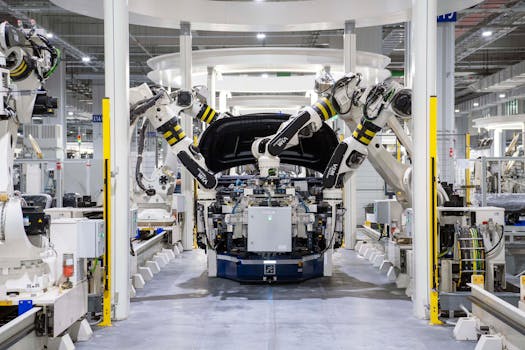 Photo: Hyundai Motor Group / Pexels
The profound capabilities of 5G extend far beyond individual consumer experiences, promising to revolutionize entire industries and create new paradigms for business operations. The comprehensive answer to "what is 5G technology benefits?" must include its transformative impact on sectors like manufacturing, healthcare, transportation, and entertainment. Each industry stands to gain unique advantages, leveraging 5G's core strengths to drive efficiency, foster innovation, and enhance service delivery.
In manufacturing, 5G is the cornerstone of Industry 4.0, enabling smart factories where machinery, robots, and sensors are interconnected in real-time. Ultra-reliable low-latency communications (URLLC) allow for precise control of robotic arms, automated guided vehicles (AGVs), and production lines, leading to increased automation and reduced human error. Predictive maintenance, powered by massive machine-type communications (mMTC) from countless sensors, can detect potential equipment failures before they occur, minimizing downtime and optimizing operational costs. Furthermore, 5G enables the use of augmented reality (AR) for remote assistance and training, allowing experts to guide on-site technicians from anywhere in the world, improving efficiency and safety. The ability to deploy private 5G networks within factories provides secure, high-performance connectivity tailored to specific industrial needs, ensuring data privacy and operational continuity.
Healthcare is another sector poised for radical transformation. 5G facilitates advanced telemedicine, allowing doctors to consult with patients remotely, even performing complex diagnostic procedures using high-resolution video and real-time data transmission. Remote surgery, once a distant dream, becomes a reality with 5G's ultra-low latency, where surgeons can control robotic instruments with millisecond precision from a different location. Wearable health monitors and IoT medical devices can continuously transmit vital signs and other health data to healthcare providers, enabling proactive care and faster intervention in emergencies. Furthermore, 5G can enhance hospital efficiency through asset tracking, smart patient monitoring, and improved communication among medical staff, ultimately leading to better patient outcomes and more streamlined operations.
Transportation, particularly the development of autonomous vehicles, relies heavily on the capabilities of 5G. Self-driving cars require constant, instantaneous communication with each other, with traffic infrastructure (V2I), and with pedestrians (V2P) to navigate safely and efficiently. 5G's ultra-low latency is critical for these vehicle-to-everything (V2X) communications, allowing vehicles to react in real-time to changing road conditions, sudden obstacles, and traffic signals. Beyond autonomous driving, 5G supports intelligent traffic management systems that can dynamically adjust traffic flow, reduce congestion, and improve public safety. Smart logistics and freight management also benefit from 5G, enabling real-time tracking of goods, optimized delivery routes, and more efficient supply chains.
The entertainment and media industries are also experiencing a paradigm shift. 5G enables immersive augmented reality (AR) and virtual reality (VR) experiences, allowing for new forms of gaming, interactive content, and live event broadcasting. High-bandwidth 5G connections facilitate 8K video streaming and cloud gaming, where processing power is offloaded to remote servers, making high-end gaming accessible on less powerful devices. Live event production can be revolutionized, with 5G enabling wireless cameras and real-time content transmission from multiple angles, offering richer, more dynamic broadcasts. The ability to deliver massive amounts of data quickly and reliably opens up new creative possibilities for content creators and provides consumers with unparalleled entertainment experiences.
Overcoming Challenges and Embracing the Future of 5G Connectivity
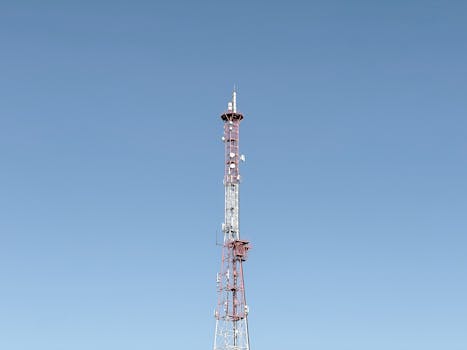 Photo: alexander ermakov / Pexels
While the answer to "what is 5G technology benefits?" paints a picture of immense potential, it's equally important to acknowledge the challenges associated with its widespread deployment and the future innovations it promises. The transition to a full 5G-enabled world is not without its hurdles, from infrastructure development to security concerns and regulatory complexities. However, concerted efforts are being made globally to overcome these obstacles, paving the way for a truly transformative era of connectivity.
One of the primary challenges has been the extensive infrastructure build-out required for 5G. Unlike 4G, which largely relied on upgrading existing cell towers, 5G, especially its high-frequency millimeter-wave (mmWave) component, requires a much denser network of small cells. These small cells have a shorter range and are more susceptible to obstruction by buildings, trees, and even weather conditions, necessitating their deployment closer to users. This requires significant investment in new hardware, fiber optic backhaul, and installation, which can be costly and time-consuming. Regulatory frameworks and local zoning laws also play a role in slowing down deployment in some areas, as permits are needed for the installation of these new network elements. However, carriers and governments are actively collaborating to streamline these processes and accelerate deployment, recognizing the economic and societal benefits of pervasive 5G coverage.
Security and privacy are also paramount concerns. With 5G enabling a massive increase in connected devices and data traffic, the attack surface for cyber threats expands significantly. Protecting critical infrastructure, sensitive personal data, and industrial control systems connected via 5G networks requires robust security protocols, advanced encryption, and continuous monitoring. The distributed nature of 5G networks, with edge computing pushing processing closer to the data source, introduces new security considerations that need to be addressed. Governments and industry bodies are working on developing comprehensive security standards and best practices for 5G, focusing on network slicing security, supply chain integrity, and user data protection.
Exploring cybersecurity in 5G networks reveals the intricate measures being taken.
Despite these challenges, the future of 5G is incredibly promising, with ongoing research and development pushing its capabilities even further. We are already seeing discussions and early developments for 6G, which aims to build upon 5G's foundation by integrating AI, ubiquitous sensing, and even higher frequencies to enable truly immersive holographic communications and sentient environments. The evolution of network slicing will become even more sophisticated, allowing for highly customized network functionalities on demand. Edge computing will become more prevalent, bringing processing power even closer to the end-user or device, further reducing latency and enhancing data privacy. The integration of satellite communications with terrestrial 5G networks will also expand coverage to remote and underserved areas, bridging the digital divide.
The long-term benefits of 5G extend to fostering innovation across all sectors. The reliable, high-speed, and low-latency connectivity provided by 5G acts as an enabling technology, allowing developers and entrepreneurs to create applications and services that were previously unimaginable. From hyper-personalized healthcare solutions to fully autonomous logistics and smart energy grids, 5G is not just an upgrade; it's a platform for a new era of technological advancement that will reshape our world for decades to come. Embracing and strategically deploying 5G is crucial for nations and businesses to remain competitive and unlock the full potential of the digital future.
Maximizing Your 5G Experience: Tips and Considerations
 Photo: MART PRODUCTION / Pexels
To fully leverage what 5G technology benefits offer, understanding how to maximize your experience and being aware of common misconceptions is crucial. While 5G promises revolutionary capabilities, the real-world experience can vary based on several factors. Knowing these can help you make informed decisions and get the most out of this advanced technology.
**Tips for Maximizing Your 5G Experience:**
* **Check for Coverage:** Before investing in a 5G device or plan, verify that 5G coverage is available in your frequently visited areas. Coverage varies significantly, especially for the fastest mmWave frequencies. Use carrier coverage maps to confirm availability.
* **Understand Different 5G Bands:** Not all 5G is created equal. Low-band 5G offers broad coverage but speeds similar to advanced 4G. Mid-band (C-band) provides a good balance of speed and coverage. Millimeter-wave (mmWave) delivers the fastest speeds but has very limited range and struggles with obstructions. Your device and location will dictate which band you access.
* **Optimize Device Settings:** Ensure your 5G-enabled device's software is up-to-date and that 5G is enabled in your network settings. Some devices may have power-saving modes that prioritize 4G or Wi-Fi, potentially limiting your 5G access.
* **Consider a 5G-Enabled Device:** To experience 5G, you need a smartphone, tablet, or other device with a 5G modem. Older devices are not compatible with 5G networks.
* **Evaluate Your Plan:** Many carriers offer different 5G plans. Some might cap 5G speeds or data usage. Review your plan details to ensure it aligns with your usage expectations and allows you to fully utilize 5G's capabilities.
* **Utilize Wi-Fi When Available:** While 5G is fast, Wi-Fi can still be more efficient for data-intensive tasks at home or work, especially if you have a robust fiber internet connection. This can also help conserve your mobile data allowance.
**Common Misconceptions About 5G:**
* **Misconception 1: 5G is available everywhere and always ultra-fast.** Reality: 5G rollout is ongoing and coverage is not ubiquitous. Speeds vary significantly based on the spectrum band used and network congestion. True gigabit speeds are often limited to mmWave hotspots.
* **Misconception 2: 5G will instantly replace Wi-Fi.** Reality: 5G complements Wi-Fi rather than replacing it entirely. Wi-Fi remains crucial for indoor connectivity, especially in homes and offices where fixed infrastructure is preferred. 5G offers seamless outdoor and mobile connectivity.
* **Misconception 3: 5G is a health risk.** Reality: Extensive research by regulatory bodies like the FCC and WHO indicates that 5G, like previous generations of wireless technology, operates within safe non-ionizing radiation limits. There is no scientific evidence to support claims of health risks.
* **Misconception 4: My current phone will get 5G with a software update.** Reality: No, a 5G-enabled modem and antenna are required, which are hardware components. Only devices designed for 5G can connect to 5G networks.
By understanding these tips and dispelling common myths, users can better navigate the evolving landscape of 5G technology and harness its full potential for both personal and professional applications, ensuring they truly benefit from this next-generation connectivity.