Top Portable Projectors for Outdoor Movies: Your Ultimate Guide
June 26, 2026 16 min read 3,271 words
Turn any backyard into a blockbuster theater with our expert picks for brightness, portability, and performance.
Find Your Perfect Projector
Unveiling the Best Outdoor Movie Projectors for Every Budget
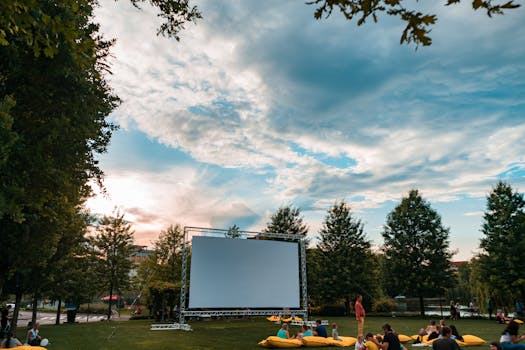 Photo: Vlad Chețan / Pexels
There's something truly magical about transforming your backyard into an open-air cinema. The rustle of leaves, the starry sky overhead, and your favorite film projected larger than life – it’s an experience that gathers friends and family for unforgettable evenings. But to achieve this cinematic dream, you need the right gear, and at the heart of it all is a top-tier portable projector. Not just any projector will do; outdoor viewing presents unique challenges that demand specific features. Ambient light, power accessibility, and durability are all factors that separate a good indoor projector from an excellent outdoor one.
When we talk about the best portable projectors for outdoor movies, we're looking for a delicate balance of several critical elements. First and foremost is brightness, measured in lumens. Outdoors, you're battling the lingering twilight and ambient light from streetlights or neighbors. A projector with at least 500 ANSI lumens is often considered the minimum for a watchable image after dark, but for earlier viewing or larger screens, 1000 ANSI lumens or more will provide a far more vibrant and impactful picture. Don't be fooled by inflated lumen counts; always look for 'ANSI lumens' for a reliable comparison.
Next, battery life is paramount. A truly portable projector means freedom from power outlets. You don't want your movie night cut short by a dead battery, nor do you want to string extension cords across your yard. Look for models offering at least 2-3 hours of continuous playback, ideally with the option to charge via a power bank. This ensures you can comfortably get through most feature films. Resolution is another key component. While 720p might be acceptable for casual viewing, a native 1080p (Full HD) resolution will deliver sharper details and a more immersive experience on a large outdoor screen. Some premium models even offer 4K support, providing unparalleled clarity, though this often comes with a higher price tag. Consider your viewing distance and screen size when evaluating resolution needs.
Connectivity is also crucial for a seamless setup. Modern portable projectors should offer a variety of input options, including HDMI for laptops, gaming consoles, or streaming sticks like Roku or Amazon Fire TV. USB ports are handy for playing media directly from a flash drive, and built-in Wi-Fi and Bluetooth capabilities allow for wireless screen mirroring from smartphones or tablets, as well as connecting to external Bluetooth speakers for superior audio. Integrated smart TV platforms, like Android TV, can further enhance convenience by providing direct access to streaming apps without needing an external device. Finally, the projector's size and weight determine its true portability. While some high-lumen projectors might be slightly larger, the best outdoor models strike a balance between performance and a compact, easy-to-transport design. Some even feature built-in handles or carrying cases. For more general tech advice, check out our
guide to smart home gadgets.
Durability is a less obvious but equally important factor. Outdoor environments can be unpredictable. While you won't be using your projector in the rain, accidental splashes or dust are possibilities. Some projectors offer basic dust resistance or a robust build quality that can withstand minor bumps. Always check user reviews for real-world experiences regarding ruggedness. The audio component is also vital; while most portable projectors have built-in speakers, they are often not powerful enough for a true cinematic experience outdoors. Plan to pair your projector with external Bluetooth speakers or a soundbar for rich, clear sound that can fill your outdoor space. Many projectors will have a 3.5mm audio jack for wired connections as well. By carefully considering these factors, you can navigate the vast market and pinpoint the perfect portable projector to elevate your outdoor movie nights from a simple viewing to a spectacular event.
Key Features That Define a Premium Outdoor Projector
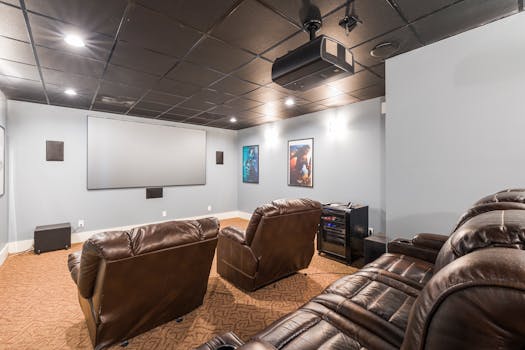 Photo: Curtis Adams / Pexels
Moving beyond the basics, certain features truly differentiate a premium outdoor projector from its average counterparts, elevating your backyard cinema from good to exceptional. One such feature is advanced keystone correction and autofocus. Setting up a projector perfectly level and at the ideal distance can be challenging outdoors, especially on uneven terrain. Automatic vertical and horizontal keystone correction, often coupled with auto-focus, means the projector intelligently adjusts the image geometry and sharpness for a perfectly rectangular and crisp picture, even if it's placed at an angle. This saves valuable setup time and frustration, ensuring you get a great image every time without manual fiddling. The convenience of these 'smart' adjustments cannot be overstated when you're trying to get a movie started as the sun sets.
Another premium aspect is the lamp or light source technology. While traditional lamp-based projectors exist, LED and laser light sources are superior for portable outdoor use. LED projectors offer a significantly longer lifespan (20,000-30,000 hours), quick on/off times, and consistent brightness over their lifetime, making them virtually maintenance-free. Laser projectors take this a step further, offering even higher brightness, superior color accuracy, and an even longer lifespan (often 25,000 hours or more), though they typically come at a higher price point. Both LED and laser light sources also tend to be more energy-efficient, which contributes positively to battery life in portable models.
Integrated streaming capabilities are a game-changer. Many high-end portable projectors now come with built-in Android TV or similar smart platforms, meaning you can directly access Netflix, Hulu, Disney+, and other streaming services without needing to connect an external streaming stick or a laptop. This significantly streamlines your setup and reduces the number of devices and cables you need to manage. Simply connect the projector to your outdoor Wi-Fi, log into your streaming accounts, and you're ready to go. Some even include voice remote control for added convenience, allowing you to search for content or adjust settings with simple commands.
Furthermore, consider the projector's throw ratio. This specification tells you how far the projector needs to be from the screen to achieve a certain image size. A 'short-throw' projector can produce a large image from a relatively short distance, which is incredibly useful in smaller backyards or when space is limited. Conversely, 'long-throw' projectors require more distance. Understanding your available space and the projector's throw ratio will help you achieve the desired screen size without needing to rearrange your entire yard. For instance, if you have a compact patio, a short-throw portable projector will be a much better fit than a standard throw model. The flexibility to project a large image in a confined space is a hallmark of a well-designed outdoor projector. Finally, expandability through USB-C ports is becoming increasingly common. A USB-C port can not only power the device but also transmit video and audio signals, offering a single-cable solution for connecting modern laptops and smartphones, further simplifying your outdoor setup and reducing clutter. These premium features, while adding to the cost, undeniably enhance the ease of use, picture quality, and overall enjoyment of your outdoor movie experience.
Comparing Top Portable Projectors: What to Look For
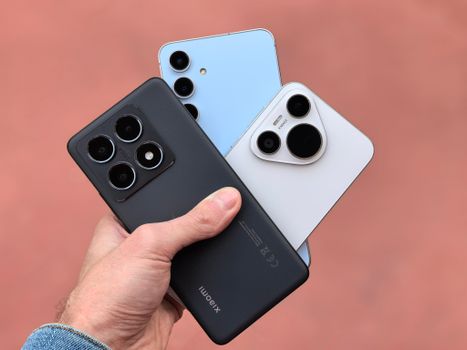 Photo: Andrey Matveev / Pexels
When delving into the specifics of comparing the top portable projectors for outdoor movies, it’s essential to look beyond marketing hype and focus on verifiable specifications and real-world performance. The market is saturated with options, from budget-friendly choices to high-end cinematic powerhouses, each promising the ultimate experience. To make an informed decision, you need a systematic approach that prioritizes your specific needs and environment. Let's break down the critical comparison points to ensure you pick a winner for your outdoor entertainment.
Firstly, revisit brightness with a critical eye. As mentioned, ANSI lumens are the standard. When comparing models, a projector boasting 2000 'LED lumens' might only equate to 500-700 ANSI lumens, which can be misleading. Always seek out the ANSI lumen rating. For general outdoor use after dusk, 500-800 ANSI lumens will provide a decent image on a screen up to 100 inches. If you plan to start your movies earlier, or want a truly vibrant image on a 120-inch or larger screen, aim for 1000+ ANSI lumens. This higher brightness is what allows the image to 'cut through' any residual ambient light and deliver punchy colors and good contrast, even if it's not pitch black. The difference between 500 and 1000 ANSI lumens is significant and directly impacts viewing quality.
Next, evaluate native resolution versus supported resolution. Many projectors claim '4K support' or '1080p compatible,' but their native resolution might be lower, such as 720p. While they can accept a higher resolution input, the image will be downscaled to the native resolution, resulting in a less sharp picture. For outdoor screens, where images are often projected large, native 1080p is highly recommended for crisp details. If your budget allows, a projector with native 4K resolution will offer an unparalleled level of detail, especially on very large screens, making it a worthwhile investment for the most discerning viewers. Check out this
article on display technologies for more insight.
Battery performance is another area where comparison is key. Manufacturers often list a maximum battery life, but this is usually at the lowest brightness setting or with minimal features enabled. Look for reviews that specify real-world battery life under typical usage (e.g., standard brightness, Wi-Fi streaming). Ideally, you want a projector that can last for at least one full movie (90-120 minutes) without needing a recharge. Some premium models offer 3+ hours, which is fantastic for longer films or back-to-back episodes. Also, check if the projector supports charging via USB-C PD (Power Delivery), as this allows you to extend playback time using a compatible power bank, greatly enhancing its versatility.
Finally, don't overlook the audio solution. While some portable projectors come with surprisingly good built-in speakers (e.g., those tuned by JBL or Harman Kardon), they are rarely sufficient for a truly immersive outdoor experience. Prioritize projectors with strong Bluetooth connectivity for easy pairing with external speakers or a dedicated 3.5mm audio output for wired connections to a more powerful sound system. The quality of the audio can make or break an outdoor movie night, so ensure your chosen projector provides flexible and robust audio output options. By meticulously comparing these aspects – true ANSI lumens, native resolution, real-world battery life, and audio connectivity – you can confidently select a portable projector that not only meets but exceeds your expectations for unforgettable outdoor cinematic adventures.
Pro Tips for Setting Up Your Outdoor Cinema & Avoiding Common Mistakes
 Photo: Genie Music / Pexels
Transforming your backyard into an outdoor cinema is exciting, but a smooth setup requires a few pro tips and an awareness of common pitfalls. Avoiding these mistakes will ensure your movie night is a blockbuster, not a bust.
**Pro Tips for a Seamless Outdoor Movie Night:**
* **Optimal Screen Placement:** Choose a location that's as dark as possible, away from streetlights, porch lights, or even illuminated windows. Position your screen against a dark backdrop like a fence or hedge to minimize light reflection and maximize contrast. Ensure the ground is level for stable projector and screen setup.
* **Sound System First:** While projectors have built-in speakers, they're often inadequate for open-air environments. Invest in good external Bluetooth speakers or a soundbar. Position them strategically (e.g., flanking the screen) for optimal sound dispersion. Test your audio levels before guests arrive.
* **Pre-Download Content:** If you're relying on streaming, ensure your Wi-Fi signal reaches your outdoor viewing area strongly. Even better, download your movie or show beforehand. This eliminates buffering issues and ensures playback even if your internet connection fluctuates.
* **Power Management:** If your projector or media source isn't battery-powered, use outdoor-rated extension cords and power strips with ground fault circuit interrupters (GFCIs) for safety. Secure cords to prevent tripping hazards. Always check the weather forecast – never use electrical equipment in the rain.
* **Comfort is Key:** Provide plenty of seating options like blankets, lawn chairs, and cushions. Don't forget bug spray, especially in the evenings, and maybe even some cozy blankets if the temperature drops.
**Common Mistakes to Avoid:**
* **Underestimating Ambient Light:** This is the biggest killer of outdoor movie quality. Trying to watch a movie too early, when the sun hasn't fully set, will result in a washed-out, barely visible image, even with a bright projector. Wait until it's genuinely dark for the best experience.
* **Ignoring Audio:** Relying solely on the projector's built-in speaker is a common mistake that leads to disappointment. The sound will be tinny and get lost in the open air. Always plan for external audio.
* **Poor Cable Management:** Tripping hazards are real in the dark. Loose cables are not only dangerous but also look messy. Use cable ties or tape to secure all wires to the ground or along the perimeter of your viewing area.
* **Forgetting Bug Protection:** Mosquitoes and other insects love outdoor gatherings. Forgetting bug repellent can quickly turn a fun night into an itchy disaster. Consider citronella candles or diffusers.
* **Incorrect Projector Placement:** Placing the projector too far or too close, or at a severe angle, without proper keystone correction will result in a distorted or unfocused image. Test your setup in advance to find the sweet spot for your projector and screen size.
* **Not Testing Equipment:** Don't wait until movie night to power everything up for the first time. Do a full test run – projector, screen, sound, and media source – a day or two before your event to iron out any technical glitches.
By following these tips and avoiding these common pitfalls, you'll be well on your way to hosting a spectacular, hassle-free outdoor movie night that everyone will remember.
