How Does 5G Technology Work? Your Ultimate Guide
how does 5g technology work

How Does 5G Technology Work? Your Ultimate Guide

Explore the revolutionary mechanics behind 5G, unlocking unprecedented speeds and transforming digital experiences.

Discover 5G's Secrets

Key Takeaways

  • ✓ 5G utilizes a combination of spectrum bands: low-band, mid-band, and high-band (mmWave).
  • ✓ Massive MIMO antennas are crucial for 5G, enabling multiple data streams simultaneously.
  • ✓ Network slicing allows for dedicated virtual networks tailored to specific applications.
  • ✓ Beamforming technology directs signals precisely to devices, improving efficiency and range.

How It Works

1
Signal Generation and Transmission

5G base stations, often smaller and more numerous than 4G, generate radio waves across various frequencies. These signals carry data from the network core to user devices.

2
Massive MIMO and Beamforming

Base stations employ Massive MIMO (Multiple-Input, Multiple-Output) antennas with dozens of elements. Beamforming then intelligently directs these signals as narrow, focused beams towards individual devices, minimizing interference and maximizing efficiency.

3
Spectrum Utilization and Device Reception

5G leverages a wider range of spectrum, including millimeter-wave (mmWave) for ultra-fast, short-range connections, and lower bands for broader coverage. User devices, equipped with 5G modems, receive and decode these signals, converting them back into usable data.

4
Network Slicing and Edge Computing

The 5G core network supports network slicing, creating virtual, isolated networks optimized for specific services (e.g., IoT, autonomous vehicles). Edge computing processes data closer to the source, reducing latency and improving responsiveness for critical applications.

The Foundational Architecture of 5G Networks
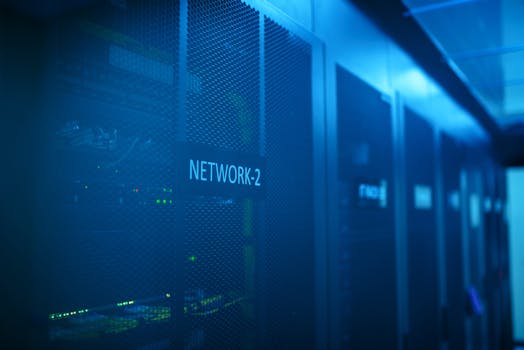
A modern server room featuring network equipment with blue illumination. Ideal for technology themes. Photo: panumas nikhomkhai / Pexels
Understanding how 5G technology works begins with its fundamental architecture, which represents a significant evolution from its predecessors. Unlike 4G, which largely built upon existing infrastructure, 5G introduces a new paradigm designed for unprecedented speed, capacity, and low latency. At its core, the 5G network is divided into two primary components: the Radio Access Network (RAN) and the 5G Core Network. The RAN is the part of the network that connects user equipment (like your smartphone) to the core network. In 5G, the RAN is far more distributed and flexible, featuring a denser deployment of base stations, often referred to as gNodeBs. These gNodeBs are not just larger cell towers; they include smaller, more numerous micro and pico cells, especially in urban environments, to provide ubiquitous high-speed coverage. This increased density is crucial for handling the massive data volumes and supporting the high-frequency millimeter-wave (mmWave) spectrum, which has excellent capacity but limited range. The 5G RAN also introduces concepts like Centralized Unit (CU) and Distributed Unit (DU) separation, allowing for more flexible deployment and resource allocation. The CU handles non-real-time processing and is often virtualized, while the DU handles real-time processing closer to the antenna. This disaggregation allows network operators to deploy resources more efficiently and adapt to varying traffic demands. The 5G Core Network, on the other hand, is the brain of the operation. It's a cloud-native, service-based architecture (SBA) that is a radical departure from the monolithic core networks of previous generations. This SBA allows network functions to be deployed as microservices, making the network highly agile, scalable, and programmable. Key functions within the 5G Core include authentication, mobility management, session management, and policy control. One of the most transformative features of the 5G Core is its support for network slicing. This allows operators to create multiple virtual networks on top of a single physical infrastructure, each tailored to specific service requirements. For instance, an autonomous vehicle application might require a slice with ultra-low latency and high reliability, while a smart city sensor network might need a slice optimized for massive connectivity and low power consumption. This flexibility enables 5G to cater to a diverse range of use cases, from enhanced mobile broadband (eMBB) to massive machine-type communications (mMTC) and ultra-reliable low-latency communications (URLLC). The cloud-native design also facilitates the integration of edge computing, where processing power is moved closer to the data source, further reducing latency and improving application performance. This foundational architecture is what truly sets 5G apart, enabling its revolutionary capabilities and paving the way for a connected future. Learn more about network infrastructure and its evolution.

Spectrum, Antennas, and Signal Processing Innovations

Close-up of vibrant digital art in red, green, and blue displayed on a monitor screen. Photo: Egor Komarov / Pexels
The ability of 5G to deliver unprecedented speeds and capacity hinges on its innovative use of spectrum and advanced antenna technologies. Unlike 4G, which primarily operated on lower and mid-band frequencies, 5G leverages a much broader range of the radio spectrum, categorizing it into three main types: low-band, mid-band, and high-band (millimeter-wave or mmWave). Low-band 5G, often operating in frequencies similar to 4G (below 1 GHz), provides extensive coverage and penetrates buildings well, making it ideal for rural areas and widespread basic 5G access. However, its capacity is limited. Mid-band 5G, typically in the 2.5 GHz to 6 GHz range, offers a balance of coverage and capacity, delivering significantly faster speeds than low-band and serving as the backbone for many urban and suburban 5G deployments. This is often referred to as the 'sweet spot' for 5G, providing a noticeable performance upgrade for most users. The most revolutionary aspect of 5G spectrum utilization is the high-band, or millimeter-wave (mmWave), which operates at frequencies above 24 GHz, often up to 40 GHz and beyond. These extremely high frequencies offer massive bandwidth, enabling multi-gigabit speeds and ultra-low latency. The trade-off, however, is that mmWave signals have a very short range and are easily obstructed by buildings, trees, and even heavy rain. To overcome these limitations, 5G employs sophisticated antenna technologies. Massive MIMO (Multiple-Input, Multiple-Output) is a cornerstone of 5G. Instead of a few antennas, Massive MIMO arrays can have dozens or even hundreds of antenna elements packed into a single base station. This allows the base station to send and receive multiple data streams simultaneously to and from multiple users, dramatically increasing capacity and spectral efficiency. Coupled with Massive MIMO is beamforming, a technique where the base station intelligently directs radio signals as narrow, focused beams towards individual user devices. Instead of broadcasting signals indiscriminately in all directions, beamforming precisely targets the user, minimizing interference and maximizing signal strength and efficiency. This is particularly critical for mmWave, as it helps to extend its effective range and reliability. Another key innovation is full-duplex communication, which allows devices to transmit and receive data on the same frequency band simultaneously, potentially doubling spectral efficiency. While still largely in research and development for widespread commercial deployment, it represents a significant future potential for 5G. These advancements in spectrum utilization, Massive MIMO, and beamforming are not just incremental improvements; they are fundamental shifts that enable 5G to deliver on its promise of transforming connectivity, supporting everything from high-definition video streaming to complex industrial IoT applications. The interplay between these technologies is what makes the 'how does 5G technology work' question so fascinating and complex.

Network Slicing, Edge Computing, and the Future of Connectivity
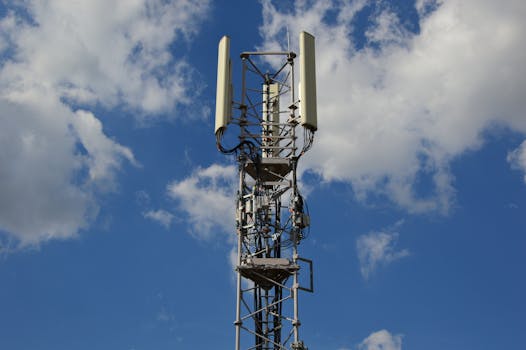
A tall cellular communication tower against a vivid blue sky, symbolizing modern technology. Photo: Ulrick Trappschuh / Pexels
Beyond raw speed, the true power of how 5G technology works lies in its intelligent capabilities, particularly network slicing and edge computing. These features are not just enhancements; they are fundamental shifts that enable 5G to support a vast array of diverse applications with highly specific requirements. Network slicing is arguably one of the most transformative innovations in 5G. Imagine a single physical 5G network infrastructure that can be virtually partitioned into multiple independent, isolated, and customized logical networks, each optimized for a specific service or application. For example, a slice could be dedicated to autonomous vehicles, prioritizing ultra-low latency and extreme reliability for safety-critical communications. Another slice might be designed for massive IoT deployments, focusing on connecting millions of low-power sensors with less emphasis on speed but high efficiency. A third slice could be optimized for enhanced mobile broadband, providing peak speeds for streaming high-definition video or virtual reality experiences. This ability to tailor network resources on demand allows businesses and industries to deploy bespoke connectivity solutions, unlocking new revenue streams and enabling innovative services that were previously impossible with a one-size-fits-all network. The dynamic nature of network slicing also means resources can be allocated and adjusted in real-time based on demand, leading to greater efficiency and flexibility. Complementing network slicing is edge computing, another critical component of the 5G ecosystem. Traditionally, data from user devices would travel all the way to a centralized cloud data center for processing. While effective for many applications, this round trip introduces latency, which can be detrimental for time-sensitive applications. Edge computing brings computational power and data storage closer to the source of data generation – at the 'edge' of the network, often within or near the 5G base station. By processing data locally, edge computing drastically reduces latency, enabling near real-time responses. This is vital for applications like augmented reality (AR), virtual reality (VR), industrial automation, smart city management, and remote surgery, where milliseconds matter. For instance, in an autonomous vehicle scenario, processing sensor data at the edge means faster decision-making, directly impacting safety. In a smart factory, edge computing can monitor machinery in real-time, predicting failures and optimizing production without sending all data to a distant cloud. The synergy between network slicing and edge computing is profound: a specific network slice can be combined with localized edge computing resources to create a truly optimized and high-performance environment for a particular application. This combination is what will drive the next wave of innovation, moving beyond just faster internet to truly intelligent and responsive connectivity that powers the digital transformation across industries. Explore the impact of edge computing on IoT and other sectors.

Challenges and Future Outlook for 5G Deployment
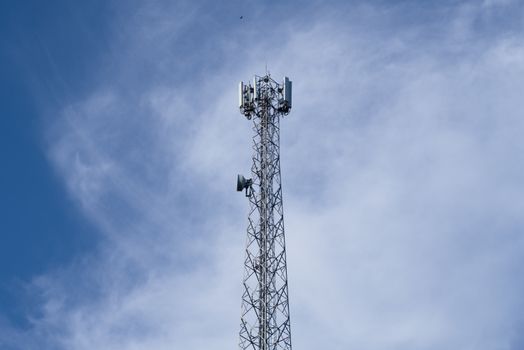
A tall metal communications tower stands against a backdrop of a clear blue sky with scattered clouds. Photo: Qeis Ismail / Pexels
While the promise of 5G is immense, its widespread deployment and full realization of its potential come with significant challenges. One of the primary hurdles is the sheer cost and complexity of infrastructure build-out. Deploying a denser network of gNodeBs, especially for mmWave, requires a massive investment in new small cells, fiber optic backhaul, and power infrastructure. Permitting and site acquisition for these numerous small cells can also be a time-consuming and bureaucratic process. Furthermore, the energy consumption of 5G networks, particularly with Massive MIMO and denser deployments, is a growing concern, necessitating innovations in energy efficiency and sustainable network operations. Another challenge lies in the interoperability and standardization across different vendors and regions, ensuring a seamless global 5G experience. Security is also paramount; as 5G connects more devices and critical infrastructure, protecting against cyber threats becomes even more crucial. The complexity of managing network slices and edge computing resources also demands advanced AI and machine learning tools for orchestration and optimization. Despite these challenges, the future outlook for 5G is incredibly bright. We are still in the early stages of unlocking its full potential. Future developments will likely focus on several key areas: * **Further densification and optimization:** Continued deployment of small cells and advanced antenna technologies to improve coverage and capacity, especially in dense urban environments and for specific enterprise use cases. * **Advanced AI/ML integration:** Deeper integration of artificial intelligence and machine learning into network management, enabling more autonomous and self-optimizing networks, from resource allocation to predictive maintenance. * **Evolution of network slicing:** More sophisticated and dynamic network slicing capabilities, allowing for even finer-grained customization and real-time adaptation to application demands. * **Enhanced security protocols:** Continuous development of robust security measures to protect the expanded attack surface introduced by 5G and IoT. * **Integration with emerging technologies:** Seamless integration with future technologies like 6G research, advanced satellite communication, and quantum computing, creating a truly ubiquitous and intelligent connectivity fabric. * **Sustainability focus:** Innovations in energy-efficient hardware and software to reduce the environmental footprint of 5G networks. The evolution of 5G will not only enhance existing mobile broadband experiences but will also be the foundational layer for entirely new industries and services, from fully autonomous transportation systems and advanced telemedicine to immersive metaverse experiences and highly automated smart factories. The journey of understanding how 5G technology works is ongoing, with continuous innovation pushing the boundaries of what's possible in the connected world.

Comparison

Feature5G (mmWave)5G (Mid-band)4G LTEWi-Fi 6
Peak Speed (Theoretical)10+ Gbps1-2 Gbps100-300 Mbps9.6 Gbps
Latency (Typical)1-5 ms10-20 ms30-50 ms10-20 ms
Coverage RangeVery ShortMediumLongShort (Local)
Penetration (Buildings)PoorGoodVery GoodGood
CapacityExtremely HighHighMediumHigh (Local)
Network Slicing

What Readers Say

"Understanding how 5G technology works has completely changed my perception. My home internet is now faster than ever, and I can download huge files in seconds. It's truly a game-changer for remote work and streaming."

Sarah J. · Austin, TX

"The article explained the complexities of 5G in an easy-to-understand way. I've noticed a significant reduction in lag while gaming on my mobile, which I now attribute to the lower latency capabilities of 5G."

Mark T. · Seattle, WA

"As a researcher in IoT, knowing how 5G technology works is crucial. The insights on network slicing and edge computing were particularly valuable, showing how it will enable truly transformative applications in smart cities and healthcare."

Dr. Elena R. · Boston, MA

"While the speeds are incredible in certain areas, I've found mmWave coverage can be a bit spotty indoors. However, when I have a clear signal, the performance is unparalleled. The mid-band 5G is consistently excellent."

David L. · Miami, FL

"I was skeptical about 5G, but after reading this, I understand the underlying tech. My experience with video calls and augmented reality apps has been much smoother, clearly benefiting from 5G's enhanced capabilities."

Jessica M. · Denver, CO

Frequently Asked Questions

What are the main differences between 4G and 5G?

The main differences are significantly higher speeds (up to 100x faster), much lower latency (down to 1ms), greater capacity for connecting more devices, and new capabilities like network slicing and edge computing. 5G also utilizes a broader range of spectrum, including millimeter-wave frequencies.

Is 5G safe for my health?

Numerous scientific bodies and health organizations, including the World Health Organization (WHO) and the FCC, have concluded that there is no established scientific evidence of adverse health effects from 5G exposure at levels below international guidelines. 5G operates within the non-ionizing radiation spectrum, similar to previous mobile technologies.

How can I get 5G on my phone?

To get 5G, you need a 5G-compatible smartphone and a 5G service plan from your mobile carrier. You also need to be in an area where your carrier offers 5G coverage. Once these conditions are met, your phone should automatically connect to 5G when available.

Is 5G more expensive than 4G?

Initially, 5G plans might have been slightly more expensive or required premium tiers. However, as 5G deployment expands, many carriers are including 5G access in standard plans without significant price increases. The value proposition often comes from the enhanced performance and new capabilities.

How does 5G compare to Wi-Fi 6?

Both 5G and Wi-Fi 6 offer significant speed and capacity improvements. 5G is a cellular technology designed for wide-area mobile connectivity, while Wi-Fi 6 is for local area networks. They are complementary; 5G provides connectivity on the go, and Wi-Fi 6 enhances home and office networks, often working together for seamless connectivity.

Who benefits most from 5G technology?

Everyone benefits from faster, more reliable mobile broadband. However, industries like manufacturing (for smart factories), healthcare (for telemedicine and remote surgery), transportation (for autonomous vehicles), and entertainment (for AR/VR and cloud gaming) stand to gain immensely from 5G's low latency and high capacity.

What are the biggest limitations of 5G?

The biggest limitations include the short range and easy obstruction of high-band (mmWave) 5G, requiring dense small cell deployments. Initial deployment costs, energy consumption, and the complexity of managing new network architectures are also significant challenges that providers are actively addressing.

What is the future potential of 5G beyond smartphones?

Beyond smartphones, 5G's future potential lies in enabling the Internet of Things (IoT) at scale, powering autonomous vehicles, transforming smart cities, facilitating advanced telemedicine, revolutionizing industrial automation, and creating immersive augmented and virtual reality experiences. It's the backbone for the next wave of digital innovation.

Now that you understand how 5G technology works, you're equipped to appreciate its transformative power. Embrace the future of connectivity and explore how 5G will reshape our digital world, from personal devices to global industries.

Topics: how does 5g technology work5G architecture5G spectrummmWave technologynetwork slicing
Leo List
Brampton weed
Adultwork EstrelaBet Vai de Bet R7 Bet Betão Galera Bet Rainbet Bet9ja Shop SportyBet BetKing Sisal Loto Foot Hollywoodbets YesPlay Odibets RushBet Jugabet BetWarrior BetCity MSport betPawa Fortebet