✓ 5G utilizes new radio frequencies, including millimeter wave (mmWave), mid-band, and low-band, for diverse capabilities.
✓ Massive MIMO (Multiple Input Multiple Output) is a core 5G technology, using many antennas to send and receive more data simultaneously.
✓ Beamforming directs wireless signals precisely to devices, improving efficiency and reducing interference.
✓ Network slicing allows operators to create virtual, customized networks for specific applications, enhancing flexibility and performance.
How It Works
1
Accessing New Frequencies
5G leverages a broader spectrum of radio frequencies, including high-frequency millimeter wave bands, to achieve much higher data rates. This expanded spectrum capacity is crucial for handling the immense data traffic of modern devices.
2
Employing Advanced Antenna Technology
Massive MIMO base stations use hundreds of tiny antennas to simultaneously transmit and receive data from many users. This dramatically increases network capacity and efficiency compared to previous generations.
3
Directing Signals with Beamforming
Instead of broadcasting signals in all directions, 5G uses beamforming to pinpoint and direct radio waves specifically to connected devices. This focused transmission reduces interference and improves signal strength and reliability.
4
Virtualizing the Network Infrastructure
Through network function virtualization (NFV) and software-defined networking (SDN), 5G networks are highly flexible and programmable. This allows for 'network slicing,' where virtual, isolated networks can be created for different services or customers.
The Foundational Pillars of 5G Architecture
Photo: Francesco Ungaro / Pexels
Understanding how does 5G technology work begins with its fundamental architectural shifts from previous generations. Unlike 4G LTE, which largely relied on a centralized, hardware-heavy infrastructure, 5G embraces a more distributed, software-defined approach. This paradigm shift is essential for delivering on 5G's promises of ultra-low latency, massive connectivity, and unprecedented speeds. At its core, 5G utilizes a New Radio (NR) interface, which is designed to be highly flexible and efficient across a wide range of frequencies, from sub-6 GHz to millimeter-wave (mmWave) bands. This flexibility allows 5G to cater to diverse use cases, from wide-area coverage to high-capacity urban deployments. The network is fundamentally disaggregated, separating the control plane (for managing network traffic) from the user plane (for carrying data). This separation, enabled by technologies like Software-Defined Networking (SDN) and Network Function Virtualization (NFV), allows network operators to deploy and scale network functions more efficiently. For instance, critical functions can be moved closer to the edge of the network, reducing latency for applications that require immediate responses, such as autonomous vehicles or industrial automation. This distributed architecture also enhances network resilience, as failures in one part of the network are less likely to impact the entire system. Furthermore, 5G introduces the concept of a 'service-based architecture' for its core network, where network functions are exposed as services that can be accessed and orchestrated programmatically. This opens up new possibilities for innovation, allowing third-party developers to create novel applications and services that leverage 5G's unique capabilities. The integration of cloud-native principles means that 5G core functions can run on standard servers in data centers, offering greater scalability and cost-effectiveness compared to proprietary hardware solutions. This robust and adaptable infrastructure is the bedrock upon which all of 5G's advanced features are built, enabling a new era of digital connectivity and innovation. To learn more about the broader impact of this technology, explore the future of telecommunications.
One of the most significant advancements in how does 5G technology work is its sophisticated approach to spectrum utilization. Unlike 4G, which primarily operated on a limited range of frequencies, 5G is designed to operate across a vast and diverse spectrum, including low-band, mid-band, and high-band (millimeter-wave or mmWave) frequencies. Each of these bands offers distinct characteristics and plays a crucial role in delivering 5G's full potential. Low-band 5G, often operating in frequencies below 1 GHz, offers broad coverage and excellent penetration through obstacles like walls. While it doesn't provide the same blistering speeds as higher bands, it's vital for nationwide coverage and ensuring that 5G reaches rural and suburban areas. It acts as the foundational layer, providing a reliable baseline connection. Mid-band 5G, typically in the 2.5 GHz to 6 GHz range, strikes a balance between coverage and capacity. This 'sweet spot' offers significantly higher speeds than low-band, often reaching hundreds of megabits per second, while still providing decent geographical reach. Mid-band is critical for urban and suburban deployments, enabling enhanced mobile broadband experiences and supporting a wide array of applications. High-band 5G, specifically mmWave, operates at frequencies above 24 GHz, sometimes reaching up to 60 GHz and beyond. This is where 5G achieves its peak theoretical speeds, often measured in gigabits per second, and ultra-low latency. However, mmWave signals have a very short range and are highly susceptible to obstruction by buildings, foliage, and even human bodies. Consequently, mmWave deployments require a dense network of small cells, typically placed on lampposts, buildings, and other urban infrastructure, to provide localized high-capacity coverage. The ability of 5G to dynamically aggregate these different frequency bands, using techniques like carrier aggregation, allows it to optimize performance based on user location and demand. This intelligent use of the radio spectrum is a cornerstone of 5G's ability to deliver diverse services, from ubiquitous connectivity to specialized high-bandwidth applications, thereby transforming how we interact with our digital environment and paving the way for innovations like the Internet of Things (IoT).
Massive MIMO and Beamforming: Precision and Efficiency
Photo: Dylan Leagh / Pexels
Central to the increased capacity and efficiency of how does 5G technology work are the innovations of Massive MIMO and Beamforming. These two technologies work in tandem to optimize the transmission and reception of wireless signals, dramatically improving network performance. Massive MIMO, short for Massive Multiple Input, Multiple Output, is a significant leap from previous antenna technologies. While 4G base stations might use a few antennas, 5G Massive MIMO base stations can incorporate hundreds of tiny antennas (e.g., 64T64R, meaning 64 transmit and 64 receive antennas) packed into a single array. This allows the base station to serve multiple users simultaneously on the same frequency band, a technique known as spatial multiplexing. By transmitting and receiving multiple data streams concurrently, Massive MIMO multiplies the capacity of a cell site, enabling more users to access high-speed data without degradation in service. This is particularly crucial in densely populated areas where network congestion is a common issue. Complementing Massive MIMO is Beamforming, a sophisticated signal processing technique. Instead of broadcasting radio signals in all directions indiscriminately, beamforming directs a focused beam of radio energy precisely towards a user's device. Imagine a flashlight that can adjust its beam to illuminate only the object you're looking at, rather than lighting up the entire room. This targeted approach has several key benefits. Firstly, it conserves power by concentrating the signal energy where it's needed most, extending the range and improving the signal strength for individual users. Secondly, by reducing interference with other devices and cells, beamforming significantly enhances signal quality and overall network reliability. Thirdly, in a Massive MIMO setup, beamforming allows the base station to create multiple independent beams simultaneously, each directed at a different user. This further enhances the ability to serve many users concurrently with high-quality connections. The combination of Massive MIMO's ability to handle multiple data streams and Beamforming's precision in directing those streams creates an incredibly efficient and high-capacity wireless communication system, fundamentally changing the dynamics of mobile connectivity. These innovations are not just incremental improvements; they represent a foundational shift in how wireless networks operate, enabling the high-performance demands of future applications. For more technical details, you might be interested in the principles of wireless communication.
Network Slicing and Edge Computing: Tailored Performance
Photo: panumas nikhomkhai / Pexels
The final, yet equally critical, components in understanding how does 5G technology work are network slicing and edge computing. These innovations move beyond just faster speeds and aim to provide highly customized and intelligent network services. Network slicing is a revolutionary concept that allows a single physical 5G network infrastructure to be partitioned into multiple virtual, independent logical networks, known as 'slices.' Each slice can be optimized with specific characteristics, such as guaranteed bandwidth, ultra-low latency, or enhanced security, to meet the unique requirements of different applications or industries. For example, an autonomous vehicle network slice might prioritize ultra-low latency and high reliability, while a smart city IoT sensor network slice might prioritize massive connectivity and energy efficiency. A virtual reality gaming slice could demand high bandwidth and minimal latency. This flexibility means that network operators can offer tailored services with Service Level Agreements (SLAs), opening up new revenue streams and enabling entirely new business models. It shifts the network from a 'one-size-fits-all' approach to a highly adaptable and programmable platform. Edge computing works hand-in-hand with network slicing to further reduce latency and improve efficiency. Traditionally, data from devices travels all the way to a centralized cloud data center for processing. Edge computing brings computation and data storage closer to the source of the data, i.e., at the 'edge' of the network, often within or near the cellular base station itself. By processing data locally, the round-trip time for data (latency) is drastically reduced, which is critical for real-time applications like augmented reality, industrial automation, and remote surgery. It also reduces the backhaul traffic to the core network, making the overall network more efficient. The synergy between network slicing and edge computing is profound. Edge computing provides the localized processing power, while network slicing ensures that this processing power, along with specific network resources, is allocated and optimized for the demanding needs of edge applications. Together, they form the backbone for a new generation of intelligent, responsive, and highly personalized digital services, fundamentally reshaping industries and daily life by delivering performance precisely where and when it's needed most. This dual innovation is key to 5G's ability to enable a truly interconnected and intelligent world, moving far beyond simply faster mobile internet.
Comparison
Feature
5G
4G LTE
3G
Peak Download Speed
1-10 Gbps+
100 Mbps - 1 Gbps
0.6-21 Mbps
Latency
1 ms
10-50 ms
100-500 ms
Connected Devices (per sq km)
1,000,000+
10,000-100,000
Low
Network Slicing
✓
✗
✗
Massive MIMO
✓
✗
✗
Primary Use Cases
IoT, AR/VR, Autonomous Vehicles, Smart Cities
Mobile Broadband, Video Streaming
Voice, Basic Data
What Readers Say
★★★★★
"Understanding how does 5G technology work really opened my eyes. The explanation of massive MIMO and beamforming made complex concepts so clear, and now I appreciate why my phone is so much faster."
Sarah J. · Austin, TX
★★★★★
"This article is incredibly thorough. I always wondered about the technical side of 5G, and the breakdown of spectrum utilization and network slicing explained exactly how these amazing speeds are achieved."
Mark D. · Seattle, WA
★★★★★
"As an engineer, I found the deep dive into 5G's foundational architecture and its disaggregated core truly insightful. The detailed explanation of NFV and SDN provided concrete results in my understanding."
Dr. Emily R. · Boston, MA
★★★★★
"Great article, very informative on how does 5G technology work. While I grasped most of it, some of the acronyms were a bit much initially. Still, the content is top-notch and extremely helpful for anyone curious about 5G."
David L. · Miami, FL
★★★★★
"I'm a small business owner, and the section on network slicing really highlighted potential future applications for my industry. It's not just about speed; it's about tailor-made solutions, which is a game-changer."
Jessica T. · Denver, CO
Frequently Asked Questions
What is the primary difference between 5G and 4G in terms of how they work?
The primary difference lies in 5G's ability to utilize a much wider range of radio frequencies, including millimeter wave, coupled with advanced antenna technologies like Massive MIMO and Beamforming. 5G also employs a more flexible, software-defined network architecture with features like network slicing, allowing for customized network performance and ultra-low latency, which 4G cannot achieve.
Is 5G technology safe for health?
Leading scientific organizations and regulatory bodies worldwide, including the World Health Organization (WHO) and the FCC, have concluded that there is no established scientific evidence of adverse health effects caused by 5G technology when operating within international exposure guidelines. 5G operates on radio waves, which are a form of non-ionizing radiation, meaning they do not have enough energy to damage DNA.
How will 5G impact my everyday internet usage?
5G will significantly enhance your everyday internet usage by providing much faster download and upload speeds, dramatically reduced latency, and more reliable connections. This means quicker streaming of high-definition content, smoother online gaming, more responsive cloud applications, and the ability to connect many more smart devices in your home without network slowdowns.
What are the costs associated with 5G technology?
The costs of 5G technology are primarily borne by telecommunication companies in deploying the infrastructure, and by consumers through their mobile plans and 5G-compatible devices. While initial 5G plans and devices might have been premium, prices are becoming more competitive. The value comes from enhanced performance, new services, and broader connectivity.
How does 5G compare to fiber optic internet?
While 5G offers comparable speeds to fiber in ideal conditions (especially mmWave), fiber optic internet typically provides more consistent, higher bandwidth, and lower latency over fixed connections. 5G's advantage lies in its mobility and ability to deliver high-speed wireless connectivity wherever available, making it an excellent alternative for fixed wireless access in areas where fiber deployment is challenging or costly.
Who benefits most from how does 5G technology work?
Everyone from individual consumers to large enterprises will benefit. Consumers will experience faster mobile internet and new applications like advanced AR/VR. Industries such as manufacturing (for smart factories), healthcare (for remote surgery and telehealth), transportation (for autonomous vehicles), and smart cities will see transformative changes due to 5G's low latency and massive connectivity capabilities.
Are there any risks or limitations to 5G deployment?
While 5G offers immense benefits, limitations include the short range and obstruction sensitivity of high-band (mmWave) frequencies, requiring dense small cell deployments. Security is a continuous concern with any network, but 5G includes enhanced security features. Deployment costs are high, and ensuring ubiquitous coverage, especially in rural areas, remains a challenge requiring significant investment and time.
What future trends are enabled by 5G technology?
5G is a foundational technology for numerous future trends. It will enable widespread adoption of the Internet of Things (IoT), fully autonomous vehicles, advanced augmented and virtual reality experiences, real-time remote robotics and industrial automation, smart city infrastructure, and sophisticated AI-driven applications that require immediate data processing and response times.
Understanding how does 5G technology work reveals a complex, yet elegant system poised to redefine our digital landscape. Embrace the future of connectivity by exploring 5G-enabled devices and services, and prepare for a world of unprecedented speed, intelligence, and interconnectedness.

 Photo: Francesco Ungaro / Pexels
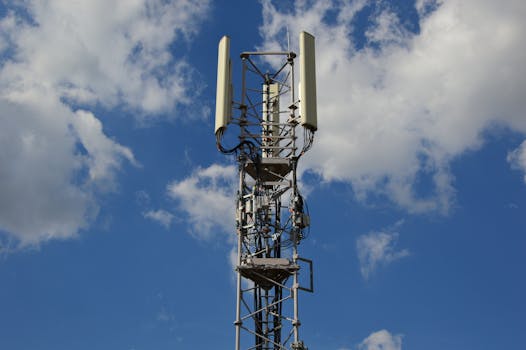 Photo: Ulrick Trappschuh / Pexels
 Photo: Dylan Leagh / Pexels
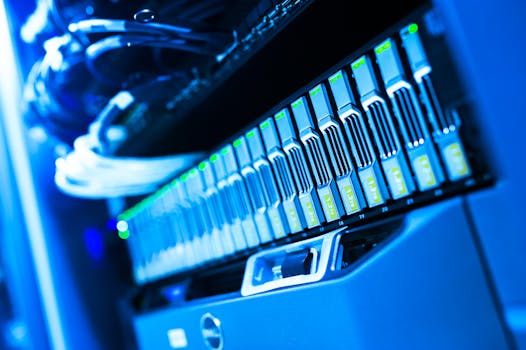 Photo: panumas nikhomkhai / Pexels