✓ Self-driving cars operate at different levels of autonomy, from driver assistance to full automation.
✓ A sophisticated array of sensors (cameras, radar, lidar, ultrasonic) provides a 360-degree view of the environment.
✓ Artificial intelligence and machine learning algorithms process sensor data to make driving decisions.
✓ High-definition maps, GPS, and V2X communication are crucial for navigation and situational awareness.
How It Works
1
Perception: Seeing the World
Vehicles use multiple sensors like cameras, radar, and lidar to gather real-time data about their surroundings. This creates a comprehensive digital model of the environment.
2
Localization: Knowing Where You Are
High-precision GPS, inertial measurement units (IMUs), and pre-mapped data help the car pinpoint its exact location. This is critical for accurate navigation and lane keeping.
3
Prediction: Anticipating Movement
AI algorithms analyze the perceived environment and predict the behavior of other road users, pedestrians, and objects. This allows the car to anticipate potential hazards and plan accordingly.
4
Planning & Control: Making Decisions
Based on all gathered data, the car's central computer plans a safe and efficient path. It then issues commands to the vehicle's steering, acceleration, and braking systems to execute the plan.
The Sensory Organs of Autonomous Vehicles: How Cars See and Feel
Photo: Giant Asparagus / Pexels
Understanding how do self-driving cars work begins with their ability to perceive the world around them. Unlike human drivers who rely primarily on sight, autonomous vehicles employ a multi-modal sensory system that provides a far more comprehensive and objective view. This robust sensor suite acts as the 'eyes' and 'ears' of the car, continuously gathering vast amounts of data about the vehicle's immediate environment. Each type of sensor plays a unique and complementary role, compensating for the limitations of others and creating a resilient perception layer.
Cameras are perhaps the most intuitive sensor, functioning much like human eyes. They capture visual information, allowing the car to detect traffic lights, road signs, lane markings, and the presence of other vehicles, pedestrians, and cyclists. Advanced computer vision algorithms then process these images, identifying objects, classifying them, and even estimating their distance and velocity. However, cameras are susceptible to adverse weather conditions like heavy rain, fog, or direct sunlight, which can obscure their view. This is where other sensors become critical. Exploring advanced AI systems can further illuminate how this visual data is interpreted.
Radar (Radio Detection and Ranging) sensors emit radio waves and measure the time it takes for them to bounce back after hitting an object. This technology is excellent for detecting the presence and speed of objects, even in poor visibility conditions where cameras struggle. Radar can 'see' through fog, heavy rain, and even snow, making it a crucial component for long-range detection and adaptive cruise control systems. While radar provides accurate distance and velocity, its angular resolution is generally lower than lidar or cameras, meaning it might not precisely identify the shape or classification of an object.
Lidar (Light Detection and Ranging) uses pulsed laser light to measure distances to objects. By sending out millions of laser pulses per second and measuring the time for each pulse to return, lidar creates a highly detailed, 3D point cloud map of the car's surroundings. This point cloud is incredibly precise, allowing the vehicle to build an accurate model of the road, obstacles, and other moving entities. Lidar excels at object classification and obstacle avoidance, providing crucial data for navigation and path planning. Its primary drawbacks have historically been cost and performance in adverse weather, though these are rapidly improving. Ultrasonic sensors, on the other hand, are short-range sensors that use sound waves to detect nearby objects, typically used for parking assistance and low-speed maneuvers. This integrated approach to sensing is fundamental to understanding how do self-driving cars work, ensuring redundancy and reliability in diverse driving scenarios.
The Brains Behind the Wheel: AI and Machine Learning in Autonomous Driving
Photo: Stephen Leonardi / Pexels
Beyond merely collecting data, the true intelligence of how do self-driving cars work lies in their sophisticated processing capabilities, powered by Artificial Intelligence (AI) and Machine Learning (ML). Once the myriad sensors have gathered raw data – images, radar returns, lidar point clouds – this information is fed into the vehicle's central computing platform. This platform, often equipped with powerful GPUs (Graphics Processing Units) designed for parallel processing, acts as the 'brain' of the autonomous system, interpreting the data and making real-time driving decisions.
At the core of this processing are deep learning algorithms, a subset of machine learning. These neural networks are trained on massive datasets of real-world driving scenarios, including millions of miles of actual and simulated driving. During this training, the AI learns to identify patterns, classify objects, predict behaviors, and understand the nuances of driving. For instance, a neural network can be trained to distinguish between a pedestrian, a cyclist, and a parked car, even if they appear in different lighting conditions or from varying angles. This object recognition and classification is a foundational task for autonomous navigation.
Another critical function of AI is prediction. Human drivers constantly predict the actions of others – will that car turn? Is that pedestrian about to step into the road? Autonomous vehicles must do the same. Machine learning models analyze the trajectories and behaviors of surrounding objects, predicting their most likely future movements. This predictive capability is essential for safe path planning and avoiding collisions. For example, if a car is merging onto a highway, the AI will predict the movement of surrounding traffic to find a safe gap.
Furthermore, AI is responsible for localization and mapping. While GPS provides a general location, autonomous vehicles require centimeter-level accuracy. High-definition (HD) maps, which include precise details about lane lines, traffic signs, and road geometry, are combined with real-time sensor data by AI algorithms to determine the car's exact position on the road. This process, known as Simultaneous Localization and Mapping (SLAM), allows the car to continually update its understanding of its environment. The AI also manages the decision-making process, weighing factors like safety, efficiency, and comfort to determine the optimal driving maneuvers – from accelerating and braking to steering and lane changes. This complex interplay of data interpretation, prediction, and decision-making is what truly defines how do self-driving cars work as intelligent systems.
From Perception to Action: Path Planning and Vehicle Control
Photo: Martin.que / Pexels
The intricate process of how do self-driving cars work culminates in the crucial stages of path planning and vehicle control. Once the car has perceived its environment, localized itself on a map, and predicted the actions of other road users, it must then formulate and execute a safe and efficient driving strategy. This is where the vehicle's 'intelligence' translates into physical action, controlling the car's movements in real-time.
Path planning involves determining the optimal route from the current location to the desired destination, while also considering immediate tactical maneuvers. The global path planner calculates the overall route, taking into account traffic conditions, road closures, and user preferences. However, the more complex task is local path planning, which occurs continuously and dynamically. This involves generating a short-term trajectory that avoids obstacles, adheres to traffic laws, and ensures passenger comfort. For instance, if a self-driving car encounters a sudden obstacle in its lane, the local path planner rapidly calculates an evasive maneuver, considering factors like available space, speed, and the presence of other vehicles. This complex decision-making process often involves probabilistic reasoning and optimization algorithms to select the safest and most efficient path in a fraction of a second. Understanding autonomous vehicle safety protocols is essential here.
Once a path has been planned, the vehicle control system takes over. This system translates the abstract path and desired maneuvers into concrete commands for the car's actuators. It directly controls the steering wheel, accelerator pedal, and brake pedal, much like a human driver would. High-fidelity control algorithms ensure that the car follows the planned trajectory precisely, maintaining the correct speed, staying within its lane, and smoothly executing turns and lane changes. This requires extremely precise and responsive control over the vehicle's physical components. For example, if the path planner determines the car needs to slow down to maintain a safe following distance, the control system will apply the brakes with the exact force required.
Furthermore, communication between the various subsystems is paramount. The perception system constantly feeds updated environmental data, the prediction system refines its forecasts, and the planning system adjusts its trajectory accordingly. The control system then executes these updated plans. This continuous feedback loop ensures that the self-driving car remains adaptable and responsive to changing road conditions and unexpected events. The transition from abstract data to precise physical movement is a testament to the engineering marvel of how do self-driving cars work, bridging the gap between digital intelligence and real-world locomotion.
Challenges and Future Outlook of Autonomous Driving Technology
Photo: Vladimir Srajber / Pexels
While the technological advancements in understanding how do self-driving cars work are impressive, significant challenges remain on the path to widespread adoption. Overcoming these hurdles is crucial for the future of autonomous driving, impacting everything from regulatory frameworks to public acceptance. One of the most persistent challenges is navigating 'edge cases' – rare or unusual driving scenarios that are difficult to anticipate and program for. These can include complex construction zones, ambiguous hand signals from traffic controllers, or unpredictable animal behavior. While AI models are robust, they still struggle with the sheer variability of the real world, especially when faced with situations outside their training data. Ensuring safety in these scenarios requires continuous testing, simulation, and refinement of algorithms.
Another major challenge is regulatory and legal frameworks. Governments worldwide are grappling with how to classify, test, and permit self-driving cars. Questions surrounding liability in the event of an accident, data privacy, and cybersecurity need clear answers. Harmonizing these regulations across different states and countries is a monumental task, but essential for the industry to scale. Public perception and trust also play a critical role. Many consumers are hesitant to fully embrace autonomous vehicles, citing concerns about safety, job displacement, and the ethical implications of AI making life-or-death decisions. Building trust requires transparent communication, proven safety records, and a gradual introduction of the technology.
* **Infrastructure Adaptations:** While self-driving cars are designed to operate on existing roads, some argue that 'smart' infrastructure (e.g., V2X communication, intelligent traffic lights) could significantly enhance their safety and efficiency. This requires massive investment and coordination.
* **Cybersecurity Risks:** As connected devices, autonomous vehicles are vulnerable to cyberattacks. Protecting these systems from hacking and malicious interference is paramount to prevent catastrophic failures or misuse.
* **Cost and Accessibility:** Currently, the advanced sensor suites and computing power required make fully autonomous vehicles expensive. Reducing these costs while maintaining performance is key to making them accessible to a broader market.
* **Human-Machine Interaction:** Designing intuitive and safe interfaces for human occupants to monitor or take over control (in lower-level autonomous vehicles) is another complex area that needs careful consideration.
Despite these challenges, the future outlook for autonomous driving technology remains optimistic. Continued advancements in AI, sensor fusion, and computing power are rapidly addressing many of the current limitations. As testing miles accumulate and regulatory frameworks mature, we can expect to see a gradual rollout of higher levels of autonomy. The long-term vision includes safer roads, reduced traffic congestion, increased accessibility for those unable to drive, and more efficient transportation networks. The journey to fully autonomous vehicles is complex, but the potential benefits are transformative, promising a future where our relationship with transportation is fundamentally redefined.
Comparison
Feature
Level 5 (Full Automation)
Level 3 (Conditional Automation)
Human Driver (Benchmark)
Driver Engagement
None required
Intermittent, take-over readiness
Full, continuous
Operating Environment
All conditions/roads
Specific conditions/roads
All conditions/roads
System Monitoring
System monitors all
System monitors environment, driver monitors system
Driver monitors all
Response to Failure
System handles all
Driver must intervene
Driver handles all
Complexity of AI
Highly advanced
Advanced
Human judgment
What Readers Say
★★★★★
"This article brilliantly explains how do self driving cars work, breaking down complex sensor fusion and AI concepts into understandable language. I now have a much clearer picture of the technology."
Sarah Chen · San Francisco, CA
★★★★★
"As an engineer, I appreciate the depth and accuracy in describing the various components like lidar and radar. It's a fantastic resource for anyone curious about how do self driving cars work."
Mark Johnson · Austin, TX
★★★★★
"I was skeptical about autonomous vehicles, but this explanation of how do self driving cars work, especially the prediction and planning, helped me understand the safety measures involved. Very insightful!"
Emily Rodriguez · Miami, FL
★★★★★
"The article is comprehensive, though I would have loved even more detail on the ethical considerations of AI decision-making. Still, an excellent overview of how do self driving cars work."
David Lee · Seattle, WA
★★★★★
"Finally, an article that explains how do self driving cars work without oversimplifying or over-complicating it. I feel much more informed about the future of transportation after reading this."
Jessica White · Boston, MA
Frequently Asked Questions
What are the different levels of self-driving autonomy?
Self-driving autonomy is classified into six levels (0-5) by the SAE International. Level 0 is no automation, while Level 5 is full automation, meaning the vehicle can handle all driving tasks in all conditions without human intervention. Most current 'self-driving' features are Level 2 (partial automation) or Level 3 (conditional automation), requiring driver supervision or readiness to take over.
Are self-driving cars safe?
The safety of self-driving cars is a primary concern for developers. While they aim to reduce human error, which causes the vast majority of accidents, autonomous systems face their own challenges. Extensive testing and simulation are conducted to ensure safety, and data suggests they can be safer in many scenarios. However, the technology is still evolving, and 'perfection' is a continuous goal.
How do self-driving cars handle bad weather?
Bad weather (heavy rain, snow, fog) remains a significant challenge for self-driving cars. While radar and ultrasonic sensors can penetrate these conditions better than cameras and lidar, performance can still be degraded. Developers are continuously improving sensor fusion techniques and AI algorithms to enhance reliability in adverse weather, but it's an area of active research and development.
How much do self-driving cars cost?
Fully autonomous vehicles (Level 4/5) are not yet widely available for purchase by the general public. The advanced sensor suites, powerful computing platforms, and specialized software significantly increase manufacturing costs. While prices for features like advanced driver-assistance systems (ADAS) are integrated into new car prices, a truly self-driving car would likely command a substantial premium initially, akin to early electric vehicles.
How do self-driving cars compare to human drivers?
Self-driving cars excel in consistency, adherence to traffic laws, and rapid reaction times to predictable events. They don't get distracted, tired, or drive under the influence. However, human drivers still generally outperform autonomous systems in handling unpredictable 'edge cases,' complex social interactions on the road, and interpreting nuanced human behavior. The goal is for autonomous systems to eventually surpass human capabilities across the board.
Who should consider using self-driving car technology?
Currently, individuals interested in enhanced safety features, reduced driving fatigue on long commutes, or those who could benefit from mobility assistance (once higher levels of autonomy are available) are the primary beneficiaries. Early adopters of new technology and tech enthusiasts are also key demographics. In the future, it will cater to anyone seeking a more efficient, safer, and potentially more enjoyable commuting or travel experience.
What are the biggest risks associated with self-driving cars?
The biggest risks include potential software glitches, cybersecurity vulnerabilities that could lead to hacking, and the challenge of ensuring safety in all unpredictable real-world scenarios (edge cases). Ethical dilemmas, such as how the car should react in unavoidable accident situations, also pose significant societal and philosophical risks that need to be addressed.
What does the future hold for self-driving cars?
The future of self-driving cars is expected to bring widespread adoption of Level 4 autonomy in specific operational design domains (e.g., robotaxis in cities) within the next decade. Full Level 5 autonomy, capable of driving anywhere in any conditions, is a longer-term goal, potentially two decades or more away. The technology promises to revolutionize transportation, urban planning, and potentially reduce accidents and traffic congestion significantly.
Dive deeper into the fascinating world of autonomous vehicles. Understanding how do self driving cars work is not just about technology, but about envisioning a safer, more efficient future for all. Stay informed and prepare for the road ahead.

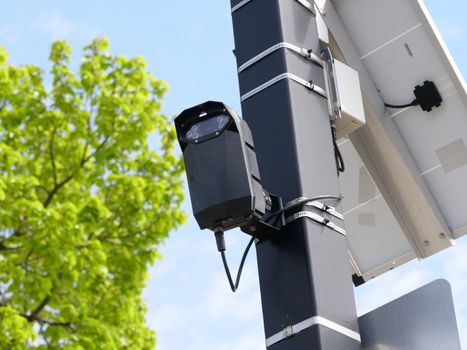 Photo: Giant Asparagus / Pexels
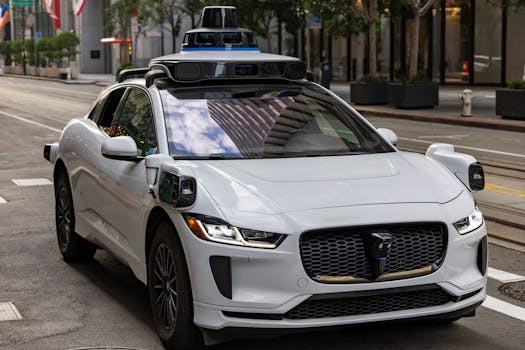 Photo: Stephen Leonardi / Pexels
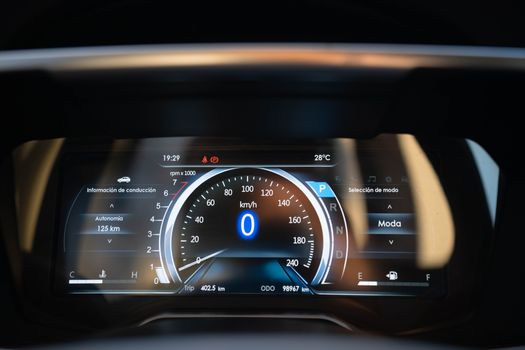 Photo: Martin.que / Pexels
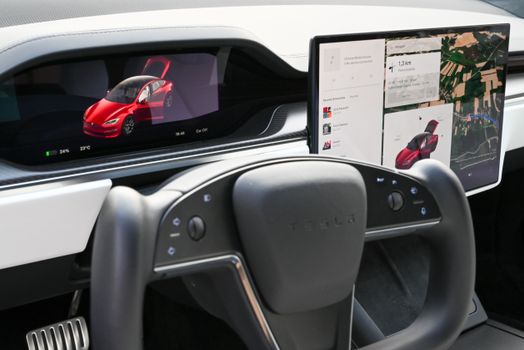 Photo: Vladimir Srajber / Pexels