✓ Self-driving cars use a complex array of sensors, including cameras, radar, LiDAR, and ultrasonic.
✓ Artificial intelligence and machine learning algorithms process sensor data to understand the environment.
✓ High-definition maps provide precise location data and information about road features.
✓ Vehicles operate on different levels of autonomy, from driver assistance to full self-driving (Level 5).
How It Works
1
Sensing the Environment
Vehicles collect vast amounts of data about their surroundings using a suite of advanced sensors. This creates a real-time, 3D understanding of the road, traffic, and pedestrians.
2
Perception and Data Processing
Onboard computers, powered by AI, analyze the raw sensor data to identify objects, predict their movements, and understand traffic signs and signals. This rapid analysis is crucial for safe navigation.
3
Path Planning and Decision Making
Based on the perceived environment and pre-loaded HD maps, the car's software calculates a safe and efficient path. It makes real-time decisions, such as accelerating, braking, or steering.
4
Vehicle Control and Execution
These decisions are then translated into commands for the car's actuators, controlling steering, acceleration, and braking systems. This seamless execution allows the car to navigate autonomously.
The Sensory Organs: How Autonomous Vehicles See the World
Photo: Markus Spiske / Pexels
At the heart of understanding how do self driving cars work lies their ability to perceive the world around them. Unlike human drivers who rely primarily on sight and hearing, autonomous vehicles employ a sophisticated orchestra of sensors, each playing a crucial role in building a comprehensive, real-time model of their environment. This multi-modal sensing approach is vital because no single sensor type can provide all the necessary information in every condition. For instance, cameras excel at identifying colors, reading signs, and detecting lane markings, much like human eyes. They capture high-resolution images and video, which are then processed by computer vision algorithms to recognize objects such as other vehicles, pedestrians, cyclists, and traffic lights. However, cameras can be hampered by poor lighting, heavy rain, or fog, limiting their effectiveness in adverse conditions. This is where other sensors step in. Radar technology, for example, emits radio waves and measures the time it takes for them to bounce back, providing excellent information about the speed and distance of objects, even in low visibility. It can penetrate rain, fog, and even some light snow, making it a reliable sensor for long-range detection and tracking. However, radar typically offers lower resolution and struggles with object classification compared to cameras.
Then there's LiDAR (Light Detection and Ranging), often considered the 'eyes' of a self-driving car for its precision. LiDAR systems emit millions of laser pulses per second, creating a highly detailed 3D point cloud of the surroundings. This point cloud precisely maps the shape and distance of everything in the vehicle's vicinity, offering unparalleled accuracy for obstacle detection and mapping. LiDAR is less affected by lighting conditions than cameras, but heavy rain or snow can still interfere with its laser beams. Finally, ultrasonic sensors, typically mounted around the car's perimeter, use sound waves to detect nearby objects, making them ideal for short-range detection, such as during parking maneuvers or low-speed driving in congested areas. Each sensor type has its strengths and weaknesses, and by fusing data from all these diverse sources, the self-driving car creates a robust and redundant understanding of its operational domain, far exceeding the capabilities of a single human driver. This fusion is critical for ensuring safety and reliability, allowing the vehicle to operate effectively across a wide range of driving scenarios and environmental challenges.
The Brains of the Operation: AI, Machine Learning, and Data Fusion
Photo: Abhishek Navlakha / Pexels
Understanding how do self driving cars work isn't just about the sensors; it's profoundly about how the data from those sensors is interpreted and acted upon. This is where artificial intelligence (AI) and machine learning (ML) come into play, serving as the central nervous system and brain of the autonomous vehicle. Once the sensory organs (cameras, radar, LiDAR, ultrasonic) collect raw data, it's immediately fed into powerful onboard computers. These computers are not just processing information; they are running sophisticated AI algorithms trained on billions of miles of real-world and simulated driving data.
The first critical task for the AI is perception. It takes the fragmented data from each sensor and fuses it together to create a unified, coherent representation of the world. For instance, a camera might see a red octagon, radar might detect an object at a certain distance and speed, and LiDAR might map its precise 3D shape. The AI combines these inputs to confidently identify it as a 'stop sign' and understand its exact location relative to the vehicle. This data fusion process is incredibly complex, requiring algorithms that can weigh the reliability of different sensor inputs under varying conditions.
Beyond simple object identification, the AI uses machine learning to predict the behavior of other road users. It learns patterns of movement from massive datasets – how pedestrians typically cross streets, how other drivers signal and merge, or how a cyclist might react to an approaching vehicle. This predictive capability is crucial for safe navigation, allowing the car to anticipate potential hazards and react proactively, rather than merely reactively. For example, if a child is playing near the curb, the AI might predict a sudden dart into the street and adjust the vehicle's speed or position accordingly.
Furthermore, deep learning models are employed for tasks like semantic segmentation, where every pixel in a camera image is classified (e.g., sky, road, car, person), and for understanding complex scenarios that might confuse rule-based systems. These neural networks are constantly learning and improving, making the self-driving system more robust and adaptable over time. The processing power required for these tasks is immense, often involving specialized hardware like GPUs (Graphics Processing Units) or custom AI chips, capable of performing trillions of operations per second to ensure real-time decision-making, which is paramount for safety on the road.
Navigation and Decision Making: From Maps to Maneuvers
Photo: Shuaizhi Tian / Pexels
A crucial component in understanding how do self driving cars work is their ability to navigate and make intelligent driving decisions. This process relies heavily on an interplay between highly detailed maps and real-time environmental perception. Unlike traditional GPS maps that offer approximate locations, autonomous vehicles utilize high-definition (HD) maps, often referred to as 'localization maps.' These maps are incredibly precise, containing lane-level detail, information about road curvature, elevation, traffic signs, traffic lights, road markings, and even the exact position of curbs and utility poles. They are typically created using specialized mapping vehicles equipped with high-accuracy LiDAR and cameras, and are continuously updated to reflect changes in the road network. The self-driving car uses its real-time sensor data to compare its perception of the environment with the pre-loaded HD map, allowing it to pinpoint its exact location on the road with centimeter-level accuracy – a process known as localization. This precision is vital for tasks like staying within lanes or executing precise turns. Path planning algorithms then take over, using this precise location information, the perceived environment, and the destination to calculate the optimal route and a series of continuous, safe maneuvers.
Decision-making in a self-driving car is a multi-layered process. At a high level, it involves strategic decisions like choosing the fastest route or optimizing for fuel efficiency. At a tactical level, it includes decisions such as when to change lanes, how to navigate an intersection, or how to react to a sudden slowdown in traffic. These decisions are informed by predictive models that anticipate the actions of other road users, ensuring the chosen path minimizes risk. For example, if the car detects a pedestrian approaching a crosswalk, it will decide to slow down and stop. If it needs to merge into a highway, it will identify a safe gap in traffic and plan its acceleration and steering accordingly. The car's software continuously updates its plans based on new sensor data, adapting to dynamic situations instantaneously. This constant cycle of sensing, perceiving, planning, and acting is what enables self-driving cars to navigate complex urban environments and open highways with a level of consistency and safety that aims to surpass human drivers.
Challenges and the Road Ahead for Autonomous Vehicles
Photo: Shuaizhi Tian / Pexels
While the technology behind how do self driving cars work is incredibly advanced, the journey to widespread adoption is fraught with challenges. One of the primary hurdles is the 'edge case' problem. Autonomous systems are excellent at handling common driving scenarios, but they can struggle with rare, unexpected, or ambiguous situations that humans instinctively understand. This could be anything from an unconventional hand gesture from a construction worker to an unusual road obstruction not covered in their training data. Ensuring that AI can safely interpret and respond to these countless unforeseen scenarios requires continuous development and extensive testing.
Another significant challenge is regulatory and legal frameworks. Governments worldwide are grappling with how to classify, permit, and insure autonomous vehicles. Questions of liability in the event of an accident, data privacy, and cybersecurity for connected vehicles are still being debated and legislated. The patchwork of state-specific laws in the US, for instance, adds complexity to testing and deployment. Public perception and trust also play a critical role. High-profile incidents, even if rare, can severely impact consumer confidence and slow down adoption. Building trust requires transparent communication about capabilities and limitations, and a proven track record of safety.
Technologically, improving sensor robustness in all weather conditions remains an area of active research. Heavy snow, dense fog, or torrential rain can still degrade the performance of current sensor suites. Furthermore, the immense computational power required onboard these vehicles demands efficient, low-power hardware that can withstand automotive environments. The infrastructure also needs to evolve; concepts like Vehicle-to-Everything (V2X) communication, where cars communicate with each other and with road infrastructure, promise to enhance safety and efficiency but require significant investment and standardization. Despite these challenges, the progress in autonomous driving is undeniable, with ongoing advancements in AI, sensor technology, and mapping continually pushing the boundaries of what's possible, paving the way for a future where autonomous vehicles become a common sight on our roads.
**Key Challenges:**
* **Edge Cases:** Handling unpredictable and rare driving situations.
* **Regulatory Frameworks:** Developing consistent laws and liability standards.
* **Public Trust:** Overcoming skepticism and building confidence in autonomous technology.
* **Sensor Limitations:** Ensuring reliable performance in all weather conditions.
* **Infrastructure:** Integrating V2X communication and smart road systems.
* **Cybersecurity:** Protecting vehicles from hacking and data breaches.
Comparison
Feature
Human Driver
Level 2 (ADAS)
Level 4 (High Automation)
Level 5 (Full Automation)
Primary Control
Human
Human (with assistance)
Vehicle (under conditions)
Vehicle (all conditions)
Situational Awareness
Human
Human + Vehicle
Vehicle
Vehicle
Operational Domain
Anywhere
Specific situations (e.g., highway)
Defined geofenced areas
Anywhere
Driver Attention Required
✓
✓
✗ (but can take over)
✗
What Readers Say
★★★★★
"This article perfectly explains how do self driving cars work! I always wondered about the sensors, and now I have a much clearer understanding of LiDAR and radar."
Sarah J. · Austin, TX
★★★★★
"As an engineer, I appreciate the depth of explanation on AI and data fusion. It really breaks down the complexity of how autonomous vehicles process information."
Mark D. · San Jose, CA
★★★★★
"I was hesitant about self-driving cars, but learning about the redundancy of sensors and the sophisticated decision-making process has made me feel much more confident in the technology's potential."
Emily R. · Chicago, IL
★★★★★
"The article is very informative, especially on the mapping and navigation aspects. While it clearly outlines how do self driving cars work, I'd love to see even more detail on the ethical considerations in future updates."
David L. · Boston, MA
★★★★★
"As someone interested in the future of transportation, this piece provided an excellent, easy-to-understand overview of the core technologies. It clarified many of my questions."
Jessica T. · Seattle, WA
Frequently Asked Questions
What are the main components that make a car self-driving?
Self-driving cars rely on a combination of advanced sensors (cameras, radar, LiDAR, ultrasonic), powerful onboard computers running artificial intelligence and machine learning algorithms, and high-definition digital maps. These components work in concert to perceive the environment, make decisions, and control the vehicle.
Are self-driving cars safe?
The goal of self-driving cars is to enhance safety by eliminating human error, which is a major cause of accidents. While the technology is still evolving and being rigorously tested, current autonomous systems aim for, and in some cases demonstrate, a lower accident rate than human-driven vehicles, especially in controlled environments. Continuous testing and regulatory oversight are key to improving their safety record.
How do self-driving cars navigate without GPS?
While GPS provides a general location, self-driving cars achieve centimeter-level precision using a combination of high-definition maps and real-time sensor data. They compare what their sensors 'see' with the detailed map data to pinpoint their exact position, a process called localization. This allows for precise lane keeping and maneuver execution.
How much do self-driving cars cost?
Currently, fully autonomous (Level 4/5) vehicles are not widely available for consumer purchase, and the cost of the advanced sensor suites and computing power makes them very expensive. Features like advanced driver-assistance systems (ADAS), which are Level 2 autonomy, add several thousands of dollars to vehicle prices. As technology matures and scales, costs are expected to decrease significantly.
What's the difference between self-driving and driver-assistance systems?
Driver-assistance systems (ADAS) like adaptive cruise control or lane-keeping assist are Level 1 or 2 autonomy, meaning the human driver is still primarily responsible and must remain engaged. Self-driving cars (Level 3-5) take over more or all of the driving tasks, with Level 5 requiring no human intervention at all. The distinction lies in who is responsible for monitoring the driving environment.
Who should consider using autonomous vehicle technology?
Early adopters of autonomous vehicle technology are often tech enthusiasts, ride-sharing companies seeking operational efficiencies, or individuals with specific mobility needs. As the technology becomes more robust and widely available, it could benefit commuters, the elderly, or those with disabilities by offering safer and more accessible transportation options.
What are the biggest risks associated with autonomous vehicles?
Key risks include the potential for software bugs or system failures, cybersecurity threats that could compromise vehicle control or data, and the challenge of handling 'edge cases' or unpredictable real-world scenarios. Ethical dilemmas, such as programming responses in unavoidable accident situations, also present complex challenges.
What does the future hold for self-driving cars?
The future of self-driving cars is expected to bring increased safety, reduced traffic congestion, and improved mobility for many. We anticipate more widespread deployment of Level 4 vehicles in geofenced areas, continued advancements in AI and sensor technology, and the eventual integration of Vehicle-to-Everything (V2X) communication, leading towards a fully autonomous transportation ecosystem.
Understanding how do self driving cars work reveals a fascinating blend of cutting-edge technology. As these vehicles continue to evolve, they promise to reshape our transportation landscape, offering a glimpse into a safer, more efficient future on the roads. Stay informed and prepare for the autonomous revolution.
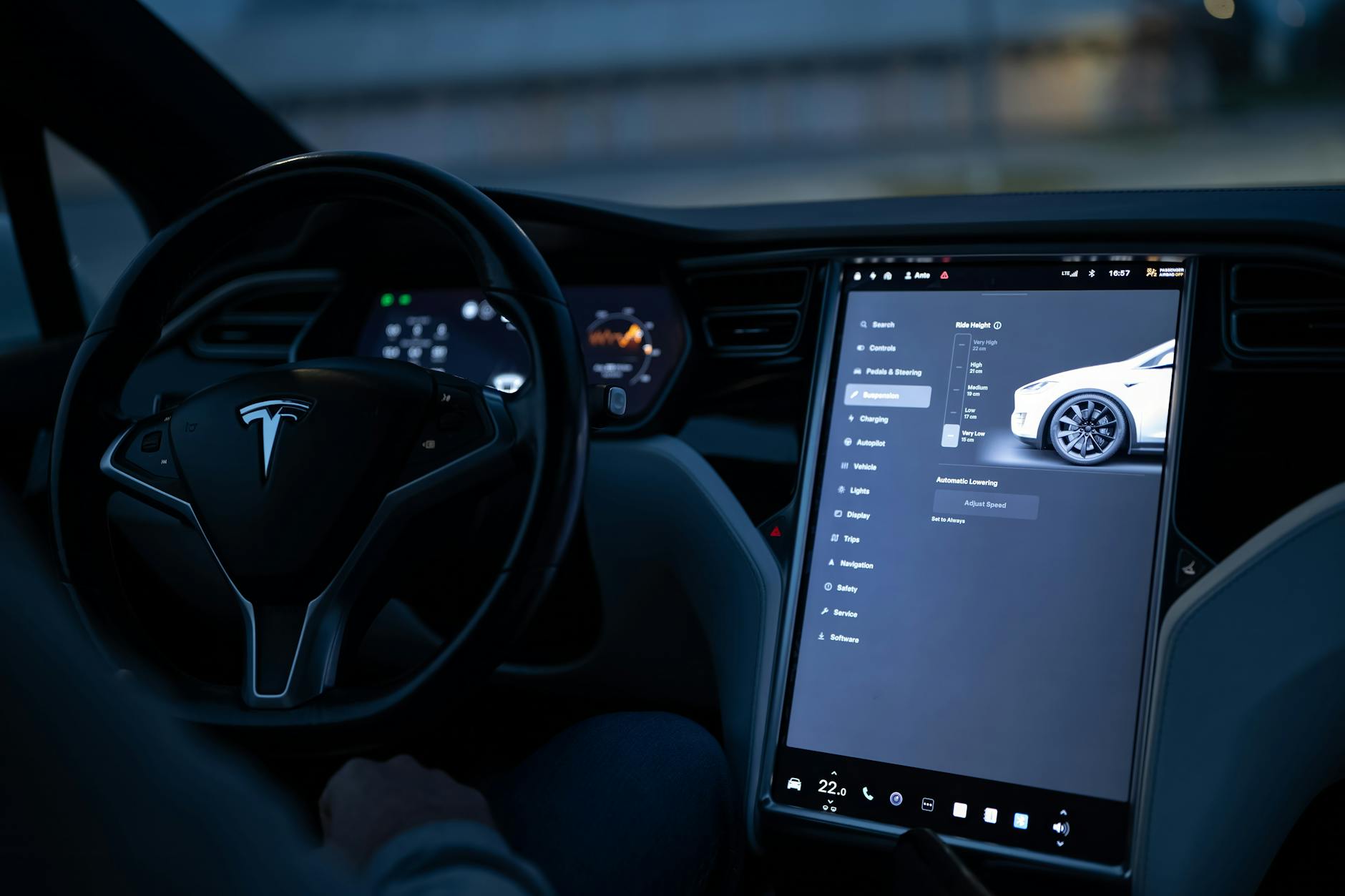
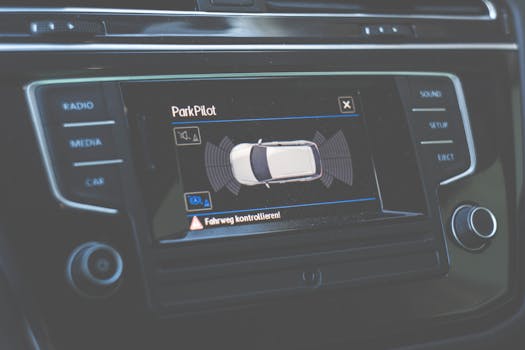 Photo: Markus Spiske / Pexels
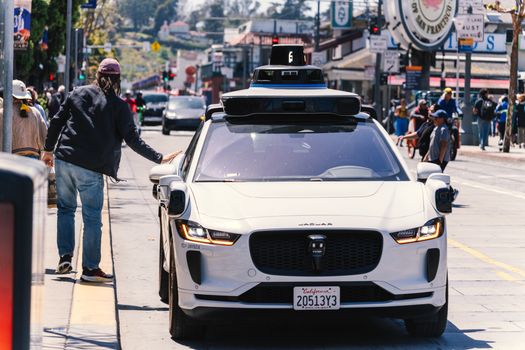 Photo: Abhishek Navlakha / Pexels
 Photo: Shuaizhi Tian / Pexels