The Future of Virtual Reality Gaming: Beyond the Horizon
future of virtual reality gaming

The Future of Virtual Reality Gaming: Beyond the Horizon

Dive into the next generation of immersive experiences where virtual worlds become indistinguishable from reality.

Uncover the Future

Key Takeaways

  • ✓ VR gaming market projected to reach $80 billion by 2028.
  • ✓ Haptic feedback and full-body tracking are becoming standard.
  • ✓ Cloud VR streaming will reduce hardware barriers.
  • ✓ AI-powered NPCs will create dynamic, evolving game worlds.

How It Works

1
Advanced Headsets & Displays

Next-gen VR headsets will feature higher resolutions, wider fields of view, and lighter designs. Micro-OLED and pancake optics will deliver unparalleled visual fidelity and comfort.

2
Immersive Input & Feedback

Beyond controllers, haptic gloves, suits, and even omnidirectional treadmills will provide full-body immersion. Players will feel textures, impacts, and movement within the virtual world.

3
Persistent & Dynamic Worlds

VR games will evolve into persistent, shared online spaces, often leveraging metaverse concepts. AI will drive dynamic narratives and NPC behavior, reacting to player actions in real-time.

4
Cloud & Edge Computing

High-fidelity VR experiences will be streamed from powerful cloud servers, reducing the need for expensive local hardware. Edge computing will minimize latency, ensuring seamless interaction.

The Evolution of Immersive VR Gaming Hardware
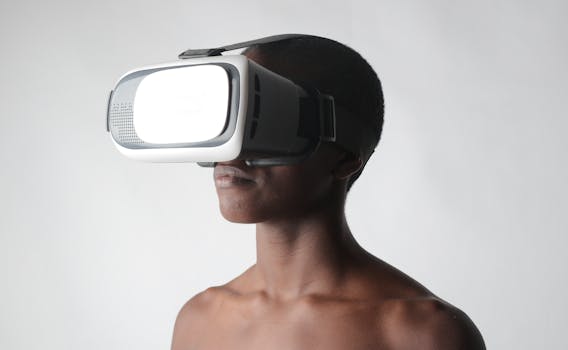
Close-up of a person using VR goggles, showcasing futuristic technology and innovation. Photo: Andrea Piacquadio / Pexels
The journey into the future of virtual reality gaming begins with the hardware that delivers these incredible experiences. Current VR headsets, while impressive, are merely stepping stones to what’s coming. We’re on the cusp of a revolution in display technology, tracking capabilities, and haptic feedback that will redefine what it means to be 'present' in a virtual world. Imagine headsets so light and comfortable you forget you’re wearing them, boasting resolutions so high that individual pixels are imperceptible, and fields of view that encompass your entire natural vision. This isn't science fiction; it's the near-term reality. Micro-OLED displays, already making their way into high-end devices, offer incredible pixel density and contrast, while 'pancake' optics significantly reduce the bulk and weight of the lenses, allowing for sleeker, more ergonomic designs. Eye-tracking technology, becoming increasingly common, will not only enhance realism through foveated rendering – where only the area you're directly looking at is rendered in full detail, saving computational power – but also serve as an intuitive input method. Imagine selecting menu items or interacting with objects simply by gazing at them. Beyond visual and auditory immersion, the tactile dimension is set for a massive leap. Haptic gloves and full-body suits are moving beyond niche prototypes into consumer-ready products. These sophisticated devices will allow players to feel the texture of a virtual sword, the impact of a punch, the warmth of a digital campfire, or the resistance of pulling a bowstring. This multi-sensory feedback closes the loop, making the virtual world feel genuinely tangible. Moreover, advancements in inside-out tracking, which uses cameras on the headset to map the environment, are becoming incredibly precise, eliminating the need for external base stations. This makes VR setup easier and more accessible, paving the way for widespread adoption. The integration of brain-computer interfaces (BCIs), while further out, represents the ultimate frontier, potentially allowing direct thought control and even sensory input directly to the brain, blurring the lines between mind and machine. The convergence of these hardware innovations will create an unparalleled sense of presence, making the virtual world feel as real, if not more real, than the physical one. This technological push is not just about better graphics; it's about fundamentally changing how we interact with and perceive digital realities, making the future of virtual reality gaming a truly transformative experience. Understanding these technological advancements is crucial to grasping the full scope of what's to come.

The Rise of Hyper-Realistic and Persistent Virtual Worlds
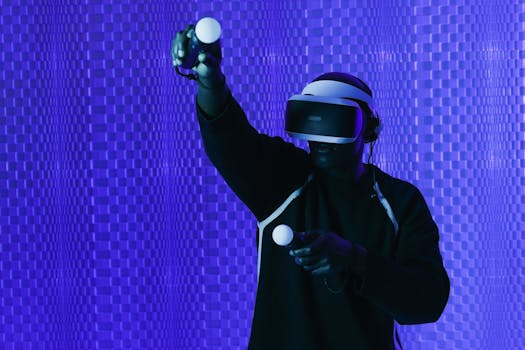
A man engaged in a virtual reality experience wearing VR goggles, holding controllers. Photo: SHVETS production / Pexels
As hardware evolves, so too will the worlds we inhabit within virtual reality. The future of virtual reality gaming promises not just better graphics, but entirely new paradigms of world-building and interaction. We're moving beyond static levels and linear narratives towards dynamic, persistent, and hyper-realistic environments that evolve with player input and AI intelligence. Imagine entering a virtual city that operates on its own internal economy, where NPCs have routines, memories, and motivations, reacting organically to your presence and actions. This level of realism will be powered by advancements in procedural generation, artificial intelligence, and cloud computing. Procedural generation will allow for the creation of vast, unique landscapes and structures on the fly, ensuring that no two player experiences are exactly alike. AI will not only govern NPC behavior but also dynamically adjust game difficulty, generate quests, and even create unique story arcs based on player choices. This means games will no longer be static products but living, breathing ecosystems that continuously adapt and offer fresh challenges. The concept of the 'metaverse' is intrinsically linked to this future. While the term is often overused, its core idea – a persistent, shared, interconnected virtual space – is a foundational element of next-gen VR gaming. Players will be able to seamlessly transition between different games and experiences, carrying their avatars, progress, and even digital assets with them. This interoperability will foster a sense of true digital citizenship within these virtual realms. Furthermore, cloud gaming will play a pivotal role in delivering these hyper-realistic worlds. Rendering complex, high-fidelity environments requires immense computational power, often exceeding what local hardware can provide. By streaming these experiences from powerful cloud servers, players will be able to access cutting-edge VR games without needing to invest in expensive, high-end PCs. This democratizes access to advanced VR, making it available to a much broader audience. Edge computing will complement this by processing critical, low-latency interactions closer to the user, ensuring that actions like swinging a sword or dodging an attack feel instantaneous. The combination of these technologies will lead to virtual worlds that are not only visually stunning but also deeply immersive, responsive, and endlessly engaging, offering unprecedented freedom and agency to players. This shift represents a fundamental change in how we perceive and interact with digital entertainment, pushing the boundaries of what's possible in the future of virtual reality gaming.

Social Interaction and the Metaverse in VR Gaming
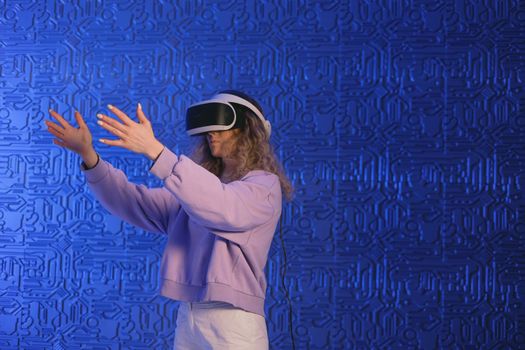
Adult woman with VR goggles interacting in a virtual environment against a blue background. Photo: SHVETS production / Pexels
The future of virtual reality gaming isn't just about individual immersion; it's profoundly about social connection and shared experiences. While current VR offers multiplayer modes, the next generation will elevate social interaction to unprecedented levels, blurring the lines between gaming, social media, and real-world interaction within the burgeoning metaverse. Imagine attending a virtual concert with thousands of other players, each represented by their unique avatar, feeling the bass through haptic feedback, and conversing with friends as if they were right beside you. Or participating in massive, persistent online role-playing games where entire societies are built and maintained by players, with real-world implications for their digital economies and political structures. Advanced avatar systems will allow for incredibly detailed and customizable representations of ourselves, capable of expressing nuanced emotions through facial tracking and body language. This level of personalized presence will foster deeper connections and a stronger sense of community within virtual spaces. Voice chat will evolve beyond simple audio, incorporating spatial audio that accurately reflects the position and distance of other players, making conversations feel natural and intuitive. Furthermore, the integration of AI will enhance social dynamics. AI-powered NPCs could serve as guides, companions, or even dynamic antagonists, reacting intelligently to group interactions and contributing to emergent storytelling. The concept of the metaverse, while still in its nascent stages, is the ultimate vision for this interconnected social VR future. It envisions a network of persistent, interoperable virtual worlds where users can seamlessly move between different experiences, carrying their digital identities and assets. This means you could play a competitive shooter in one world, then teleport to a social hub to meet friends, and then attend a virtual class or work meeting, all within the same overarching digital ecosystem. This level of integration will transform how we socialize, learn, work, and play, making VR gaming a central pillar of our digital lives. The economic implications are also vast, with digital economies flourishing within these metaverses, driven by NFTs, cryptocurrencies, and user-generated content. Players could earn real-world value from their creations and contributions within these virtual spaces, fostering a new creator economy. The social fabric of the future of virtual reality gaming will be rich, complex, and deeply interconnected, offering new ways to build communities and share experiences on a global scale. Exploring the economic models within the metaverse provides further insight into this evolving landscape.

Challenges and Opportunities in the Future of VR Gaming

A man engaged in a virtual reality experience wearing VR goggles, holding controllers. Photo: SHVETS production / Pexels
While the future of virtual reality gaming paints a dazzling picture, it's not without its significant challenges. Addressing these hurdles is crucial for widespread adoption and the full realization of VR's potential. One primary concern remains accessibility, both in terms of cost and ease of use. High-end VR setups can still be expensive, and while cloud streaming will help, the initial investment for headsets can be a barrier. Furthermore, the physical space required for room-scale VR and the potential for motion sickness or discomfort for some users are factors that need continuous improvement. Developers are working on smarter locomotion methods and more comfortable hardware to mitigate these issues. Another significant challenge lies in content creation. Developing truly immersive, expansive, and engaging VR experiences is incredibly complex and resource-intensive. The tools and pipelines for VR development are still maturing, and attracting top talent to create compelling content is vital. However, this challenge also presents a massive opportunity for innovation and new forms of storytelling. The rise of user-generated content (UGC) platforms within VR could empower a new generation of creators, similar to how platforms like Roblox or Minecraft have thrived. **Key Challenges:** * **Cost of Entry:** High hardware prices can deter mainstream adoption. * **Comfort & Motion Sickness:** Physical discomfort and simulator sickness remain issues for some users. * **Content Gap:** Creating high-quality, long-form VR experiences is resource-intensive. * **Interoperability:** Lack of seamless integration between different VR platforms and experiences. * **Data Privacy & Security:** Concerns about personal data within persistent virtual worlds. **Key Opportunities:** * **Cloud VR:** Democratizes access by reducing hardware requirements. * **AI-Powered Content:** Enables dynamic, personalized, and ever-evolving game worlds. * **User-Generated Content:** Fosters creativity and expands the content library exponentially. * **New Business Models:** Subscription services, NFTs, and virtual economies offer novel revenue streams. * **Cross-Industry Integration:** VR gaming tech can spill over into education, training, and remote work, creating a larger ecosystem. Overcoming these challenges will require collaboration across hardware manufacturers, software developers, and platform providers. The opportunities, however, are immense, promising not just a new era of entertainment but a fundamental shift in how we interact with digital information and each other. The future of virtual reality gaming is not just about playing games; it's about building new worlds and new ways of living within them.

Comparison

FeatureFuture VR (2030+)Current High-End VREarly VR (2016)
Resolution (per eye)8K+2K-3K1K-1.5K
Field of View180°+100°-120°90°-100°
Haptic FeedbackFull-body suitHand controllersBasic rumble
TrackingFull body, eye, facialHead, handsHead, hands (external)
World PersistenceDynamic, shared metaverseSession-based, limitedStatic levels
Hardware RelianceCloud/Edge computingHigh-end PC/ConsoleHigh-end PC
Comfort & WeightExtremely light, ergonomicModerate weight, some bulkHeavy, bulky
AI IntegrationAdvanced NPCs, dynamic narrativesScripted NPCs, basic AIBasic AI

What Readers Say

"The potential for the future of virtual reality gaming is mind-blowing. I can't wait for the day I can step into a fully realized world and truly feel like I'm there, not just playing a game."

Alex Chen · Seattle, WA

"I'm most excited about the social aspects. Imagine meeting up with friends in a virtual space that feels as real as a coffee shop, but with infinite possibilities for adventure. It's going to revolutionize how we connect."

Maria Rodriguez · Austin, TX

"As a developer, the advancements in AI and procedural generation for VR are thrilling. It means we can create truly infinite, dynamic game worlds that adapt to every player, leading to unprecedented replayability."

David Lee · New York, NY

"While the vision for the future of virtual reality gaming is incredible, I hope they solve the motion sickness issue and make headsets more affordable. It needs to be accessible for everyone to truly take off."

Sarah Miller · Denver, CO

"My kids are already obsessed with current VR. The idea of them growing up with hyper-realistic, interactive virtual worlds that are also educational is a game-changer for entertainment and learning."

Omar Khan · Los Angeles, CA

Frequently Asked Questions

What is the biggest change expected in the future of virtual reality gaming?

The biggest change will be the transition from isolated, static games to persistent, hyper-realistic, and socially integrated virtual worlds, often referred to as the metaverse. This will be driven by advancements in hardware, AI, and cloud computing, allowing for unprecedented immersion and social interaction.

Will VR gaming become affordable for everyone?

While high-end VR will likely remain premium, the future promises increased affordability. Cloud VR streaming will reduce the need for expensive local hardware, and competition among manufacturers will drive down headset costs, making VR gaming more accessible to a broader audience over time.

How will haptic feedback enhance future VR gaming?

Haptic feedback, through gloves and full-body suits, will add a crucial tactile dimension to VR gaming. Players will be able to feel textures, temperature, impacts, and resistance, making virtual interactions incredibly realistic and deepening the sense of presence within the game world.

What role will AI play in the future of virtual reality gaming?

AI will be transformative, powering dynamic NPCs with complex behaviors, generating evolving narratives, creating vast procedural worlds, and even personalizing game experiences based on player actions. This will lead to infinitely replayable and highly responsive game environments.

How will the metaverse impact VR gaming?

The metaverse will transform VR gaming by creating interconnected, persistent virtual spaces where players can seamlessly move between different games and experiences. It will foster robust digital economies, new social dynamics, and a sense of true digital citizenship, blurring the lines between gaming and real-world interaction.

Who should be most excited about the future of virtual reality gaming?

Everyone! Gamers seeking deeper immersion, socializers looking for new ways to connect, creators wanting to build new worlds, and even educators and trainers will find immense value. The future of VR gaming will offer something for every demographic, pushing the boundaries of interactive entertainment.

Are there any risks associated with the future of virtual reality gaming?

Potential risks include concerns over data privacy in persistent virtual worlds, the psychological impact of prolonged immersion, and the need for ethical guidelines in AI-driven content. Developers and policymakers will need to address these challenges to ensure a safe and positive experience for users.

What new types of games can we expect in the future of VR?

Expect hyper-realistic simulations, expansive social RPGs with living economies, dynamic narrative adventures driven by AI, competitive esports with full-body immersion, and entirely new genres that leverage the unique capabilities of advanced VR, offering experiences currently unimaginable.

The future of virtual reality gaming is not just an evolution; it's a revolution. Prepare to step beyond the screen and into worlds that feel as real as your own, where every interaction is tangible, and every adventure is uniquely yours. Don't just play the game; live it.

Topics: future of virtual reality gamingVR gaming trendsimmersive gaminghaptic technologymetaverse gaming
Leo List
Brampton weed
Adultwork