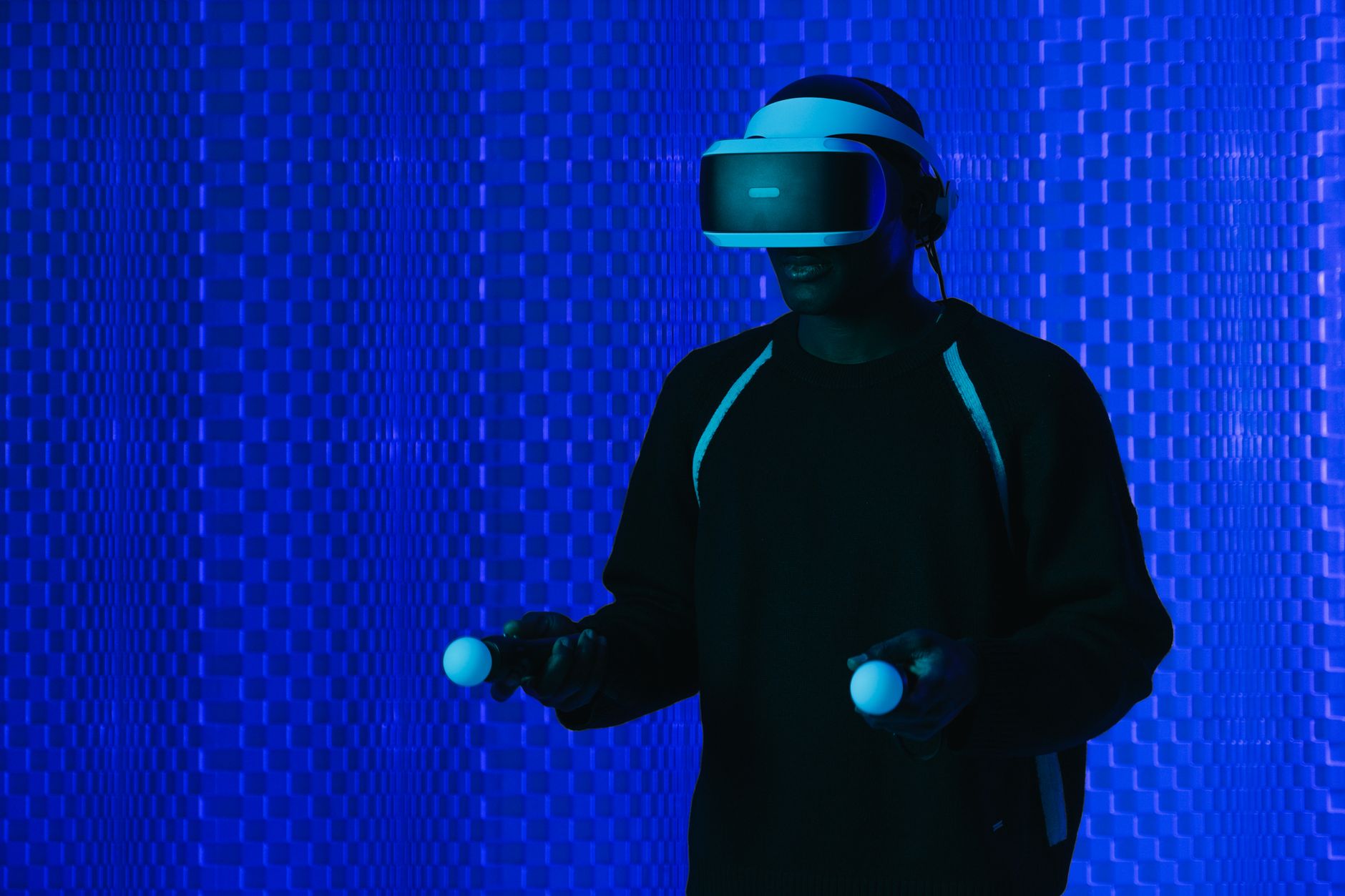
✓ VR market projected to reach over $50 billion by 2026.
✓ Haptic feedback and brain-computer interfaces are key next-gen VR features.
✓ The metaverse is a significant driver for VR's long-term development.
✓ VR is expanding beyond gaming into healthcare, education, and enterprise.
How It Works
1
Data Input & Processing
VR systems take real-world or simulated data, processing it through powerful GPUs to render complex 3D environments in real-time. This ensures a fluid and responsive virtual experience.
2
Visual & Audio Immersion
High-resolution displays with wide fields of view present these rendered environments directly to the user's eyes. Spacial audio further enhances immersion, making sounds appear to come from specific directions within the virtual space.
3
Tracking & Interaction
Sensors inside the headset and external trackers monitor head and body movements, translating them into actions within the virtual world. Hand controllers or gloves allow for natural interaction with virtual objects.
4
Sensory Feedback & Realism
Advanced VR aims to incorporate haptic feedback, mimicking touch sensations. Future iterations will also focus on reducing latency and improving visual fidelity to minimize motion sickness and maximize realism.
The Evolution of Immersive Virtual Reality Technology
Virtual Reality (VR) has come a long way from its clunky, experimental beginnings. Once the realm of science fiction and niche gaming, it's now poised to revolutionize nearly every facet of our lives. The journey has been marked by significant technological breakthroughs, from early head-mounted displays like the Sensorama in the 1960s to the consumer-ready devices of today. However, the 'future of virtual reality technology' isn't just about incremental improvements; it's about a paradigm shift in how we interact with digital information and each other. We are moving beyond mere visual and auditory immersion towards a multi-sensory experience that blurs the lines between the physical and digital worlds.
Early VR systems faced immense challenges: high latency causing motion sickness, prohibitive costs, limited computing power, and bulky hardware. The advent of powerful smartphones and miniaturized components provided a crucial stepping stone, allowing companies like Oculus (now Meta) to bring relatively affordable VR to the masses. This sparked a new wave of innovation, pushing boundaries in display technology, tracking accuracy, and content creation. Current-generation headsets offer higher resolutions, wider fields of view, and more precise positional tracking, significantly enhancing the user experience. Yet, these are just precursors to what's coming. The next wave of VR will integrate advanced haptics, sophisticated eye-tracking, and even rudimentary brain-computer interfaces (BCIs), allowing for unprecedented levels of immersion and control. Imagine not just seeing and hearing a virtual world, but feeling the texture of a digital object, or controlling an avatar with your thoughts. These capabilities are no longer distant dreams but active areas of research and development, promising to unlock truly transformative applications across various sectors.
The drive towards hyper-realistic graphics and seamless interaction is fueled by continuous advancements in processing power and display technologies. Micro-LED and OLED displays are being developed to offer higher pixel densities and refresh rates, eliminating the 'screen-door effect' and delivering visuals indistinguishable from reality. Furthermore, foveated rendering, a technique that renders the area the user is looking at in high detail while reducing the resolution in their peripheral vision, will optimize computational resources, enabling more complex and detailed virtual environments without sacrificing performance. This optimization is crucial for standalone VR headsets, which need to pack significant processing power into a compact form factor. The convergence of these technologies will pave the way for a new era of digital interaction, where our virtual experiences are as rich and nuanced as our physical ones. The implications for industries like entertainment, education, and healthcare are profound, offering new ways to engage, learn, and heal. Understanding these technological shifts is key to grasping the full potential of VR.
Transformative Applications Across Industries
The 'future of virtual reality technology' extends far beyond gaming and entertainment, permeating critical sectors and redefining how we work, learn, and connect. In healthcare, VR is already being used for surgical training, allowing aspiring surgeons to practice complex procedures in a risk-free environment, improving precision and reducing patient risk. It's also proving invaluable in pain management, distracting patients during uncomfortable procedures, and in therapy for conditions like PTSD and anxiety, by simulating controlled exposure to triggers. Imagine a future where personalized VR therapies are as common as physical therapy, tailored to individual patient needs and accessible from the comfort of their home.
Education stands to be fundamentally transformed by VR. Traditional textbooks and lectures can be augmented or even replaced by immersive learning experiences. Students can explore ancient civilizations, dissect virtual anatomy, or conduct complex chemistry experiments without the need for expensive lab equipment or field trips. This experiential learning fosters deeper understanding and engagement, making education more accessible and effective. For example, medical students can walk through a virtual human body, understanding organ systems in 3D, or engineering students can design and test structures in a simulated environment before physical construction. The ability to visualize abstract concepts in a tangible, interactive way is a game-changer for learning.
In the enterprise sector, VR is revolutionizing training, design, and collaboration. Companies are using VR for onboarding new employees, simulating dangerous or difficult work environments for safety training, and conducting product design reviews with geographically dispersed teams. Architects can walk clients through virtual blueprints, allowing them to experience a building before it's even constructed. Manufacturers can simulate assembly lines to optimize workflows and identify bottlenecks. The rise of the metaverse, a persistent, shared, 3D virtual space, will further amplify these collaborative capabilities, allowing global teams to meet, ideate, and co-create in incredibly immersive digital offices. This shift towards virtual collaboration reduces travel costs, carbon footprints, and opens up global talent pools, fundamentally changing the future of work. The convergence of VR with AI and IoT will unlock even more sophisticated applications, creating intelligent virtual environments that adapt to user needs and provide real-time data insights, driving unprecedented levels of efficiency and innovation across all industries.
The military and defense sectors are also significant adopters, using VR for advanced combat training, flight simulations, and tactical planning. These simulations provide realistic, high-stakes scenarios without actual risk, preparing personnel for critical situations. Furthermore, retail and e-commerce are embracing VR to offer immersive shopping experiences, allowing customers to virtually 'try on' clothes or 'place' furniture in their homes before purchase, reducing returns and enhancing customer satisfaction. The potential for VR to create entirely new business models and revenue streams is immense, fostering a new era of digital commerce and service delivery.
The Metaverse and the Future of Social Interaction
Perhaps the most talked-about aspect of the 'future of virtual reality technology' is its integral role in the development of the metaverse. While the term 'metaverse' is still evolving, it broadly refers to a persistent, interconnected network of 3D virtual worlds where users can interact with each other, digital objects, and AI-driven entities in real-time. VR headsets are envisioned as the primary gateway to these immersive digital spaces, providing the deepest sense of presence and immersion. The metaverse promises to be more than just a collection of virtual spaces; it's an entire digital economy where users can own digital assets, create content, and engage in social, professional, and recreational activities that mirror, and often transcend, real-world possibilities.
Social interaction in the metaverse will be fundamentally different from current 2D social media platforms. Instead of scrolling through feeds, users will be able to embody avatars, meet friends in virtual cafes, attend concerts, or collaborate on projects in shared digital workspaces. The ability to perceive body language, spatial audio, and shared gaze will foster a much richer and more nuanced sense of connection, reducing the feeling of isolation that can sometimes accompany remote interactions. Advanced avatar technology, driven by AI and motion capture, will allow for highly expressive and customizable digital representations, enabling users to truly project their identity into the virtual realm. This level of realism and interaction will make virtual gatherings feel much closer to in-person experiences.
Challenges remain, of course. Interoperability between different metaverse platforms is crucial to avoid a fragmented digital landscape. Standards for digital identity, asset ownership (often leveraging NFTs and blockchain technology), and data privacy need to be established. Ethical considerations, such as digital well-being, combating harassment, and ensuring equitable access, are paramount as these virtual worlds become more central to our lives. However, the potential for the metaverse to create new forms of community, foster creativity, and unlock unprecedented economic opportunities is undeniable. Companies like Meta, Microsoft, and Epic Games are investing billions into building their visions of the metaverse, indicating a strong belief in its long-term potential. As VR technology matures, it will increasingly become the primary interface for this next iteration of the internet, transforming how we perceive and participate in digital life. The metaverse isn't just a destination; it's an evolving ecosystem where VR is the key to unlocking its full immersive power. The convergence of these technologies is paving the way for a truly interconnected digital future.
Furthermore, the economic implications of the metaverse, powered by VR, are staggering. It is anticipated to create entirely new markets for virtual goods, services, and experiences. Digital fashion, virtual real estate, and immersive entertainment will become mainstream industries. Content creators, developers, and entrepreneurs will find vast opportunities to build and monetize within these virtual economies. This shift represents a significant evolution from the current app-centric internet to a spatial, experience-centric internet, where presence and interaction are paramount. The regulatory frameworks and societal norms around these emerging digital economies will need to evolve rapidly to keep pace with the technological advancements.
Overcoming Challenges and Ethical Considerations for VR Adoption
Despite the immense promise of the 'future of virtual reality technology', several significant challenges and ethical considerations must be addressed for widespread adoption. One of the primary technical hurdles is the continued need for more powerful, yet affordable, hardware. While standalone headsets have improved dramatically, achieving photorealistic graphics and complex simulations still often requires tethered connections to high-end PCs. Reducing latency, improving field of view, and enhancing display resolution while keeping devices light and comfortable are ongoing engineering challenges. The physical comfort of prolonged VR use, including mitigating motion sickness, eye strain, and general fatigue, remains a critical factor for user retention.
Another key challenge is content creation. Developing high-quality, engaging, and diverse VR experiences is resource-intensive and requires specialized skills. A robust ecosystem of developers, artists, and storytellers is essential to provide compelling reasons for users to embrace VR beyond initial novelty. Interoperability, as mentioned earlier, is also crucial. A fragmented VR landscape where experiences are locked into specific platforms will hinder mass adoption. Open standards and cross-platform compatibility will be vital for a truly interconnected virtual future.
Ethical considerations are equally important. Data privacy and security in highly immersive virtual environments raise new questions. Who owns the data generated by our virtual interactions? How is our digital identity protected? The potential for addiction and disassociation from the real world is another concern, requiring careful design and responsible usage guidelines. The psychological impact of spending significant time in virtual worlds needs further research and understanding. Furthermore, issues of digital harassment, online safety, and equitable access to these technologies must be proactively addressed to ensure the metaverse and VR are inclusive and beneficial for all.
Addressing these challenges will require collaborative efforts from technology companies, policymakers, researchers, and users themselves. Investments in R&D for hardware and software, the development of ethical guidelines, and fostering an open and diverse content ecosystem are all critical steps. As VR becomes more sophisticated, the lines between our physical and virtual realities will blur, making these considerations even more pressing. Responsible innovation, focused on user well-being and societal benefit, will be paramount in shaping a positive and sustainable future for virtual reality technology. Ultimately, the success of VR will depend not just on its technological prowess, but on its ability to integrate seamlessly and ethically into human lives, enhancing our experiences without compromising our well-being. This requires a balanced approach to development, prioritizing human-centric design and robust ethical frameworks alongside technological advancement.
List of Critical Challenges:
* **Hardware Limitations:** Weight, comfort, battery life, and processing power for standalone devices.
* **Content Gap:** Need for more diverse, high-quality, and compelling VR applications beyond gaming.
* **Interoperability:** Lack of universal standards for platforms, avatars, and digital assets.
* **Data Privacy & Security:** Protecting user data and digital identities in immersive environments.
* **Digital Well-being:** Addressing potential for addiction, motion sickness, and psychological impact.
* **Accessibility & Equity:** Ensuring VR is affordable and usable for diverse populations.
* **Ethical Governance:** Establishing norms and regulations for behavior in virtual spaces.
Comparison
Feature
Current High-End VR (e.g., Quest 3)
Next-Gen VR (2-5 years)
Future Vision (5-10+ years)
Display Resolution
2064x2208 per eye
4K-8K per eye
Retina-level (16K+)
Field of View
100-110 degrees
120-150 degrees
180+ degrees (human-like)
Input Methods
Hand controllers, hand tracking
Advanced hand tracking, haptics, eye tracking
BCI, full body haptics
Portability
Standalone, some tethered
Lighter standalone, AR/VR hybrid
Glasses-form factor, full AR/VR convergence
Realism
Good, noticeable digital artifacts
Near photorealistic, reduced latency
Indistinguishable from reality
Sensory Feedback
Vibration in controllers
Advanced haptics (gloves, suits)
Full body haptic suits, olfactory (smell) feedback
Cost
$500 - $1500
$800 - $2500
Potentially consumer-friendly with mass production
Social Interaction
Avatars, limited non-verbal cues
Expressive avatars, advanced non-verbal cues
Hyper-realistic avatars, seamless social presence
What Readers Say
★★★★★
"The future of virtual reality technology is breathtaking. I tried a haptic suit demo last week, and feeling the virtual rain was an experience I won't forget. It truly felt like stepping into another world."
Alex P. · San Francisco, CA
★★★★★
"As a surgeon, the advancements in VR for medical training are revolutionary. Simulating complex operations in VR has drastically improved my residents' confidence and precision, reducing real-world risks for patients."
Dr. Lena H. · Boston, MA
★★★★★
"My kids are learning history through VR, and their engagement is incredible. They can walk through ancient Rome! This technology has transformed their understanding and made learning truly immersive and fun."
Marcus L. · Austin, TX
★★★★★
"While the current headsets are still a bit bulky, the potential for the future of virtual reality technology is clear. I'm excited for lighter designs and more seamless integration into daily life, especially for remote work."
Sarah J. · New York, NY
★★★★★
"The collaborative tools in VR for my engineering team have been a game-changer. We can review 3D models together from across the globe, identifying issues faster and streamlining our design process significantly."
David C. · Seattle, WA
Frequently Asked Questions
What are the biggest innovations expected in the future of virtual reality technology?
The biggest innovations include significantly higher resolution displays that eliminate the 'screen-door effect', advanced haptic feedback for realistic touch sensations, more sophisticated eye-tracking for foveated rendering and intuitive interaction, and the integration of brain-computer interfaces for direct thought control. These will lead to unparalleled immersion and realism.
Is VR still just for gaming, or will it have broader appeal?
Definitely broader appeal! While gaming remains a strong driver, the future of virtual reality technology is expanding rapidly into education, healthcare, enterprise training, social interaction (the metaverse), and even retail. Its ability to create immersive, interactive experiences makes it valuable across almost every industry.
How will the metaverse impact the future of virtual reality technology?
The metaverse is a crucial driver for VR's future. VR headsets are expected to be the primary gateway to these persistent, interconnected 3D virtual worlds. The demand for rich social interactions, collaborative work, and digital economies within the metaverse will accelerate VR hardware and software development, pushing for greater realism, comfort, and accessibility.
Will future VR headsets be affordable for the average consumer?
As with most emerging technologies, initial high-end VR will likely remain premium-priced. However, as manufacturing scales and technology matures, more affordable and accessible options are expected to become available. The trend for standalone headsets suggests a push towards consumer-friendly pricing, similar to how smartphones evolved.
How does VR compare to Augmented Reality (AR) in terms of future impact?
While VR fully immerses you in a virtual world, AR overlays digital information onto your real-world view. The future sees a convergence into 'Extended Reality' (XR), where devices can seamlessly switch between VR and AR. Both will have massive impact, with AR potentially more pervasive for daily tasks and VR for deep immersion, but they are increasingly complementary.
Who stands to benefit most from the advancements in virtual reality technology?
Nearly everyone. Gamers will get richer experiences, students will learn more effectively, professionals will collaborate globally, patients will receive innovative therapies, and consumers will engage with brands in new ways. Industries focused on design, training, and simulation will see significant productivity gains.
Are there any health or safety concerns with the future of virtual reality technology?
As VR becomes more immersive, concerns about motion sickness, eye strain, and potential psychological impacts from prolonged use or disassociation from reality are being actively researched. Developers are working to mitigate these through better hardware design, reduced latency, and responsible content creation. Ethical guidelines for digital well-being will also be crucial.
What role will AI play in the future of virtual reality technology?
AI will be fundamental. It will power more intelligent and responsive virtual characters (NPCs), enable more realistic and dynamic virtual environments, personalize user experiences, and optimize rendering performance. AI will also be critical for processing complex data from eye-tracking and BCIs, making interactions more intuitive and natural.
The future of virtual reality technology promises a world where digital experiences are indistinguishable from reality. Embrace this transformative journey and prepare for a new era of interaction, learning, and entertainment. Don't just observe the future; step into it.