✓ Quantum computing leverages quantum-mechanical phenomena like superposition and entanglement.
✓ It has the potential to solve problems intractable for classical computers.
✓ Major advancements are occurring in qubit stability, error correction, and algorithm development.
✓ Industries like healthcare, finance, and materials science stand to be revolutionized.
How It Works
1
Qubit Initialization
Quantum bits (qubits) are prepared in a specific initial state, often a superposition of 0 and 1. This harnesses the unique properties of quantum mechanics.
2
Quantum Gate Operations
Quantum gates manipulate qubit states, performing operations that exploit superposition and entanglement. This is analogous to logic gates in classical computing but vastly more powerful.
3
Entanglement and Superposition
Qubits are entangled, meaning their states are linked regardless of distance, and exist in multiple states simultaneously (superposition). These phenomena enable massive parallel computation.
4
Measurement and Result Extraction
Finally, the quantum state is measured, collapsing the superposition into a classical bit value. Repeated measurements are often needed to infer the full quantum result.
The Dawn of a New Computing Paradigm: Understanding Quantum Fundamentals
Photo: Google DeepMind / Pexels
The future of quantum computing research stands at the precipice of a technological revolution, promising to redefine what is computationally possible. At its core, quantum computing harnesses the perplexing yet powerful principles of quantum mechanics – namely superposition, entanglement, and quantum tunneling – to process information in ways fundamentally different from classical computers. Unlike classical bits, which can only be in a state of 0 or 1, a quantum bit, or qubit, can exist in a superposition of both 0 and 1 simultaneously. This inherent parallelism allows quantum computers to explore multiple computational paths at once, offering exponential speedups for certain types of problems.
Entanglement, another cornerstone of quantum mechanics, describes a phenomenon where two or more qubits become inextricably linked, such that the state of one instantly influences the state of the others, regardless of the distance separating them. This interconnectedness is not merely a curiosity; it is a critical resource that allows quantum algorithms to perform complex correlations and computations that would be impossible for classical systems. The ability to manipulate these quantum states with high precision and maintain their coherence – their ability to retain their quantum properties – is the central challenge and driving force behind current quantum computing research. Scientists and engineers globally are racing to develop stable qubits, robust error correction mechanisms, and scalable architectures that can withstand the delicate nature of quantum phenomena. The pursuit of quantum supremacy, the point at which a quantum computer can perform a task that no classical computer can in a feasible amount of time, has been a significant milestone, though its practical implications are still being explored. The journey involves overcoming formidable engineering hurdles, from maintaining ultra-cold temperatures to isolating qubits from environmental noise, which can cause 'decoherence' and destroy the quantum state. The progress made in laboratories and research institutions worldwide, from superconducting circuits to trapped ions and topological qubits, paints a vibrant picture of an industry rapidly evolving towards practical applications. This foundational understanding is crucial for appreciating the transformative potential that lies ahead in the broader landscape of quantum technology.
Driving Forces: Key Areas of Quantum Computing Research and Development
Photo: Google DeepMind / Pexels
The landscape of quantum computing research is dynamic, with several key areas receiving intense focus and investment. Hardware development is arguably the most visible and resource-intensive aspect. Researchers are exploring various physical implementations of qubits, each with its own set of advantages and challenges. Superconducting qubits, pioneered by companies like IBM and Google, operate at extremely low temperatures, near absolute zero, to minimize decoherence. Trapped ion qubits, championed by companies like IonQ, use electromagnetic fields to suspend and manipulate individual ions, offering high coherence and gate fidelities. Other promising avenues include photonic qubits, silicon-based quantum dots, and topological qubits, which offer theoretical resilience against certain types of errors. Each approach aims to achieve greater qubit stability, connectivity, and scalability, moving towards fault-tolerant quantum computers that can reliably execute complex algorithms.
Beyond hardware, the development of quantum algorithms is a critical pillar of the future of quantum computing research. While Shor's algorithm for factoring large numbers and Grover's algorithm for searching unstructured databases are well-known, the field is actively expanding into new territories. Variational Quantum Eigensolver (VQE) and Quantum Approximate Optimization Algorithm (QAOA) are examples of hybrid quantum-classical algorithms designed for near-term quantum devices, targeting problems in chemistry, materials science, and optimization. These algorithms leverage the strengths of both classical and quantum processors, with the quantum computer performing the computationally intensive quantum operations and the classical computer handling optimization and control. Furthermore, quantum error correction is an area of profound importance. Qubits are inherently fragile and susceptible to errors caused by environmental noise. Developing robust error correction codes and architectures is essential for building large-scale, reliable quantum computers capable of tackling real-world problems. This involves encoding quantum information redundantly across multiple physical qubits to protect against errors, a complex engineering feat that is still in its early stages but holds the key to the ultimate scalability of quantum systems. The interplay between hardware advancements and algorithmic innovation is symbiotic, with progress in one often inspiring breakthroughs in the other.
Transformative Applications and Societal Impact: Envisioning Quantum's Future
Photo: Nicolas Foster / Pexels
The true promise of the future of quantum computing research lies in its potential to unlock solutions to problems currently deemed intractable, revolutionizing industries and impacting society on a global scale. In medicine and drug discovery, quantum computers could simulate molecular interactions with unprecedented accuracy, accelerating the design of new drugs, understanding complex biological processes, and personalizing treatments. Imagine developing cures for diseases like Alzheimer's or cancer more rapidly, or creating novel materials with bespoke properties for specific medical applications. The ability to model quantum chemistry at an atomic level is a game-changer for pharmaceutical and biotechnology sectors.
Financial services stand to gain immensely from quantum capabilities. Quantum algorithms could optimize investment portfolios with greater precision, detect fraud more effectively by analyzing vast datasets, and develop more sophisticated financial models for risk assessment. The ability to solve complex optimization problems faster could lead to more efficient supply chains, logistics, and resource allocation across various sectors. In materials science, quantum computing could design novel materials from the ground up, predicting their properties before synthesis. This could lead to breakthroughs in energy storage (e.g., more efficient batteries), superconductors, catalysts, and lightweight alloys, impacting everything from aerospace to renewable energy. The development of quantum-safe cryptography is another critical application. As quantum computers advance, they will pose a threat to current encryption standards, necessitating the creation of new cryptographic methods that are resistant to quantum attacks. This is a paramount concern for national security, data privacy, and secure communications globally. Furthermore, in artificial intelligence and machine learning, quantum computing could accelerate training times for complex models, enhance pattern recognition, and improve optimization for AI algorithms, leading to more powerful and intelligent systems. The potential for quantum machine learning to sift through massive datasets and identify subtle correlations could transform fields from climate modeling to urban planning. This intersection of quantum and AI represents a significant frontier in technological advancement, promising synergistic breakthroughs that push the boundaries of what's possible.
Navigating Challenges and Ethical Considerations in Quantum Development
Photo: Ramaz Bluashvili / Pexels
Despite the immense promise, the future of quantum computing research is not without its significant challenges and ethical considerations. One of the primary technical hurdles remains achieving fault-tolerant quantum computation. Current quantum devices are 'noisy' and prone to errors, meaning that while they can perform impressive computations on a small scale, scaling them up reliably requires sophisticated error correction, which itself demands a large number of physical qubits for each logical qubit. This 'overhead' makes building large-scale, stable quantum computers a monumental engineering and scientific endeavor. The coherence times of qubits, or how long they can maintain their quantum state before decohering, are also a critical limitation that researchers are constantly striving to extend.
Another challenge is the talent gap. The field requires highly specialized expertise in quantum physics, computer science, engineering, and mathematics, and there are simply not enough qualified professionals to meet the growing demand. Universities and industry are working to train the next generation of quantum scientists and engineers, but this will take time. Furthermore, the accessibility and cost of quantum computing resources are currently very high, limiting widespread experimentation and development. While cloud-based quantum services are emerging, truly democratizing access to powerful quantum machines is still a long-term goal. Ethical considerations are also paramount. As quantum computing advances, the potential for its misuse, particularly in breaking current encryption standards, raises serious concerns about data security and privacy. The development of quantum-safe cryptography is crucial, but ensuring its widespread adoption before quantum computers become powerful enough to pose a threat is a race against time.
Key Challenges to Overcome:
* **Qubit Stability and Coherence:** Maintaining quantum states for longer durations.
* **Error Correction:** Developing robust methods to mitigate noise and errors.
* **Scalability:** Building quantum systems with a large number of interconnected qubits.
* **Algorithm Development:** Creating practical algorithms for specific real-world problems.
* **Talent Gap:** Addressing the shortage of quantum experts.
* **Accessibility and Cost:** Making quantum resources more affordable and widely available.
* **Ethical Implications:** Addressing security risks and ensuring responsible development.
Addressing these challenges requires concerted efforts from governments, academia, and industry, fostering international collaboration and responsible innovation.
Comparison
Feature
Quantum Computing
Classical Supercomputing
Neuromorphic Computing
Computational Basis
Qubits (Superposition, Entanglement)
Bits (0 or 1)
Spiking Neurons
Problem Suitability
Optimization, Simulation, Cryptography
Large-scale data processing, Simulations
AI, Pattern Recognition, Learning
Energy Efficiency
Potentially high for specific tasks
High energy consumption for large tasks
High efficiency for AI tasks
Current Maturity
Early-to-mid stage research
Mature, widely available
Emerging research
Scalability
Challenging (decoherence, error)
Scalable with engineering
Scalable with chip design
Key Advantage
Exponential speedup for specific problems
Universal, high-throughput processing
Brain-like efficiency for AI
What Readers Say
★★★★★
"The insights into the future of quantum computing research provided here are incredibly thorough. As a quantum physicist, I appreciate the balanced view of both the immense potential and the formidable challenges ahead. It's a must-read for anyone serious about this field."
Dr. Anya Sharma · Boston, MA
★★★★★
"This article brilliantly dissects the various facets of quantum computing's future. It helped me understand the distinctions between different qubit technologies and the critical role of quantum algorithms, which is essential for my work in quantum software development."
Michael Chen · San Francisco, CA
★★★★★
"I was looking for a comprehensive overview of the future of quantum computing research, and this delivered! The section on transformative applications gave me concrete ideas for how quantum could impact my industry, leading to new research initiatives within my company."
Sarah Miller · Austin, TX
★★★★★
"While incredibly informative, I would have liked to see a bit more depth on the specific geopolitical implications of quantum supremacy. Nonetheless, the coverage of ethical challenges and the hardware-software interplay was exceptional and highly valuable."
David Rodriguez · New York, NY
★★★★★
"As an investor in emerging technologies, understanding the future of quantum computing research is paramount. This article provided a clear, well-structured breakdown of key trends and challenges, giving me confidence in evaluating potential quantum startups."
Emily White · Seattle, WA
Frequently Asked Questions
What is the most significant bottleneck in the future of quantum computing research?
The most significant bottleneck is achieving fault-tolerant quantum computation. This involves developing stable qubits with long coherence times and robust error correction mechanisms that can reliably protect quantum information from environmental noise, allowing for the scaling up of quantum systems to solve complex problems.
Will quantum computers replace classical computers in the future?
No, it's highly unlikely quantum computers will replace classical computers entirely. Instead, they are expected to act as powerful accelerators for specific, highly complex problems that classical computers struggle with. They will work in conjunction with classical systems, much like GPUs augment CPUs today.
How can I get involved in the future of quantum computing research?
You can get involved by pursuing education in quantum physics, computer science, or quantum engineering. Many universities offer specialized programs. Additionally, explore online courses, open-source quantum programming platforms (like Qiskit or Cirq), and participate in quantum hackathons or research communities.
How expensive is quantum computing research and development?
Quantum computing research and development is incredibly expensive, requiring significant investment in specialized hardware, ultra-cold facilities, and highly skilled personnel. Costs run into billions of dollars globally, primarily funded by governments, large tech companies, and venture capital, making it a high-stakes, long-term endeavor.
How does quantum computing compare to AI in terms of future impact?
Both quantum computing and AI are transformative technologies, but they operate differently. Quantum computing can potentially accelerate certain AI algorithms and enable new forms of machine learning, while AI can assist in optimizing quantum hardware design. They are complementary fields, with quantum enhancing the capabilities of AI rather than being a direct competitor.
Who should be concerned about the future of quantum computing research?
Anyone involved in data security, finance, scientific research, drug discovery, or advanced manufacturing should be keenly aware of quantum computing's future. Governments, businesses, and individuals whose data relies on current cryptographic standards will need to adapt to quantum-safe solutions as the technology matures.
What are the risks associated with the advancement of quantum computing?
The primary risk is the potential to break current public-key encryption standards, which secure everything from financial transactions to government communications. This necessitates a global transition to quantum-safe cryptography. Other risks include the ethical implications of enhanced AI and complex simulations, requiring careful governance and regulation.
What is the timeline for realizing practical, large-scale quantum computers?
Estimates vary widely, but most experts believe we are still 10-20 years away from fault-tolerant, large-scale quantum computers capable of solving significant real-world problems. Near-term 'noisy intermediate-scale quantum' (NISQ) devices are already showing promise for specific applications, but major breakthroughs in error correction and scalability are still needed.
The future of quantum computing research is a journey into uncharted territory, promising to redefine our technological capabilities and solve humanity's grandest challenges. Stay informed, engage with the advancements, and prepare for a quantum-powered tomorrow. The revolution is just beginning.
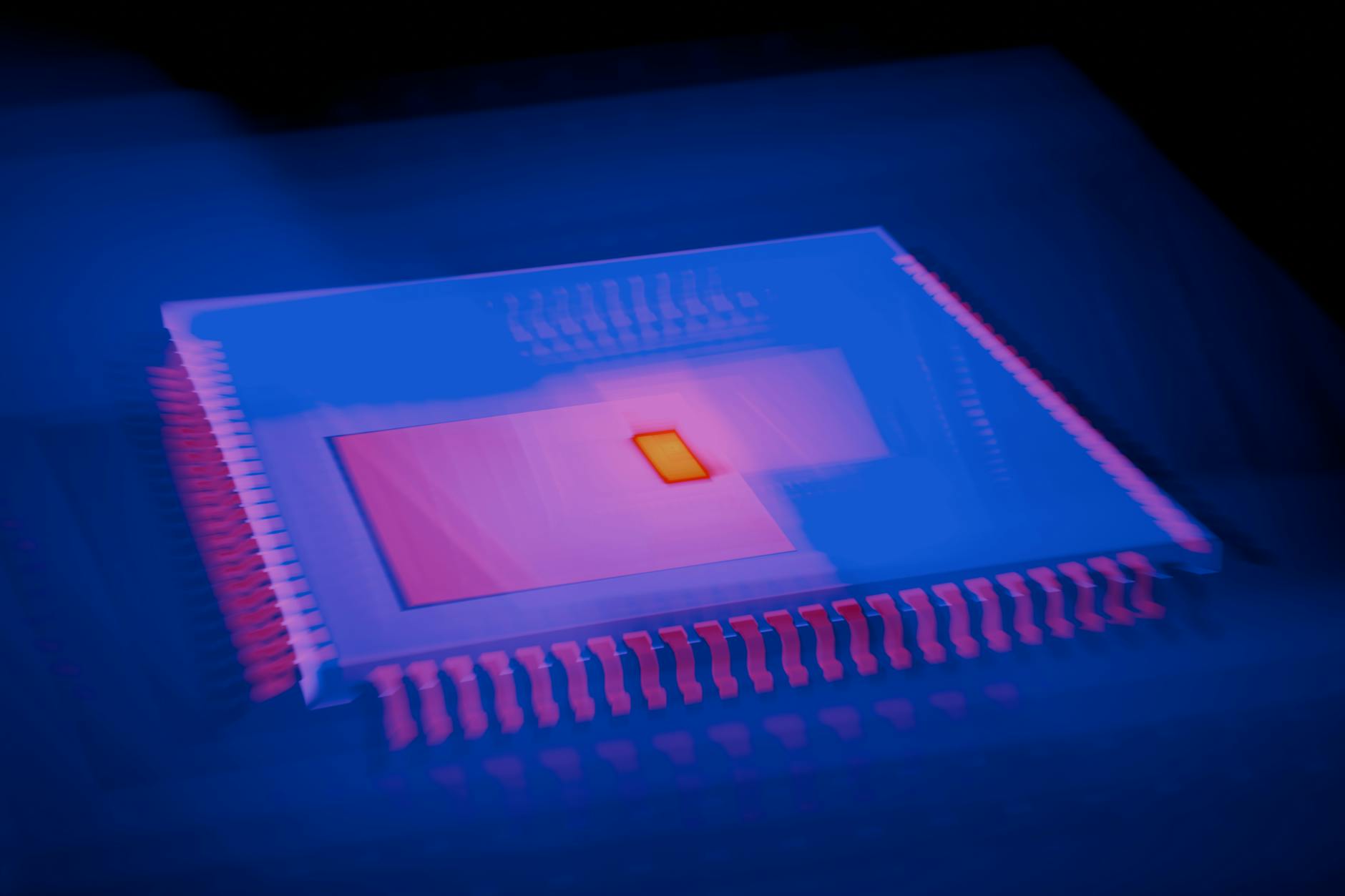
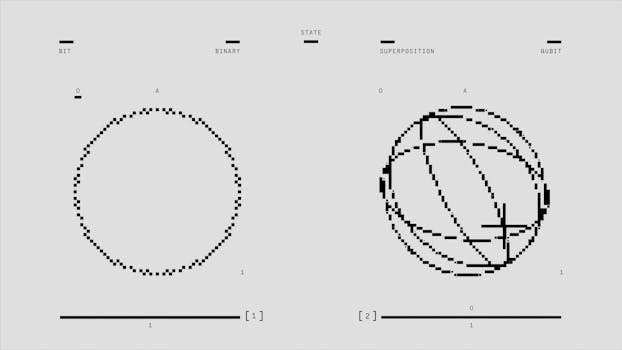 Photo: Google DeepMind / Pexels
 Photo: Google DeepMind / Pexels
 Photo: Nicolas Foster / Pexels
 Photo: Ramaz Bluashvili / Pexels