
The Future of Autonomous Vehicles: Navigating the Road Ahead
Uncover how self-driving technology is set to revolutionize urban mobility, logistics, and personal travel.
Dive In NowKey Takeaways
- ✓ Autonomous vehicles (AVs) are classified into 6 levels of automation, from 0 (no automation) to 5 (full automation).
- ✓ The global autonomous vehicle market is projected to reach over $1 trillion by 2030.
- ✓ A significant portion of AV development is focused on enhancing safety by eliminating human error, which causes over 90% of accidents.
- ✓ Beyond personal cars, AV technology will transform trucking, public transit, and last-mile delivery services.
How It Works
AVs use an array of sensors like cameras, radar, lidar, and ultrasonic sensors to create a detailed 3D map of their surroundings. This data identifies other vehicles, pedestrians, traffic signs, and road conditions.
High-definition maps combined with real-time sensor data allow the vehicle to precisely determine its location. This continuous localization ensures accurate path planning and obstacle avoidance.
Sophisticated AI algorithms analyze sensor data and map information to predict the behavior of other road users and plan an optimal, safe path. Decisions are made in milliseconds, mimicking and often exceeding human reaction times.
Once a path is planned, the vehicle's control systems translate these decisions into physical actions. This includes steering, acceleration, and braking, executed with precision to navigate safely and efficiently.
Understanding the Evolution of Self-Driving Technology
 Photo: Daniel Andraski / Pexels
Transformative Impact on Society and Economy
 Photo: Abhishek Navlakha / Pexels
Addressing Challenges: Regulatory, Ethical, and Technological Hurdles
 Photo: Vladimir Srajber / Pexels
Future Trends and Key Milestones on the Horizon
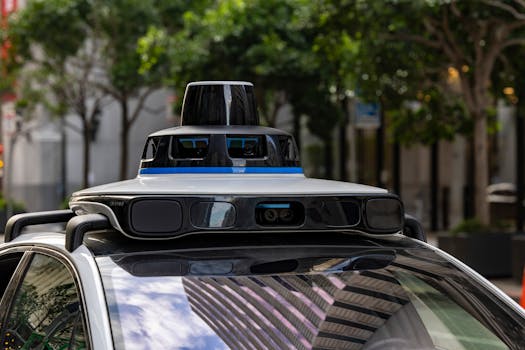 Photo: Stephen Leonardi / Pexels
Comparison
| Feature | Level 2 (Partial Automation) | Level 3 (Conditional Automation) | Level 4 (High Automation) | Level 5 (Full Automation) |
|---|---|---|---|---|
| Driver Engagement | Constant supervision required | Driver must be ready to intervene | No driver attention needed in ODD | No driver attention ever needed |
| System Control | Steering & Speed (simultaneously) | Most dynamic driving tasks | All dynamic driving tasks in ODD | All dynamic driving tasks |
| Operational Design Domain (ODD) | Limited (e.g., highway, clear weather) | Limited (e.g., highway, clear weather) | Specific areas/conditions (e.g., geofenced city) | All conditions, everywhere |
| Human Takeover | ✓ | ✓ (when prompted) | ✗ (system handles fallback) | ✗ (no human needed) |
What Readers Say
"The conceptual shift presented by the future of autonomous vehicles is truly groundbreaking. As an urban planner, I see the potential for reclaiming vast amounts of urban space currently dedicated to parking, leading to more livable and sustainable cities."
Dr. Evelyn Reed · San Francisco, CA"I've been following the progress of self-driving cars for years, and this article perfectly captures the excitement and the challenges. The focus on safety benefits and economic impact really resonates with me as a logistics professional."
Marcus Chen · Austin, TX"After reading, I have a much clearer understanding of the different automation levels. I used to think 'self-driving' meant fully autonomous, but the breakdown here helped me realize the complex journey ahead. It's clear the future of autonomous vehicles will significantly reduce accidents."
Sarah Miller · Boston, MA"While the technological advancements are impressive, the article rightly points out the significant ethical and regulatory hurdles. I'm optimistic, but it's important to approach the future of autonomous vehicles with a balanced perspective on both their potential and the problems to solve."
David Kim · Seattle, WA"As someone who relies on public transport, the idea of autonomous shuttles and 'Mobility as a Service' is incredibly appealing. It could truly democratize access to transportation for everyone, enhancing urban living in ways we can only begin to imagine."
Jessica Lopez · Miami, FLFrequently Asked Questions
What is the biggest challenge to the widespread adoption of autonomous vehicles?
The biggest challenge lies in a combination of regulatory harmonization, public trust, and the technological mastery of 'edge cases' – rare, unpredictable scenarios that current AI struggles to consistently handle. Building robust, universally safe systems requires extensive testing, transparent ethical frameworks, and clear legal accountability.
Are autonomous vehicles truly safer than human-driven cars?
The long-term goal and strong hypothesis is that AVs will be significantly safer. Human error accounts for over 90% of accidents. While current AVs are still in testing and refinement, their potential to eliminate distraction, fatigue, and impairment suggests a future with dramatically fewer collisions and fatalities. However, robust data from widespread deployment is still being gathered.
How will autonomous vehicles impact the job market?
AVs will likely create new jobs in software development, AI engineering, cybersecurity, and maintenance. However, they will also disrupt industries reliant on human drivers, such as trucking, taxis, and ride-sharing. Societies will need to implement retraining programs and social safety nets to manage this transition effectively and ensure equitable outcomes.
How much will autonomous vehicles cost?
Initially, fully autonomous vehicles or services will be premium-priced due to the advanced technology involved. However, as the technology matures and scales, costs are expected to decrease. The rise of 'Mobility as a Service' could also mean individuals pay for access to autonomous fleets rather than owning expensive vehicles, potentially lowering overall transportation costs for many.
How do Level 2 and Level 3 autonomous vehicles differ?
In Level 2, the driver must constantly supervise and be ready to take control, even when the system controls steering and speed. In Level 3, the vehicle can handle most dynamic driving tasks in specific conditions, allowing the driver to disengage from driving, but they must still be available to intervene when prompted by the system. The key difference is the driver's role in monitoring.
Who should be excited about the future of autonomous vehicles?
Everyone should be excited! Commuters can anticipate less stressful, more productive travel. Businesses can expect optimized logistics and delivery. The elderly and disabled will gain unprecedented mobility. Urban planners see potential for greener, more efficient cities. Ultimately, anyone concerned with safety, efficiency, and accessibility in transportation stands to benefit.
What happens if an autonomous vehicle's sensors fail due to extreme weather?
Autonomous vehicles are designed with redundancies. If primary sensors (like lidar or cameras) are degraded by extreme weather, the system might rely more heavily on other sensors (like radar) or high-definition maps. In severe cases where safety cannot be guaranteed, a Level 3 or 4 vehicle would prompt a human takeover or execute a safe 'minimum risk maneuver,' such as pulling over to the side of the road.
Will autonomous vehicles eliminate traffic congestion?
While AVs have the potential to significantly reduce congestion through optimized routing, platooning, and dynamic traffic management, they may not eliminate it entirely. The actual impact will depend on factors like the penetration rate of AVs, urban planning decisions, and whether AVs lead to an increase in overall vehicle miles traveled (e.g., empty robotaxis cruising for fares). However, efficiency will drastically improve.
The future of autonomous vehicles is not just a technological advancement; it's a societal transformation. As we navigate the complexities and embrace the innovations, staying informed is key. Explore further, engage with the discussion, and prepare for a future where mobility is redefined.