Explain Blockchain Technology for Dummies: Your Simple Guide
explain blockchain technology for dummies

Explain Blockchain Technology for Dummies: Your Simple Guide

Hand writing 'ETH' on a whiteboard, highlighting Ethereum concept.Photo: RDNE Stock project / Pexels

Explain Blockchain Technology for Dummies: Your Simple Guide

Demystify the complex world of blockchain with straightforward explanations and real-world examples.

Start Learning Now

Key Takeaways

  • ✓ Blockchain is a decentralized, distributed digital ledger.
  • ✓ Transactions are grouped into 'blocks' and cryptographically linked.
  • ✓ It offers enhanced security and transparency without a central authority.
  • ✓ Not just for cryptocurrency; it has diverse applications.

How It Works

1
A Transaction Initiated

Someone wants to send digital money, data, or assets to another person. This action creates a transaction request.

2
Verification by the Network

The transaction is broadcast to a peer-to-peer network of computers. These computers, called nodes, verify the transaction's legitimacy based on established rules.

3
Block Creation and Linking

Once verified, the transaction is bundled with other recent transactions into a new 'block'. This block is then cryptographically linked to the previous block, forming a chain.

4
Distribution and Immutability

The new block is added to the shared, distributed ledger across all nodes. This makes the record permanent and extremely difficult to alter, ensuring transparency and security.

What is Blockchain? The Core Concept Simplified
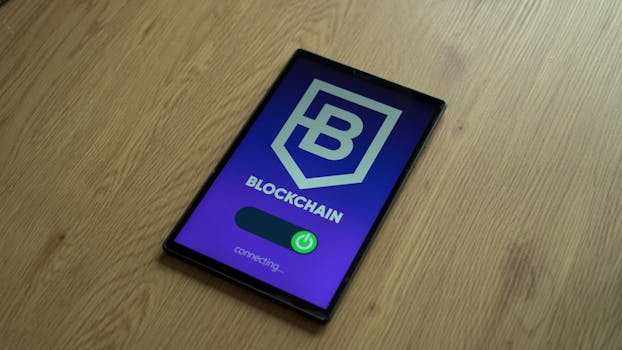
Close-up of a digital tablet showing a blockchain concept screen on a wooden surface.Photo: Morthy Jameson / Pexels
Imagine a digital notebook that's not owned by one person, but by everyone who uses it. Every time someone writes something new in this notebook, everyone else gets a copy. That, in its simplest form, is blockchain. It's a type of Distributed Ledger Technology (DLT) that records transactions in a way that makes them incredibly secure and transparent. Instead of a central bank or a single company managing all records, blockchain distributes the power across a network of computers. Each 'page' in this notebook is called a 'block,' and once a page is filled with information (transactions), it's sealed and linked to the previous page, forming a 'chain' of blocks. This chain is almost impossible to tamper with because if someone tries to change a record on one page, all other copies in the network would immediately detect the discrepancy. This fundamental design choice is what gives blockchain its revolutionary potential, moving us away from systems that rely on trust in a single entity towards systems built on cryptographic proof and collective verification. It’s like having a public notary for every single transaction, but instead of one person, you have thousands of computers verifying and stamping the record. This shared, immutable record creates an unprecedented level of trust and accountability, opening doors for new ways to manage data, assets, and value. The beauty of it lies in its decentralized nature; no single point of failure means greater resilience and security against hacks or manipulation. Understanding this core concept is the first step in truly grasping the power and implications of this technology. It's a paradigm shift from centralized control to a distributed consensus, promising a future where intermediaries are less critical and individuals have more direct control over their digital interactions and assets. For more on the underlying principles, you might explore the basics of cryptography that secure these chains.

The Building Blocks: Transactions, Blocks, and Chains

Flat lay of a modern digital workspace with blockchain theme, featuring a smartphone and calendar.Photo: Leeloo The First / Pexels
To truly explain blockchain technology for dummies, we need to break it down into its fundamental components. At the heart of it all are **transactions**. A transaction isn't just about sending money; it can be any piece of information or value transfer – from buying a coffee with Bitcoin to recording a land deed or even voting. When a transaction occurs, it's not immediately added to the blockchain. Instead, it waits in a pool with other pending transactions. The next critical component is a **block**. Think of a block as a container designed to hold a specific number of these verified transactions. When enough transactions are gathered, and certain cryptographic puzzles are solved (a process known as 'mining' in some blockchains like Bitcoin), a new block is created. Each block contains a unique identifier, often called a 'hash,' which is like its digital fingerprint. What makes it a 'chain' is the inclusion of the previous block's hash within the new block. This creates an unbreakable link, meaning that if you try to alter a transaction in an old block, its hash would change, and that change would ripple through all subsequent blocks, invalidating the entire chain. This cryptographic linking is the backbone of blockchain's security and immutability. The **chain** itself is the continuous, chronological record of all valid transactions that have ever occurred on that particular blockchain. Every participant in the network holds a copy of this entire chain. This distributed nature is key. If one copy is corrupted, the network can easily identify it by comparing it to the thousands of other identical copies. This consensus mechanism ensures that all participants agree on the state of the ledger, making it incredibly resistant to fraud and censorship. It's a self-regulating system where the integrity of the data is maintained by the collective power of the network, rather than a single oversight body. This architecture is what makes blockchain a robust and trustworthy system for recording any kind of valuable information, far beyond just financial transactions. The design ensures that once information is on the chain, it's there to stay, forever verifiable and transparent for all who have access.

Decentralization and Security: Why Blockchain is Revolutionary

Close-up of a digital tablet showing a blockchain concept screen on a wooden surface.Photo: Morthy Jameson / Pexels
The true genius of blockchain technology, and why it's so often lauded as revolutionary, lies in its principles of **decentralization** and **security**. In traditional systems, a central authority – a bank, a government, or a corporation – holds all the power and maintains all the records. This centralized model creates single points of failure. If that central authority is compromised, or if it acts maliciously, the entire system can collapse, or data can be manipulated. Blockchain, by contrast, operates without a central authority. Instead, it's a peer-to-peer network where every participant (or 'node') holds a copy of the entire ledger. When a new block of transactions is created, it's validated by multiple nodes across the network, and once verified, it's added to everyone's copy of the ledger. This distributed consensus means no single entity has control, making it incredibly resilient to attacks and censorship. The security aspect of blockchain is multifaceted. Firstly, **cryptography** plays a massive role. Each block is cryptographically linked to the previous one using a unique 'hash.' Any attempt to alter a past transaction would change that block's hash, which would then invalidate the hash of the next block, and so on, breaking the entire chain. To successfully tamper with the blockchain, an attacker would need to alter every subsequent block on every single copy of the ledger across the entire network simultaneously – a feat that is practically impossible for public blockchains. Secondly, the **consensus mechanisms**, like Proof of Work (used by Bitcoin) or Proof of Stake (used by Ethereum 2.0), ensure that all participants agree on the validity of new transactions and blocks. These mechanisms make it computationally or economically unfeasible for malicious actors to gain enough control to manipulate the ledger. This combination of decentralization, cryptographic security, and robust consensus mechanisms creates a system where trust is not placed in an intermediary, but in the mathematical and computational integrity of the network itself. It's a system built on verifiable proof rather than blind faith, which is a profound shift for how we manage information and value in the digital age. This robust framework means that once a transaction is recorded on the blockchain, it is considered immutable and transparent, a permanent record for all to see and verify. For a deeper dive into the different ways these networks agree, consider learning about various consensus algorithms.

Beyond Bitcoin: Real-World Applications and Future Potential

While Bitcoin was the first widespread application of blockchain, and often the first thing people think of, it's crucial to understand that blockchain technology extends far beyond cryptocurrency. Its true potential lies in its ability to provide a secure, transparent, and immutable ledger for virtually any type of data or asset. Here are some key real-world applications and what the future might hold: * **Supply Chain Management:** Imagine tracking a product from its origin farm to your dinner plate. Blockchain can record every step – harvesting, processing, shipping, customs – ensuring authenticity, identifying bottlenecks, and preventing counterfeits. Consumers could scan a QR code and see the entire journey of their purchase. * **Healthcare Records:** Securely storing and sharing patient medical records while maintaining privacy. Blockchain could allow patients to control who accesses their data, streamline information sharing between doctors and hospitals, and improve drug traceability. * **Voting Systems:** Enhancing the integrity and transparency of elections. Blockchain could provide an immutable record of votes, making it incredibly difficult to tamper with results and increasing public trust in democratic processes. * **Intellectual Property Rights:** Artists, musicians, and creators could timestamp their work on a blockchain, proving ownership and preventing copyright infringement. Royalties could also be automatically distributed via smart contracts. * **Real Estate and Land Records:** Streamlining the cumbersome process of property transfers. Blockchain could create a transparent, unchangeable record of ownership, reducing fraud, speeding up transactions, and lowering administrative costs. * **Digital Identity:** Giving individuals more control over their personal data. Instead of multiple centralized databases holding your information, a blockchain-based identity could allow you to selectively share verified attributes (like age or citizenship) without revealing your entire identity. The future potential of blockchain is vast. It's poised to disrupt industries that rely heavily on intermediaries and centralized record-keeping. We're seeing the rise of Decentralized Autonomous Organizations (DAOs), self-governing entities run by code on a blockchain, and the increasing integration of blockchain with other emerging technologies like Artificial Intelligence and the Internet of Things (IoT). As the technology matures and becomes more user-friendly, its applications will only continue to grow, leading to more efficient, transparent, and equitable systems across various sectors. The key takeaway is that blockchain is a foundational technology, much like the internet itself, with the power to reshape how we interact with data, assets, and each other in the digital realm. **Key Takeaways for Future Potential:** * **Reduced Friction:** Streamlining processes by removing intermediaries. * **Enhanced Trust:** Building systems based on verifiable data, not centralized authority. * **Increased Efficiency:** Automating tasks and reducing delays. * **Greater Transparency:** Providing auditable and publicly verifiable records.

Comparison

FeatureBlockchainTraditional DatabaseCentralized System
ControlDecentralizedCentralizedCentralized
SecurityHigh (cryptographic)Moderate (access control)Varies (single point of failure)
TransparencyHigh (public ledger)Low (private access)Low (private access)
ImmutabilityVery High (difficult to alter)Low (easy to alter)Low (easy to alter)
IntermediariesNone requiredRequiredRequired
Censorship ResistanceHighLowLow

What Our Readers Say

5 ★★★★★

"This guide truly helped explain blockchain technology for dummies like me. I always found it intimidating, but the analogies made it so much clearer. Highly recommend for beginners!"

5 ★★★★★

"Finally, an explanation that doesn't feel like rocket science! The breakdown of blocks and chains was especially helpful. I feel much more confident discussing blockchain now."

5 ★★★★★

"I read this article and immediately felt a lightbulb go off. The real-world examples clarified its practical uses beyond crypto, which was a huge barrier for me. My understanding jumped significantly."

4 ★★★★☆

"A solid introduction. While some concepts still require a bit more digging for absolute clarity, this article provides an excellent foundation to explain blockchain technology for dummies. Very well-structured."

5 ★★★★★

"As a non-tech person, I appreciated the 'digital notebook' analogy. It made understanding the core concept of a distributed ledger so much easier. This is the simplest explanation I've found."

Frequently Asked Questions

Is blockchain just for cryptocurrency?
No, while cryptocurrency like Bitcoin was the first major application, blockchain's potential extends far beyond digital money. It's a foundational technology for secure data management, supply chain tracking, digital identity, voting systems, and much more, offering transparency and immutability for various types of transactions and records.
Is blockchain secure?
Yes, blockchain is considered highly secure due to its cryptographic linking of blocks, decentralized nature, and consensus mechanisms. Altering past transactions would require immense computational power to change every subsequent block on the majority of the network, making it practically impossible for public blockchains.
How do transactions get added to the blockchain?
Transactions are first initiated and broadcast to the network. Nodes (computers) then verify these transactions. Once verified, they are grouped into a 'block' and cryptographically linked to the previous block. This new block is then added to the distributed ledger, and all participants update their copy.
Does blockchain consume a lot of energy?
Some blockchain networks, particularly those using a Proof of Work consensus mechanism like early Bitcoin, can consume significant energy. However, newer blockchains and upgrades (like Ethereum's move to Proof of Stake) are designed to be much more energy-efficient, addressing environmental concerns.
What's the difference between public and private blockchains?
Public blockchains (like Bitcoin or Ethereum) are open for anyone to join, read, and participate. Private blockchains, on the other hand, have restricted access, often managed by a single organization or consortium, offering more control and privacy for specific business applications.
Who should use blockchain technology?
Blockchain is beneficial for any entity or industry that requires secure, transparent, and immutable record-keeping without relying on a central authority. This includes financial institutions, supply chain managers, healthcare providers, governments, and anyone dealing with valuable digital assets or data that needs verifiable authenticity.
Can blockchain be hacked?
While individual applications built on blockchain can be vulnerable to software exploits, the underlying blockchain ledger itself is extremely resistant to hacking. A '51% attack,' where a single entity controls most of the network's computing power, is theoretically possible but practically unfeasible for large, established public blockchains due to the immense resources required.
What are 'smart contracts'?
Smart contracts are self-executing contracts with the terms of the agreement directly written into lines of code. They run on a blockchain and automatically execute when predefined conditions are met, eliminating the need for intermediaries and ensuring transparent, tamper-proof agreements.

Now that you understand the core concepts and applications, you're no longer a dummy when it comes to blockchain technology. Continue exploring its vast potential and how it's shaping our digital future.

Topics: explain blockchain technology for dummieswhat is blockchainhow blockchain worksblockchain explained simplyblockchain benefits
Leo List
Brampton weed
Adultwork