Compare iPhone 15 vs Samsung S24: Which Flagship Reigns?
compare iPhone 15 vs Samsung S24

Compare iPhone 15 vs Samsung S24: Which Flagship Reigns?

Unsure which premium smartphone to choose? We break down every key aspect to help you make an informed decision.

Read the Full Comparison

Key Takeaways

  • ✓ iPhone 15 features Apple's A16 Bionic chip, while S24 uses Snapdragon 8 Gen 3 (or Exynos 2400) for varied performance.
  • ✓ Both offer advanced camera systems, but with different processing philosophies and specific strengths in zoom or computational photography.
  • ✓ Display technology varies, with Samsung often lauded for its vivid AMOLED panels and higher refresh rates on base models.
  • ✓ Ecosystem integration (iOS vs. Android) remains a primary differentiator, influencing user experience and device synergy.

How It Works

1
Identify Your Priorities

Consider what matters most to you in a smartphone: camera, battery, performance, ecosystem, or price. This helps narrow down the choices.

2
Dive into Detailed Specs

Examine the core specifications like processor, RAM, display type, and camera sensors. Understand how these translate to real-world usage.

3
Evaluate Ecosystem Benefits

Think about your current devices and preferred software. Apple's iOS offers seamless integration, while Android provides greater customization and openness.

4
Consider Long-Term Value

Look beyond the initial purchase price to factors like software update longevity, resale value, and accessory availability. This ensures a wise investment.

Performance and Processing Power: A Deep Dive into Chipsets
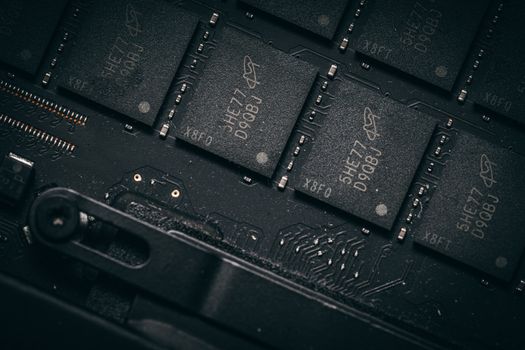
Detailed shot of microchips on a circuit board, showcasing electronic technology and precision engineering. Photo: Jakub Pabis / Pexels
When you compare iPhone 15 vs Samsung S24, one of the most significant battlegrounds is undoubtedly performance. At the heart of the iPhone 15 lies Apple’s formidable A16 Bionic chip, a powerhouse that debuted with the iPhone 14 Pro models. This 4nm chip boasts a 6-core CPU (2 performance, 4 efficiency) and a 5-core GPU, along with a 16-core Neural Engine. What does this mean for the everyday user? It translates to incredibly smooth multitasking, rapid app launches, and exceptional gaming performance. Even demanding applications and graphically intensive games run without a hitch, showcasing Apple's continued lead in single-core and multi-core benchmarks. The A16 Bionic's efficiency cores also play a crucial role in battery longevity, intelligently managing background tasks to conserve power. Apple's tight integration between hardware and software allows them to extract maximum performance from their silicon, often leading to a perception of unparalleled fluidity in iOS. This optimization is a hallmark of Apple's design philosophy, ensuring that even as the hardware ages, the user experience remains premium. For those who prioritize raw speed and long-term performance consistency, the A16 Bionic in the iPhone 15 sets a very high bar. On the other side of the ring, the Samsung Galaxy S24 presents a more complex picture regarding its chipset. Depending on the region, the S24 is powered by either Qualcomm’s latest Snapdragon 8 Gen 3 for Galaxy or Samsung’s own Exynos 2400. In the US, the Snapdragon 8 Gen 3 for Galaxy is the standard. This specialized version of Qualcomm's flagship chip is known for its enhanced clock speeds compared to the standard Snapdragon 8 Gen 3. It features an octa-core CPU configuration, often including a prime core clocked at incredibly high speeds, multiple performance cores, and efficient cores, coupled with an Adreno GPU. The Exynos 2400, prevalent in other global markets, marks Samsung's return to its in-house chip for its flagship lineup, featuring a deca-core (10-core) CPU and an Xclipse 940 GPU, co-developed with AMD RDNA 3 graphics. Both the Snapdragon 8 Gen 3 and Exynos 2400 are built on advanced process nodes (typically 4nm or 3nm), delivering significant improvements in CPU, GPU, and NPU performance over their predecessors. Samsung has heavily emphasized AI capabilities with the S24 series, leveraging these powerful chipsets for on-device AI features like live translation, generative photo editing, and advanced search functions. While the raw benchmark numbers for the Snapdragon 8 Gen 3 and Exynos 2400 might show them trailing the A16 Bionic in some synthetic tests, particularly in single-core performance, they are undeniably top-tier chips that offer exceptional real-world performance. For most users, both devices will handle daily tasks, gaming, and productivity apps with ease. The choice here often comes down to regional availability and a slight preference for either Apple's sustained peak performance or Samsung's focus on cutting-edge AI capabilities. For a deeper dive into mobile chip advancements, check out this article on smartphone processors.

Camera Capabilities: Capturing Your World
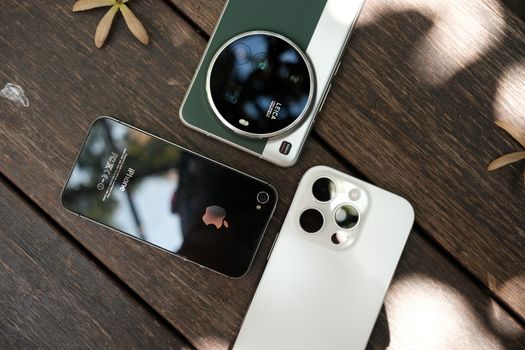
Overhead composition of multiple smartphones on a wooden surface, highlighting contemporary technology. Photo: Phong Thanh / Pexels
The camera system is often a make-or-break feature for potential buyers, and when you compare iPhone 15 vs Samsung S24, both devices offer stellar photographic experiences, albeit with distinct approaches. The iPhone 15 features a dual-camera system on the rear, spearheaded by a new 48-megapixel main sensor. This sensor, a significant upgrade from previous non-Pro models, uses pixel binning technology to output stunning 24MP photos by default, capturing more light and detail. It also enables a 2x optical quality telephoto option by cropping the center of the high-resolution sensor, offering versatility without a dedicated telephoto lens. The main sensor is complemented by a 12-megapixel ultrawide lens, providing a broader perspective for landscapes and group shots. Apple's computational photography, powered by the A16 Bionic, excels in features like Photonic Engine, Deep Fusion, and Smart HDR 5, which collectively optimize images for dynamic range, color accuracy, and low-light performance. The iPhone 15 also brings improved Portrait mode with Focus and Depth Control, allowing users to shift focus after the shot. Video recording remains a strong suit for Apple, with cinematic mode, action mode, and 4K recording up to 60fps delivering industry-leading quality and stabilization. The front-facing 12MP TrueDepth camera also benefits from these computational improvements, ensuring high-quality selfies and video calls. Samsung's Galaxy S24, on the other hand, typically comes with a versatile triple-camera setup. While the exact specifications can vary slightly by region, the S24 generally features a 50-megapixel main sensor, often with optical image stabilization (OIS), a 12-megapixel ultrawide lens, and a 10-megapixel telephoto lens offering 3x optical zoom. This dedicated telephoto lens gives the S24 a distinct advantage for zooming capabilities over the base iPhone 15, allowing for clearer, more detailed distant shots. Samsung's camera philosophy often leans towards vibrant, punchy colors and high contrast, which many users find appealing for immediate social media sharing. Their computational photography, under the umbrella of 'ProVisual Engine' for the S24 series, focuses heavily on AI-powered enhancements. Features like Nightography are enhanced for superior low-light performance, and AI Zoom capabilities aim to improve clarity even at higher digital zoom levels. The S24 also offers advanced video recording features, including 8K recording at 30fps (on some variants) and robust stabilization. The front camera is usually a 12-megapixel unit, also benefiting from Samsung's image processing. For users who value a dedicated telephoto lens and a more vibrant, 'ready-to-share' image aesthetic, the S24 often presents a compelling alternative. Apple tends to aim for a more true-to-life color reproduction, which can be preferred by those who prefer to edit their photos themselves.

Battery Life, Display, and User Experience: Daily Drivers Compared
Close-up of a hand holding a smartphone outdoors in TN, India, showing apps on screen. Photo: Soundarapandian MS / Pexels
Beyond raw power and camera prowess, the daily user experience hinges significantly on battery life, display quality, and the overarching software ecosystem. When we compare iPhone 15 vs Samsung S24, both devices promise all-day battery life, but their approaches and real-world results can differ. The iPhone 15 typically houses a battery that, while not disclosed in exact mAh by Apple, is optimized through the A16 Bionic chip's efficiency and iOS's power management. Users can generally expect a full day of moderate to heavy use, with Apple often quoting around 20 hours of video playback. Charging speeds are decent, supporting up to 50% charge in about 30 minutes with a 20W adapter, and it supports MagSafe and Qi2 wireless charging. The display on the iPhone 15 is a 6.1-inch Super Retina XDR OLED panel, offering vibrant colors, deep blacks, and excellent contrast. Its peak brightness is impressive, making it highly legible even in direct sunlight. However, it retains a standard 60Hz refresh rate, which might feel less fluid to users accustomed to higher refresh rates. The Dynamic Island, introduced with the 14 Pro, makes its way to the iPhone 15, offering an innovative way to interact with alerts and background activities, enhancing the overall user interface. iOS, with its intuitive interface, robust privacy features, and seamless integration with other Apple devices, continues to be a major draw for users. The App Store offers a vast ecosystem of high-quality applications, and Apple's commitment to long-term software updates ensures devices remain current for many years. Conversely, the Samsung Galaxy S24 typically features a slightly larger battery capacity, often in the range of 4000mAh, though exact figures can vary by region and chipset. Coupled with the power-efficient Snapdragon 8 Gen 3 or Exynos 2400, the S24 is also designed for all-day endurance. Samsung often supports faster wired charging speeds, sometimes exceeding 25W, and also offers wireless charging and reverse wireless charging (Wireless PowerShare), allowing it to charge other Qi-compatible devices. The S24 boasts a 6.2-inch Dynamic AMOLED 2X display, known for its stunning color accuracy, incredible brightness (often peaking higher than the iPhone 15), and a variable refresh rate that can go up to 120Hz. This higher refresh rate provides a noticeably smoother scrolling experience and more fluid animations, a key differentiator for many. Samsung's One UI, built on Android, offers extensive customization options, from themes and widgets to advanced multi-window capabilities. The S24 also integrates heavily with Samsung's ecosystem, including features like DeX for a desktop-like experience and SmartThings for smart home control. Google's Android ecosystem provides unparalleled flexibility and openness, with a vast array of apps and services. Samsung has also committed to seven years of OS updates and security patches for the S24 series, matching Apple's long-term support for their devices, which is a significant win for consumers. The choice between these two ultimately boils down to personal preference for iOS's streamlined simplicity or Android's customizable flexibility. For those interested in display tech, this guide to smartphone screens offers more details.

Ecosystem, Software, and Value: Making Your Final Choice
Close-up view of a smartphone displaying apps, held by a hand, with a blurred laptop in the background. Photo: AS Photography / Pexels
The decision to compare iPhone 15 vs Samsung S24 often extends beyond the hardware specifications to the broader ecosystem and software experience. This is where personal preference and existing technology investments play a crucial role. Apple's iOS ecosystem is renowned for its seamless integration and user-friendliness. If you already own an iPad, Mac, Apple Watch, or AirPods, the iPhone 15 slots in perfectly, offering features like Handoff, AirDrop, Universal Clipboard, and Find My network capabilities that work effortlessly across devices. The App Store is meticulously curated, often ensuring a high standard of app quality and security. iOS updates are consistent and delivered to all compatible devices simultaneously, guaranteeing users access to the latest features and security patches for years. For many, the simplicity, security, and tight integration of the Apple ecosystem are compelling reasons to choose the iPhone 15. Furthermore, Apple's privacy policies are often highlighted as a key benefit, giving users more control over their data. The resale value of iPhones also tends to be higher, offering better long-term value. Samsung's Galaxy S24 operates within the Android ecosystem, offering a contrasting experience of openness, customization, and choice. Android allows for greater personalization, from launchers and icon packs to widgets and default app selections. Samsung's One UI skin on top of Android is one of the most feature-rich, providing advanced multitasking options, secure folders, and a highly customizable interface. If you're invested in Google's services, such as Google Drive, Google Photos, or Google Assistant, the S24 provides a native and optimized experience. Samsung also has its own ecosystem of devices, including Galaxy Watches, Galaxy Buds, and Samsung tablets, which offer similar levels of integration, though perhaps not as universally seamless as Apple's. The flexibility of Android, allowing sideloading of apps and more direct file system access, appeals to users who prefer more control over their device. Samsung's recent commitment to seven years of OS and security updates brings it on par with Apple for long-term software support, significantly enhancing the value proposition of the S24. When considering value, both phones are premium devices. The iPhone 15 starts at a similar price point to the S24. The long-term value for both has improved with extended software support, making them sound investments. Ultimately, your choice between the iPhone 15 and Samsung S24 will likely hinge on whether you prioritize Apple's polished, integrated, and secure ecosystem or Android's flexible, customizable, and open platform. Both offer excellent performance and features, but their underlying philosophies cater to different user preferences. **Common Mistakes When Choosing a Flagship Smartphone:** * **Ignoring Ecosystem Compatibility:** Don't just look at the phone; consider how it fits with your other devices. An iPhone in an all-Android home can be frustrating, and vice versa. * **Overemphasizing Benchmarks:** While benchmarks indicate raw power, real-world usage is often indistinguishable between top-tier flagships. Focus on practical performance. * **Neglecting Software Support:** A phone is only as good as its updates. Ensure your chosen device has a long support lifespan for security and new features. * **Not Considering Personal Use Cases:** If you never use a telephoto lens, don't pay extra for one. If you're a heavy gamer, prioritize GPU performance and cooling. * **Forgetting Resale Value:** Premium phones can retain significant value. Researching typical depreciation can inform your long-term investment decision. * **Ignoring Charging Standards:** Wireless charging, fast charging, and reverse wireless charging are convenient. Ensure your new phone supports your preferred methods.

Comparison

FeatureiPhone 15Samsung Galaxy S24Winner (subjective)
ProcessorA16 BionicSnapdragon 8 Gen 3 for Galaxy / Exynos 2400iPhone 15 (raw power), S24 (AI focus)
Display Size6.1-inch6.2-inchSamsung Galaxy S24
Display Refresh Rate60Hz1-120Hz AdaptiveSamsung Galaxy S24
Main Camera48MP (2x 'optical' zoom)50MP (3x optical zoom)Samsung Galaxy S24 (for zoom)
Ultrawide Camera12MP12MPTie
Telephoto CameraNo dedicated10MP (3x Optical)Samsung Galaxy S24
Battery Life (video playback)Up to 20 hoursUp to 29 hours (estimated)Samsung Galaxy S24
OSiOS 17Android 14 (One UI 6.1)Personal Preference
Software Updates5-6+ years7 years (OS & security)Samsung Galaxy S24
ChargingUSB-C, MagSafe, Qi2USB-C, Wireless, Reverse WirelessSamsung Galaxy S24 (more versatile)
Build MaterialsAluminum, Ceramic ShieldArmor Aluminum, Gorilla Glass Victus 2Tie
Unique FeatureDynamic IslandGalaxy AI featuresPersonal Preference

What Readers Say

"I was torn between the iPhone 15 and S24, but after reading detailed comparisons, the S24's 120Hz screen and 3x optical zoom sealed the deal. It's incredibly smooth for browsing and the camera is fantastic for travel."

Alex R. · Seattle, WA

"Coming from an older Android, the iPhone 15's seamless integration with my AirPods and MacBook was a game-changer. The Dynamic Island is surprisingly useful, and the camera is a huge step up for me."

Sarah K. · Austin, TX

"I chose the S24 for its AI features, and they've genuinely improved my daily workflow. Live Translate is a lifesaver for business calls, and the photo editing tools are surprisingly powerful right on the device."

Michael D. · Miami, FL

"Both phones are excellent, but I ultimately stuck with the iPhone 15 because I love the simplicity of iOS. While I wish it had a higher refresh rate, the overall experience is just so polished and reliable."

Jessica L. · Denver, CO

"As a power user, the S24's customization options and the flexibility of Android are unmatched. The battery life is also exceptional, easily getting me through a long day of work and media consumption."

David P. · Chicago, IL

Frequently Asked Questions

Which phone has a better camera, iPhone 15 or Samsung S24?

Both phones offer excellent camera systems, but with different strengths. The iPhone 15 excels in video and natural color reproduction, with a strong 48MP main sensor. The Samsung S24 often boasts a dedicated telephoto lens for superior optical zoom and a tendency for more vibrant, 'ready-to-share' photos, along with advanced AI photo editing features.

Is the iPhone 15 or Samsung S24 better for gaming?

Both devices are top-tier for gaming. The iPhone 15's A16 Bionic chip offers exceptional raw GPU power and optimization. The Samsung S24, with its Snapdragon 8 Gen 3 or Exynos 2400, also delivers fantastic graphics performance and often features a 120Hz display for smoother visuals. The choice might come down to specific game optimization or display preference.

How long do iPhone 15 and Samsung S24 receive software updates?

Apple typically provides 5-6+ years of major iOS updates for its devices, ensuring long-term support. Samsung has significantly upped its game with the S24 series, committing to an impressive seven years of OS upgrades and security updates, making it an excellent choice for longevity.

Which phone offers better value for money?

Both the iPhone 15 and Samsung S24 are premium devices with similar starting price points. Value depends on individual priorities. The S24 offers a 120Hz display, dedicated telephoto lens, and longer software support out of the box, potentially offering more features for the price. The iPhone 15 offers a highly polished ecosystem and typically higher resale value.

How does the display of the iPhone 15 compare to the Samsung S24?

The iPhone 15 features a 6.1-inch Super Retina XDR OLED display with a 60Hz refresh rate. The Samsung S24 has a slightly larger 6.2-inch Dynamic AMOLED 2X display with a variable refresh rate up to 120Hz. The S24's higher refresh rate provides a smoother visual experience, and its display often achieves higher peak brightness.

Who should choose the iPhone 15?

The iPhone 15 is ideal for users already invested in Apple's ecosystem, those who prioritize simplicity, intuitive user experience, strong privacy features, excellent video recording, and consistent software updates. It's also a great choice for those who value higher resale value and a tightly integrated hardware-software experience.

Are there any privacy differences between iOS and Android on these phones?

Apple's iOS is often lauded for its strong privacy controls and data protection features, giving users granular control over app permissions and data sharing. Android, while having made significant strides in privacy, still offers a more open platform. Samsung also includes its Knox security platform on the S24, adding an extra layer of protection for business and personal data.

What are the future trends for these flagship phones?

Future trends for both devices will likely focus on enhanced AI integration, improved computational photography, more durable and sustainable materials, and even greater power efficiency. Apple will continue to refine its A-series chips, while Samsung will push the boundaries of Galaxy AI and potentially integrate more advanced display technologies and faster charging solutions.

Choosing between the iPhone 15 and Samsung S24 is a personal journey, guided by your priorities and ecosystem preferences. This comprehensive comparison empowers you to make an informed decision that perfectly aligns with your digital life. Dive into the details, weigh the pros and cons, and select the flagship that truly elevates your smartphone experience.

Topics: compare iPhone 15 vs Samsung S24iPhone 15 featuresSamsung S24 specsbest smartphone 2024iOS vs Android
Leo List
Brampton weed
Adultwork