How to Buy Drone with Camera: Your Ultimate Guide
buy drone with camera

How to Buy Drone with Camera: Your Ultimate Guide

Unlock breathtaking aerial perspectives with the perfect camera drone, capturing unforgettable moments from above.

Find Your Drone Now

Key Takeaways

  • ✓ Resolution and sensor size are paramount for image quality.
  • ✓ Battery life dictates flight duration and creative opportunities.
  • ✓ Gimbal stabilization is crucial for smooth, professional footage.
  • ✓ GPS and obstacle avoidance enhance safety and ease of flight.

How It Works

1
Define Your Purpose

Before you buy a drone with a camera, consider what you'll use it for. Is it for professional filmmaking, casual hobby flying, or capturing family vacations? This will narrow down your options significantly.

2
Research Key Features

Dive into specifications like camera resolution, sensor size, gimbal type, flight time, and range. Understand how each feature impacts performance and your overall drone experience.

3
Set a Budget

Drones with cameras range from under $200 to several thousands. Establish a realistic budget that aligns with your desired features and usage frequency.

4
Compare Models & Read Reviews

Once you have a few models in mind, compare them side-by-side. Read independent reviews and watch flight footage to get real-world insights before making your final decision.

Understanding Camera Drone Essentials: What to Look For
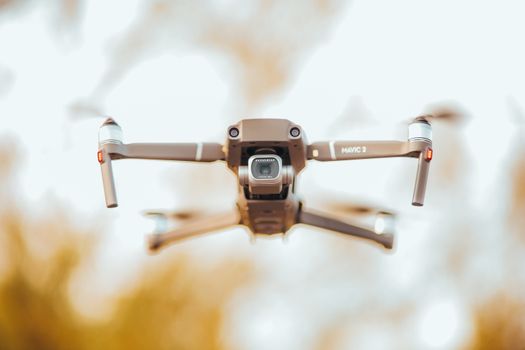
A cutting-edge drone flying outdoors, showcasing advanced aerial capabilities with a clear blue sky backdrop. Photo: Pok Rie / Pexels
When you decide to buy a drone with a camera, the sheer volume of options can be overwhelming. To make an informed decision, it's crucial to understand the core components that dictate a drone's performance and image quality. At the heart of any good camera drone is, of course, the camera itself. Don't just look at megapixel count; while important, sensor size is often a more critical indicator of image quality, especially in low light conditions. A larger sensor (e.g., 1-inch) can capture more light, resulting in richer colors, better dynamic range, and less noise. Look for drones offering 4K video recording at a minimum of 30 frames per second (fps) for cinematic quality, with 60fps being ideal for smoother slow-motion capabilities. Beyond the camera, stabilization is paramount. A 3-axis mechanical gimbal is the industry standard for professional-grade, smooth footage. This physical stabilization system actively counters the drone's movements, ensuring your video remains level and free of shakes, even in windy conditions. Without a proper gimbal, even the best camera will produce shaky, unusable footage. Battery life is another critical factor. Most consumer drones offer flight times between 20-35 minutes. Consider how much time you need in the air for your projects. Shorter flight times might mean frequently landing to swap batteries, interrupting your creative flow. Many drone packages include extra batteries, which is a significant advantage. Finally, flight range and transmission technology determine how far and reliably your drone can communicate with its controller. Advanced transmission systems like OcuSync or LightSync offer greater range and a more stable, clear video feed back to your device, which is essential for precise framing and safe operation. Understanding these fundamental aspects will empower you to navigate the market and pinpoint the drone that truly meets your aerial photography and videography aspirations. For more insights on drone technology, check out our guide on advanced drone features.

Navigating the Market: Best Camera Drones for Every Budget
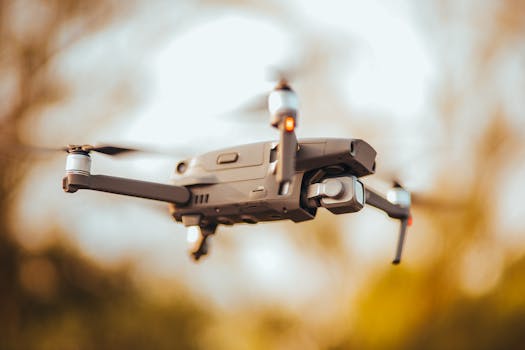
A drone flying outdoors with a blurred background, capturing the essence of modern technology. Photo: Pok Rie / Pexels
The market for camera drones is diverse, offering options that cater to every skill level and budget, from entry-level models perfect for beginners to high-end professional cinematic tools. If you're looking to buy a drone with a camera for casual use or as a first step into the hobby, several excellent options exist under $500. These often feature decent 2.7K or 4K cameras, electronic image stabilization, and user-friendly controls. While they might not have the extensive range or advanced obstacle avoidance of their pricier counterparts, they provide an excellent platform to learn flying and basic aerial photography skills without breaking the bank. Brands like Ryze (powered by DJI) offer robust entry-level choices that are incredibly popular for their ease of use and respectable image quality for their price point. Moving up the ladder, the mid-range (typically $500-$1500) is where you'll find the sweet spot for many enthusiasts and semi-professionals. Drones in this category boast 4K cameras with 3-axis gimbals, significantly improved flight times (often 30+ minutes), enhanced transmission ranges, and a suite of intelligent flight modes like 'Follow Me,' 'Point of Interest,' and advanced obstacle sensing. This segment offers a fantastic balance of features, performance, and portability, making them ideal for travel, vlogging, and creating compelling social media content. DJI's Mavic Air and Mini series often dominate this space, known for their compact design and powerful capabilities. At the premium end (over $1500), you're entering the realm of professional filmmaking and commercial applications. These drones feature larger sensors (1-inch or Micro Four Thirds), interchangeable lenses on some models, superior low-light performance, and advanced video codecs (like D-Log or H.265) for extensive post-production flexibility. They come equipped with multi-directional obstacle avoidance, robust wind resistance, and often dual-operator capabilities, where one person flies and another controls the camera. Brands like DJI's Mavic Pro line, Phantom series, or even enterprise-level drones are designed for demanding professionals who require the absolute best in image quality, reliability, and flight performance. Your budget will largely dictate the level of sophistication and professional output you can expect from your camera drone.

Essential Accessories and Software for Your New Camera Drone
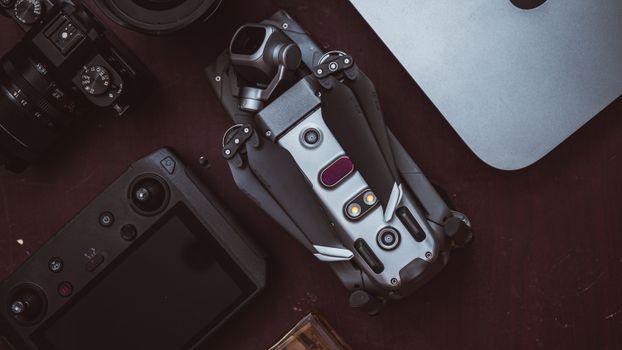
Top view composition of modern photo and video equipment including professional photo camera and action camera arranged on desk near laptop keyboard Photo: The Lazy Artist Gallery / Pexels
Once you decide to buy a drone with a camera, your journey doesn't end with the drone itself. A range of essential accessories and software tools can significantly enhance your flying experience, improve your footage, and ensure the longevity of your investment. First and foremost, extra batteries are almost non-negotiable. While most drones offer decent flight times, having two or three additional batteries allows for extended shooting sessions without constantly returning to base for recharging. A multi-battery charging hub is also a wise investment, allowing you to charge several batteries simultaneously. Propeller guards, especially for beginners, can protect your blades and surroundings during early flights, while spare propellers are a must-have for inevitable bumps and crashes. For optimizing your aerial photography, ND (Neutral Density) filters are crucial. These filters reduce the amount of light entering the camera sensor, allowing you to use slower shutter speeds in bright conditions, which is essential for achieving a cinematic motion blur in your video footage. Polarizer filters can also reduce glare and enhance color saturation. A high-speed, high-capacity microSD card is also non-negotiable; choose one with a U3 or V30 rating to handle 4K video recording without dropped frames. Consider a sturdy, custom-fitted carrying case or backpack to protect your drone and all its accessories during transport. On the software front, while your drone's companion app handles flight control and basic editing, dedicated video editing software like Adobe Premiere Pro, DaVinci Resolve, or Final Cut Pro will unlock the full potential of your captured footage. These programs offer advanced color grading, stabilization, and effects that can transform raw drone footage into stunning, professional-looking videos. Additionally, flight planning apps (some integrated, some third-party) can help you pre-plan routes, create automated missions, and ensure compliance with local airspace regulations. Always check local drone laws and consider obtaining necessary certifications, especially for commercial use. Explore more about drone safety regulations to ensure responsible flying.

Tips for First-Time Buyers and Common Mistakes to Avoid
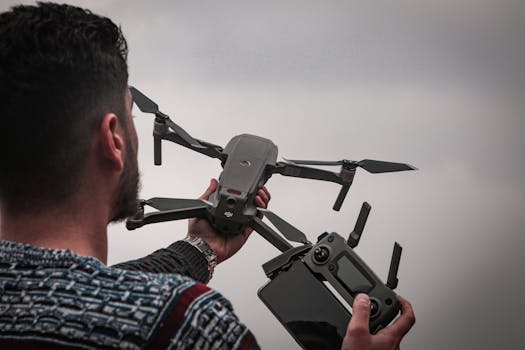
Close-up of a man controlling a drone using a remote outdoors. Technology and gadget interaction. Photo: osama naser / Pexels
For those looking to buy a drone with a camera for the first time, the excitement can sometimes overshadow the practicalities. Here are crucial tips and common mistakes to avoid to ensure a smooth and enjoyable entry into the world of aerial photography: **Tips for First-Time Buyers:** * **Start with a Simulator:** Many drone manufacturers offer flight simulators within their apps. Practice flying virtually before taking your drone to the sky. This builds muscle memory and confidence without risking your new equipment. * **Understand Airspace Regulations:** Before your first flight, thoroughly research local drone laws. The FAA's B4UFLY app (in the US) is an invaluable tool for identifying restricted airspace and temporary flight restrictions. * **Begin in Open Spaces:** Choose a large, open area free from obstacles like trees, power lines, and crowds for your initial flights. This gives you ample room to react and learn without immediate hazards. * **Master Basic Controls:** Focus on mastering hovering, forward/backward, and left/right movements before attempting complex maneuvers or intelligent flight modes. * **Invest in a Drone Care Kit:** A small brush, microfiber cloths, and compressed air can help keep your drone's camera lens and sensors clean, ensuring optimal image quality. **Common Mistakes to Avoid:** * **Ignoring Battery Calibration:** New drone batteries often need to be fully charged and discharged a few times to calibrate their power sensors accurately. Skipping this can lead to inaccurate battery readings and unexpected landings. * **Flying in High Winds:** Even advanced drones have wind resistance limits. Pushing these limits can lead to unstable footage, loss of control, or even a crash. * **Forgetting Pre-Flight Checks:** Always check propellers for damage, ensure the battery is fully charged and securely seated, and verify GPS lock before takeoff. * **Flying Beyond Visual Line of Sight (BVLOS):** Most recreational drone pilots are legally required to keep their drone within their direct line of sight. Flying too far can lead to disorientation and loss of control. * **Neglecting Firmware Updates:** Drone manufacturers regularly release firmware updates that improve performance, add features, and fix bugs. Keep your drone and controller updated for the best experience. * **Impatience:** Learning to fly a drone and capture great footage takes time. Don't get discouraged by initial challenges; persistence and practice are key.

Comparison

FeatureProfessional (DJI Mavic 3)Enthusiast (DJI Air 3)Beginner (DJI Mini 4 Pro)
Camera Sensor4/3 CMOS (20MP)1/1.3" CMOS (48MP)1/1.3" CMOS (48MP)
Video Resolution5.1K/50fps, 4K/120fps4K/100fps4K/100fps
Gimbal3-axis Mechanical3-axis Mechanical3-axis Mechanical
Flight Time (Max)46 min46 min34 min
Obstacle AvoidanceOmnidirectional APAS 5.0Omnidirectional APAS 5.0Omnidirectional APAS 5.0
Weight895 g720 gUnder 249 g
Price Range (USD)$2000+$1000-$1500$700-$1000

What Readers Say

"I finally decided to buy a drone with a camera, and this guide was a lifesaver! I bought the DJI Mini 4 Pro and the footage is incredible for its size. Highly recommend doing your research first."

Sarah J. · Austin, TX

"As a budding filmmaker, investing in a quality camera drone was crucial. The section on camera essentials helped me understand sensor sizes and gimbals, leading me to the perfect professional-grade drone."

Michael D. · Seattle, WA

"I was overwhelmed by options, but following the 'how it works' steps made my decision to buy a drone with a camera so much easier. My aerial vacation photos have never looked better!"

Emily R. · Miami, FL

"The tips for first-time buyers were spot on. I initially underestimated the importance of extra batteries, but quickly realized their value. Great article, very thorough."

David L. · Denver, CO

"I needed a drone for real estate photography. The comparison table helped me weigh features versus price, and I found a fantastic mid-range option that perfectly suits my business needs."

Jessica M. · Chicago, IL

Frequently Asked Questions

What's the most important factor when I buy a drone with a camera?

While many factors are important, the camera's sensor size and gimbal stabilization are arguably the most crucial for image and video quality. A larger sensor captures better detail and performs well in varied lighting, while a 3-axis gimbal ensures smooth, professional-looking footage free from shakes.

Are camera drones difficult to fly for beginners?

Modern camera drones, especially entry-level models, are designed with user-friendliness in mind. Features like GPS stabilization, auto-hover, and one-key take-off/landing make them relatively easy to fly. However, practice is essential to master controls and capture good footage.

How do I ensure my drone footage is stable and cinematic?

To achieve stable and cinematic footage, ensure your drone has a 3-axis mechanical gimbal. Additionally, practice smooth, slow movements, use ND filters in bright conditions to achieve a lower shutter speed (which creates motion blur), and learn basic post-production editing techniques.

What's a reasonable budget to buy a drone with a camera for a hobbyist?

For a hobbyist, a reasonable budget to buy a drone with a camera typically ranges from $500 to $1500. This price range offers excellent models with 4K cameras, reliable gimbals, good flight times, and intelligent features that provide a great balance of performance and value.

Should I choose a drone with optical or electronic image stabilization?

For serious photography and videography, always choose a drone with a 3-axis mechanical gimbal (optical stabilization). Electronic Image Stabilization (EIS) can crop the image and sometimes introduce distortion, whereas a mechanical gimbal physically stabilizes the camera for superior, shake-free results.

Who should consider buying a professional-grade camera drone?

Professional-grade camera drones are best suited for commercial photographers, videographers, filmmakers, and businesses that require the highest quality aerial imagery and robust performance. This includes real estate agents, surveyors, event videographers, and content creators needing advanced features and post-production flexibility.

What are the key safety considerations when operating a camera drone?

Key safety considerations include checking local airspace regulations (e.g., FAA in the US), maintaining visual line of sight with your drone, avoiding flying over people or private property without permission, and not flying near airports or in adverse weather conditions. Always perform pre-flight checks.

What's the future trend for camera drones?

Future trends for camera drones include enhanced AI-powered flight autonomy and obstacle avoidance, improved low-light camera performance, longer battery life, even more compact and portable designs, and deeper integration with augmented reality and 5G networks for real-time streaming and data analysis.

Ready to elevate your perspective and capture stunning aerial moments? Use this comprehensive guide to confidently buy a drone with a camera that perfectly matches your aspirations and budget. The sky is no longer the limit – it's your canvas.

Topics: buy drone with camerabest camera dronesdrone buying guideaerial photography drone
Leo List
Brampton weed
Adultwork