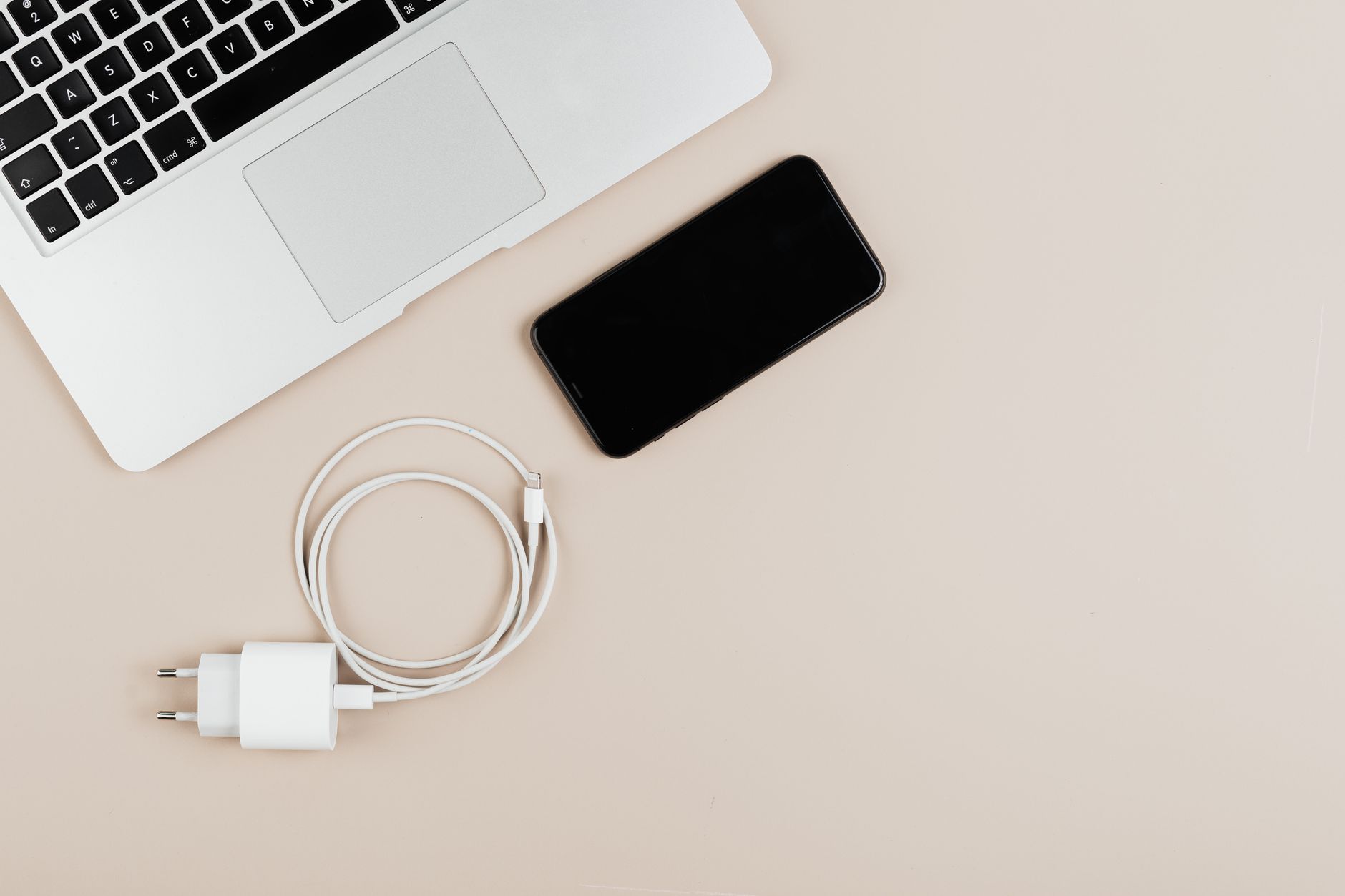
Your Guide to the best portable power bank for travel
best portable power bank for travel

Your Guide to the best portable power bank for travel

Stay powered up on every journey with our expert guide to the top portable power banks for travelers.

Find Your Perfect Charger

Key Takeaways

  • ✓ Capacity (mAh) is crucial: 10,000mAh for phones, 20,000mAh+ for laptops/multiple devices.
  • ✓ Fast charging (PD, QC) significantly reduces charge times for compatible devices.
  • ✓ Portability matters: size, weight, and airline restrictions should be considered.
  • ✓ Durability and safety features are essential for travel environments.

How It Works

1
Charge the Power Bank

Before your trip, fully charge your portable power bank using a wall adapter. Most modern power banks use USB-C for input, offering faster recharge times.

2
Connect Your Device

When your phone, tablet, or laptop needs power, connect it to the power bank using a compatible USB cable. Ensure you use the correct port (USB-A, USB-C) for optimal charging speed.

3
Monitor Charge Levels

Most power banks feature LED indicators to show remaining battery life. Keep an eye on these to know when your power bank needs to be recharged or how much power it has left to give.

4
Enjoy Extended Power

Once connected, your device will begin charging, allowing you to use it for longer periods without searching for an outlet. This is especially useful in airports, on long flights, or during outdoor adventures.

Understanding Portable Power Bank Essentials for Travelers
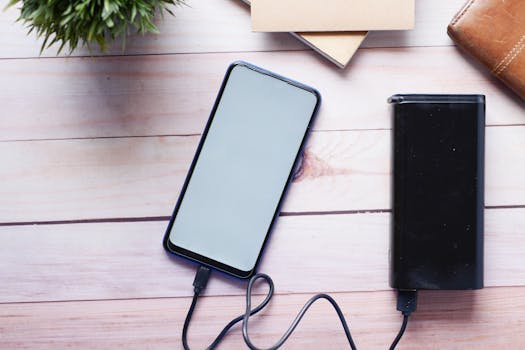
Smartphone charging with a power bank on a wooden desk, showcasing modern technology essentials. Photo: Towfiqu barbhuiya / Pexels
When embarking on any journey, from a weekend getaway to an international expedition, one universal truth emerges: our reliance on electronic devices. Smartphones, tablets, e-readers, and even laptops have become indispensable companions, keeping us connected, entertained, and informed. The Achilles' heel of these devices, however, is their battery life. This is where the best portable power bank for travel becomes not just a convenience, but a necessity. But with an overwhelming array of options on the market, how do you choose the right one? It starts with understanding the core essentials. First and foremost, capacity is king. Measured in milliampere-hours (mAh), this figure indicates how much power a bank can store. For a smartphone, a 10,000mAh power bank is often sufficient for 2-3 full charges, making it ideal for day trips or short excursions. If you're a heavy user, carry multiple devices, or plan extended periods away from outlets, consider a 20,000mAh or even 26,800mAh power bank. The latter is often the maximum allowed on airplanes in carry-on luggage without special airline approval, making it a crucial consideration for air travelers. Exceeding this limit can lead to your power bank being confiscated, so always check airline regulations before flying. Remember, while a higher mAh means more charges, it also typically means a larger, heavier unit, which impacts portability. Next, consider the output ports and charging technology. Modern devices demand faster charging, and older power banks simply won't keep up. Look for power banks that support Power Delivery (PD) via USB-C for quick charging of iPhones, iPads, and many Android devices, as well as laptops. Qualcomm Quick Charge (QC) is another popular fast-charging standard, primarily for Android phones. A good travel power bank will offer a combination of USB-A ports (for older devices or accessories) and USB-C ports (for newer devices and faster charging). The number of ports also matters; if you frequently charge multiple devices simultaneously, ensure your chosen power bank has enough outputs to accommodate your needs. Some premium models even offer wireless charging capabilities, adding another layer of convenience for compatible devices, though often at a slightly slower rate than wired connections. Exploring the latest in charging technology can help you make an informed decision. Finally, don't overlook durability and safety features. Travel can be rough on electronics. A robust casing that can withstand bumps and drops is invaluable. Furthermore, reputable brands incorporate multiple safety mechanisms, such as overcharge protection, short-circuit protection, and temperature control, to prevent damage to your devices and the power bank itself. Always prioritize certified products from well-known manufacturers to ensure peace of mind. The best portable power bank for travel isn't just about raw power; it's about reliable, safe, and efficient power delivery in any environment.

Top Contenders: The best portable power bank for travel in 2024
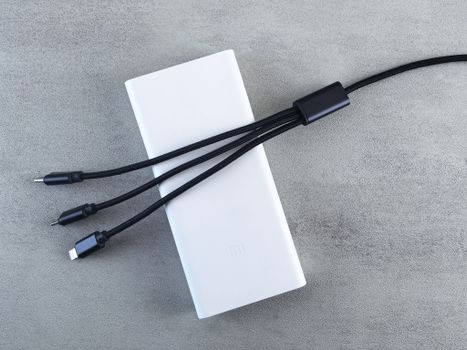
A sleek white power bank with a black multi-connector cable laid on a textured grey surface, emphasizing modern technology. Photo: Andrey Matveev / Pexels
Navigating the vast landscape of portable power banks can be daunting, but certain models consistently rise to the top for their blend of capacity, charging speed, portability, and reliability. For travelers, the ideal power bank strikes a delicate balance, offering enough juice without being a cumbersome burden. Here, we highlight some of the leading contenders that consistently earn high marks from users and tech experts alike, ensuring you find the best portable power bank for travel to suit your specific needs. For the minimalist traveler or day-tripper, the Anker PowerCore Slim 10000 PD is a perennial favorite. Its slim profile and relatively light weight make it easy to slip into a pocket or small bag, yet it packs enough punch to fully charge most smartphones twice over. With 18W Power Delivery output via USB-C, it offers respectable charging speeds for its size. It’s perfect for keeping your phone alive through a long day of sightseeing or a short flight. While it won't power a laptop, its compact design and reliable performance make it an excellent everyday carry option. Stepping up in capacity and versatility, the INIU Portable Charger 20000mAh Power Bank often comes highly recommended. This model typically offers a robust 20,000mAh capacity, capable of charging most smartphones 4-5 times or providing significant boosts to tablets. Many versions feature both USB-A and USB-C outputs, often with 20W or 22.5W fast charging capabilities, making it suitable for a wider range of devices. Despite its higher capacity, INIU often manages to keep its power banks relatively compact and lightweight, making them a strong contender for those who need more power without excessive bulk. It’s an excellent choice for weekend trips or travelers with multiple devices. For the power user or international adventurer, the Anker 737 Power Bank (PowerCore 24K) is a true powerhouse, arguably one of the best portable power bank for travel in its class. With a substantial 24,000mAh capacity and an impressive 140W total output (often with a single USB-C port capable of 140W Power Delivery), this beast can rapidly charge not only smartphones and tablets but also power-hungry laptops like the MacBook Pro. Its intelligent digital display shows remaining battery, input, and output wattage, giving you precise control. While larger and heavier, its ability to keep all your devices charged, including laptops, makes it indispensable for digital nomads, remote workers, or anyone who can't afford to be without power. Remember to check airline restrictions for devices nearing the 100Wh (27,027mAh) limit; 24,000mAh is generally safe for carry-on. Its robust build quality and advanced charging features justify its higher price point for those who demand peak performance and reliability on the go. Another strong contender in the high-capacity, fast-charging category is the Baseus 65W 20000mAh Power Bank. This unit typically offers 65W Power Delivery via its USB-C port, making it a fantastic option for charging most USB-C laptops at a decent speed, alongside phones and tablets. Its 20,000mAh capacity strikes a good balance between power and portability for many travelers. The design is often sleek and functional, making it a stylish yet powerful travel companion. The choice among these top contenders ultimately depends on your specific device ecosystem, travel habits, and budget, but each represents a superior solution for staying charged while exploring the world.

Maximizing Your Travel Charger: Features and Considerations
A stylish smartwatch with a pink band placed on a laptop surface, surrounded by modern gadgets. Photo: Melike B / Pexels
Choosing the best portable power bank for travel goes beyond just capacity and brand; it involves understanding a range of features and considerations that can significantly enhance your travel experience. Delving into these nuances ensures that your investment truly meets your specific needs, preventing frustration and ensuring you always have reliable power when you need it most. One critical aspect often overlooked is passthrough charging. This feature allows the power bank to charge itself while simultaneously charging connected devices. For travelers with limited access to wall outlets, such as in hotel rooms with few available sockets, this can be a game-changer. You can plug the power bank into the wall overnight, and by morning, both the power bank and your primary device (like your phone) will be fully charged, ready for the day ahead. Not all power banks offer this, so if it's a priority, verify this capability before purchase. Another feature to consider is the inclusion of built-in cables or adapters. While most power banks require you to supply your own charging cables, some models come with integrated USB-C, Lightning, or Micro-USB cables. This can reduce clutter and the risk of forgetting essential cables, simplifying your packing. However, integrated cables can also be a point of failure, and if they break, the power bank's utility might be diminished. Assess whether the convenience outweighs the potential for a single point of failure in your travel setup. For instance, a power bank with a built-in AC plug can eliminate the need for a separate wall adapter altogether, offering unparalleled convenience for recharging the power bank itself. Exploring innovative travel gadgets often reveals such integrated solutions. Airline restrictions are paramount for air travelers. As mentioned, most airlines allow power banks up to 100Wh (approximately 27,027mAh at 3.7V) in carry-on luggage only. Power banks between 100Wh and 160Wh require airline approval, and anything above 160Wh is generally prohibited. Always check the Watt-hour (Wh) rating on your power bank or calculate it (mAh * V / 1000 = Wh) to avoid issues at security. Never pack power banks in checked luggage due to fire safety concerns. Additionally, some power banks come with IP ratings, indicating their resistance to dust and water. While not essential for all travelers, an IP-rated power bank can be invaluable for outdoor adventurers, hikers, or those traveling to humid or rainy climates, offering an extra layer of protection against the elements. Finally, consider the overall build quality and design. A good travel power bank should feel robust, not flimsy. Features like LED indicators for battery status are standard, but some advanced models offer digital displays that show precise percentage, input, and output wattage, providing more detailed information. The aesthetic design, while subjective, can also contribute to the user experience. A sleek, ergonomic design that fits comfortably in your hand or bag can make a difference during prolonged use. Prioritizing these features ensures you select a power bank that is not only powerful but also practical, durable, and compliant with travel regulations, making it truly the best portable power bank for travel for your unique adventures.

Smart Charging Tips and Common Mistakes to Avoid with Your Portable Charger
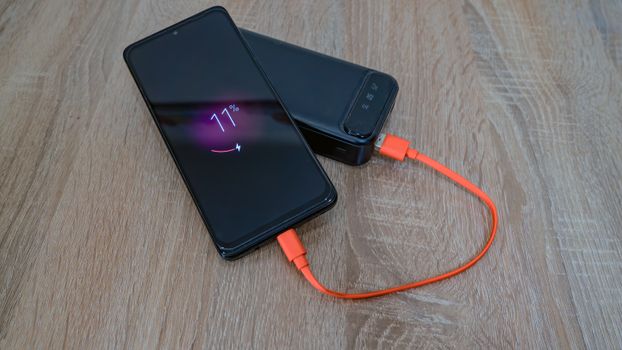
A smartphone charging from a power bank with an orange cable on a wooden table. Photo: Eleonora Vokueva / Pexels
Even with the best portable power bank for travel in hand, knowing how to use it effectively and avoid common pitfalls can significantly extend its lifespan and ensure optimal performance when you need it most. Smart charging practices are not just about plugging in; they're about understanding your device and your power bank's capabilities. **Smart Charging Tips:** * **Fully Charge Before Departure:** Always ensure your power bank is fully charged before you leave. This seems obvious, but a partially charged power bank can leave you stranded. Plan ahead, especially for larger capacity units which can take several hours to fully recharge. * **Use Original or Certified Cables:** The cable you use is just as important as the power bank itself. Cheap, uncertified cables can lead to slower charging speeds, inefficient power transfer, and even potential damage to your devices or power bank. Invest in high-quality, MFi-certified (for Apple devices) or reputable brand cables. * **Prioritize Devices:** If you have multiple devices and limited power bank capacity, prioritize which devices get charged first. Your phone for navigation and emergencies might take precedence over a tablet for entertainment. * **Optimize Device Settings:** While charging, put your device in airplane mode or turn off unnecessary features like Wi-Fi, Bluetooth, and GPS. This reduces the device's power consumption, allowing it to charge faster and more efficiently from the power bank. * **Store Properly:** When not in use, store your power bank in a cool, dry place. Avoid extreme temperatures, as these can degrade battery health over time. For long-term storage, it's often recommended to keep lithium-ion batteries at around 50-70% charge. **Common Mistakes to Avoid:** * **Overcharging/Over-discharging:** While most modern power banks have protection circuits, consistently draining them to 0% or leaving them plugged in for days after reaching 100% can slowly reduce battery health. Aim to keep them within a healthy charge range when possible. * **Ignoring Airline Regulations:** As discussed, attempting to carry power banks in checked luggage or bringing oversized units (over 100Wh without approval) onto a plane is a common mistake that can lead to confiscation and travel delays. Always adhere to carry-on rules. * **Using Damaged Power Banks:** If your power bank is visibly damaged, swollen, or unusually hot, stop using it immediately. These are signs of potential internal damage or battery failure, which can pose a fire hazard. Dispose of it responsibly. * **Buying Unbranded/Cheap Power Banks:** While tempting, ultra-cheap, unbranded power banks often exaggerate their capacity, lack essential safety features, and use low-quality components. This can lead to poor performance, short lifespan, and even safety risks. Stick to reputable brands for peace of mind. * **Forgetting Adapters:** If you're traveling internationally, remember that while your power bank will charge via USB, the wall adapter you use to charge the power bank itself might need a specific plug type for the region you're visiting. Don't forget your international travel adapter!

Comparison

FeatureAnker PowerCore Slim 10000 PDINIU 20000mAh Power BankAnker 737 Power Bank (PowerCore 24K)
Capacity10,000mAh20,000mAh24,000mAh
Max Output (PD)18W22.5W140W
Ports1x USB-A, 1x USB-C2x USB-A, 1x USB-C2x USB-C, 1x USB-A
Best ForDaily carry, phone chargesWeekend trips, multiple devicesLaptops, extensive travel
Airline Carry-on✓ (check Wh)
Weight (approx.)7.5 oz12.5 oz22.2 oz
Laptop Charging

What Readers Say

"The Anker PowerCore Slim 10000 PD has been my go-to for every trip. It's so compact, yet it gives my iPhone 13 Pro two full charges easily. It's truly the best portable power bank for travel when space is limited."

Sarah J. · Denver, CO

"I bought the INIU 20000mAh for a family vacation, and it kept both my phone and my wife's tablet charged throughout long flights and tours. The fast charging really made a difference, highly recommend it for families."

Michael L. · Austin, TX

"As a digital nomad, the Anker 737 Power Bank is a lifesaver. It charges my MacBook Pro at full speed and keeps my phone topped up. I can work from anywhere without worrying about outlets – a game-changer for productivity on the road."

Emily R. · New York, NY

"The Baseus 65W 20000mAh power bank is fantastic for its value and performance. It charges my Dell XPS 13 and my Pixel 7 quickly. My only minor gripe is its slightly larger footprint compared to some others, but the power output makes up for it."

David K. · Seattle, WA

"I used the INIU 20000mAh during a camping trip, and it survived a few accidental splashes and drops while keeping our devices charged for days. Its durability and capacity make it the best portable power bank for travel in rugged environments."

Jessica M. · Miami, FL

Frequently Asked Questions

What is the maximum capacity power bank allowed on an airplane?

Most airlines allow power banks with a capacity up to 100 Watt-hours (Wh) in carry-on luggage. Power banks between 100 Wh and 160 Wh usually require airline approval, and anything above 160 Wh is generally prohibited. Always check the Wh rating on your power bank or calculate it (mAh * V / 1000 = Wh) and consult your airline's specific policies before flying.

Are portable power banks safe to travel with?

Yes, reputable portable power banks from trusted brands are designed with multiple safety features like overcharge, over-discharge, short-circuit, and temperature protection, making them very safe. The main safety concern is ensuring they are always carried in your carry-on luggage, never in checked baggage, due to potential fire hazards with lithium-ion batteries in cargo holds.

How do I calculate how many times a power bank can charge my phone?

To estimate, divide the power bank's capacity (mAh) by your phone's battery capacity (mAh). Then, multiply by an efficiency factor (typically 0.7 to 0.9) to account for energy loss during transfer. For example, a 10,000mAh power bank charging a 2,500mAh phone: (10,000 / 2,500) * 0.8 = 3.2 charges.

Is a more expensive power bank always better?

Not always, but generally, higher-priced power banks from reputable brands offer better build quality, more accurate capacity ratings, faster charging technologies (like PD/QC), and superior safety features. While you don't need the most expensive option, avoiding suspiciously cheap, unbranded power banks is crucial for reliability and safety.

Should I get a power bank with USB-A or USB-C ports?

Ideally, look for a power bank with both. USB-C with Power Delivery (PD) is the modern standard for fast charging newer smartphones, tablets, and laptops. USB-A ports are still useful for older devices, accessories, or if you have many devices that use USB-A cables. A combination offers the most versatility for travel.

Who should invest in a high-capacity (20,000mAh+) power bank?

High-capacity power banks are ideal for digital nomads, remote workers, international travelers, campers, or anyone who frequently spends extended periods away from wall outlets. They are also essential if you need to charge multiple devices (phones, tablets, laptops) or power hungry devices like cameras multiple times.

What should I do if my power bank gets unusually hot while charging?

If your power bank becomes unusually hot (beyond a warm temperature) during charging or discharging, immediately disconnect it from all devices and the power source. Excessive heat can indicate an internal issue and pose a safety risk. Do not use it again and consider contacting the manufacturer or safely disposing of it.

Will power banks eventually replace wall chargers entirely?

While power banks offer incredible portability and convenience, it's unlikely they will entirely replace wall chargers. Wall chargers provide a continuous, direct power source, which is still the most efficient way to charge devices at home or in hotels. Power banks serve as essential supplementary power for on-the-go situations, extending device use between wall outlets.

Choosing the best portable power bank for travel is a crucial step in ensuring a seamless, connected journey. With the right power companion, you can explore the world without the constant worry of a dead battery. Invest wisely and power your adventures with confidence.

Topics: best portable power bank for traveltravel chargerportable phone chargerpower bank capacityfast charging power bank
Leo List
Brampton weed
Adultwork