Find the Best Budget 4K Monitor for Editing: Your Ultimate Guide
best budget 4K monitor for editing

Find the Best Budget 4K Monitor for Editing: Your Ultimate Guide

Unlock professional-grade visual fidelity for your creative projects without compromising your budget.

Explore Top Picks

Key Takeaways

  • ✓ 4K resolution offers four times the pixels of Full HD, providing unparalleled detail for editing.
  • ✓ Budget 4K monitors often balance price with essential features like IPS panels and decent color accuracy.
  • ✓ Key specs to prioritize include sRGB coverage, Delta E value, and connectivity options.
  • ✓ Calibration is crucial for any editing monitor, regardless of price, to ensure accurate colors.

How It Works

1
Identify Your Core Needs

Determine whether you primarily do photo or video editing, as this influences color space requirements and refresh rates. Consider your workspace size and the types of ports your computer supports.

2
Research Key Specifications

Look for monitors with IPS panels for wide viewing angles and good color reproduction. Prioritize sRGB coverage of 99% or higher, and a Delta E value of less than 2 for color accuracy.

3
Compare Budget-Friendly Options

Scrutinize reviews and specifications of monitors within your price range. Pay attention to user experiences regarding backlight bleed, uniformity, and overall build quality.

4
Calibrate for Optimal Performance

Once you've purchased your monitor, invest in a hardware calibrator. This ensures your display accurately represents colors, which is critical for professional editing work.

Understanding the Fundamentals of Affordable 4K Displays for Creative Work
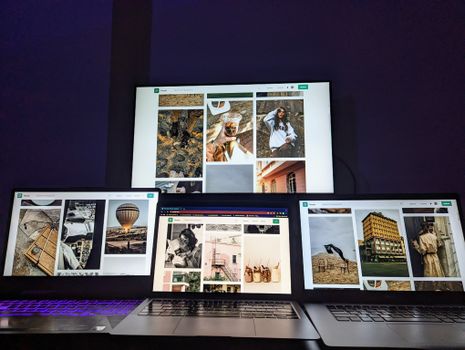
A modern digital setup with multiple screens showcasing diverse photographs, ideal for creatives. Photo: Bhavishya :) / Pexels
In the world of creative content, particularly video and photo editing, a high-resolution display is no longer a luxury but a necessity. The advent of 4K cameras and higher fidelity expectations across platforms means that editors need monitors capable of showcasing every pixel and nuance. For a long time, 4K monitors were prohibitively expensive, placing them out of reach for many aspiring professionals and budget-conscious creators. However, the market has matured significantly, and finding the best budget 4K monitor for editing is now a realistic goal. But what exactly makes a 4K monitor suitable for editing, especially when you're working with a limited budget? First and foremost, 4K resolution, also known as Ultra High Definition (UHD), translates to 3840 x 2160 pixels. This is four times the pixel count of a Full HD (1920 x 1080) display. The immediate benefit for editors is the sheer amount of screen real estate. Imagine being able to view your 4K footage at native resolution while still having ample space for your timeline, toolbars, and various editing panels. This dramatically improves workflow efficiency, reducing the constant need to zoom in and out or juggle windows. For photographers, it means seeing intricate details in images without pixelation, allowing for precise adjustments to sharpness, noise reduction, and fine textures. The increased pixel density also contributes to a sharper, more immersive viewing experience, making your work appear more professional even before it's published. Beyond resolution, the panel technology is paramount. For editing, an IPS (In-Plane Switching) panel is almost universally recommended. Unlike TN (Twisted Nematic) panels, which are faster but suffer from poor viewing angles and color shift, IPS panels offer superior color accuracy and wide viewing angles. This means that colors remain consistent and accurate even when viewed from the side, which is crucial if you're collaborating with others or need to move around your workspace. While VA (Vertical Alignment) panels offer better contrast than IPS, they often come with slower response times and can exhibit color shift at extreme angles. For the purposes of color-critical editing, IPS remains the gold standard in the budget segment. Color accuracy is arguably the most critical aspect for any editing monitor. This is measured by several metrics, including color gamut coverage (e.g., sRGB, Adobe RGB, DCI-P3) and Delta E (ΔE) values. For most general content creation and web-based work, 99-100% sRGB coverage is a strong starting point. If you're working with print or more specialized video formats, you might need wider gamuts like Adobe RGB or DCI-P3, though these typically push monitors out of the 'budget' category. A Delta E value of less than 2 is considered excellent for color accuracy, indicating that the human eye can barely distinguish between the displayed color and its true reference. Many budget 4K monitors now achieve these levels of sRGB coverage and acceptable Delta E values straight out of the box, though a hardware calibration is always recommended for absolute precision. Understanding these core specifications will empower you to make an informed decision when searching for an affordable 4K display that truly meets your editing demands.

Essential Features to Prioritize in a Budget 4K Editing Monitor
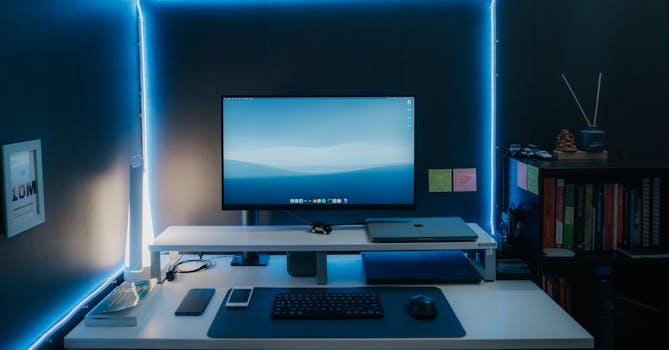
Sleek home office setup with monitor, laptop, and LED lights, perfect for productivity. Photo: Pramod Tiwari / Pexels
When hunting for the best budget 4K monitor for editing, it’s easy to get overwhelmed by a sea of specifications. To cut through the noise, focus on a few key features that directly impact your editing workflow and color accuracy, ensuring you get the most bang for your buck. First, as mentioned, an IPS panel is non-negotiable. While TN panels might offer faster response times, their poor color reproduction and narrow viewing angles make them unsuitable for any serious creative work. VA panels are a step up in contrast but can still fall short on color consistency compared to IPS, especially at an angle. So, when you see 'IPS' in the product description, you're on the right track for reliable color and wide viewing angles. This is particularly important for collaborative work or if you simply shift your posture during long editing sessions; you don't want colors to appear different from one moment to the next. Next, pay close attention to refresh rate and response time. While gaming monitors boast incredibly high refresh rates (144Hz, 240Hz), these are generally not critical for photo or video editing. A standard 60Hz refresh rate is perfectly adequate for most editing tasks. Higher refresh rates primarily benefit fast-paced gaming by making motion appear smoother. Similarly, an extremely low response time (1ms, 2ms) is also more relevant for gaming. For editing, anything under 8ms Gray-to-Gray (GtG) is usually fine, preventing ghosting during video playback or scrubbing through timelines. Don't overspend on ultra-high refresh rates or lightning-fast response times if your primary use is editing; these features will inflate the price without providing a tangible benefit to your specific workflow. Connectivity options are another often-overlooked but crucial aspect. Ensure the monitor has the necessary ports to connect to your computer, and ideally, a few extras for future-proofing or connecting other devices. DisplayPort 1.2 or higher is excellent for 4K at 60Hz, as is HDMI 2.0. Some monitors offer USB-C with Power Delivery, which can be incredibly convenient for laptop users, allowing a single cable to handle video, data, and charging. While a USB hub built into the monitor isn't strictly necessary, it can help declutter your desk by providing easy access to USB ports for peripherals like external hard drives, card readers, or calibration devices. Before making a purchase, double-check your computer's output ports and the monitor's input ports to ensure compatibility. There's nothing more frustrating than getting a new monitor only to find you need to buy an adapter, adding unexpected costs and complexity. Finally, ergonomics and build quality, while not directly related to image quality, significantly impact your long-term comfort and productivity. A good budget 4K monitor for editing should ideally offer height adjustment, tilt, swivel, and pivot capabilities. This allows you to position the screen optimally to reduce neck strain and glare. VESA mount compatibility is also a plus, giving you the option to use an aftermarket monitor arm for even greater flexibility. While budget monitors might not have the most premium materials, look for solid construction and minimal wobbly parts. A monitor stand that doesn't take up too much desk space is also a consideration. These ergonomic features might seem secondary, but they contribute significantly to a comfortable and efficient editing environment, especially during long hours of creative work.

Top Contenders: Finding the Best Budget 4K Monitor for Editing
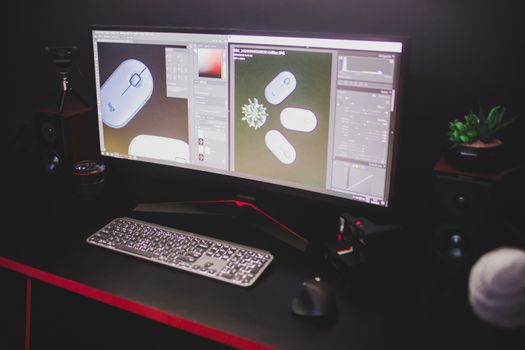
A sleek computer setup with dual monitors, keyboard, and mouse in a dark room. Photo: Matheus Bertelli / Pexels
Navigating the vast market of 4K monitors to pinpoint the best budget 4K monitor for editing requires a keen eye and an understanding of where to find value. While specific models frequently change due to product cycles and sales, certain brands consistently offer excellent options in the affordable 4K segment. Brands like Dell, LG, BenQ, and Acer often feature prominently in recommendations for their balance of performance, features, and price. Dell's UltraSharp series, even in its more affordable iterations, is renowned for its factory calibration and excellent out-of-the-box color accuracy. Models like the Dell UltraSharp U2723QE or U2720Q (if you can find them on sale) often provide 99% sRGB coverage, decent Delta E values, and robust build quality with ergonomic stands. While not always the absolute cheapest, their reliability and performance often justify a slightly higher budget. They are workhorses designed for professionals, making them a solid investment for serious editors. Exploring Dell's monitor lineup can reveal some hidden gems. LG is another strong contender, frequently offering vibrant IPS panels with good color accuracy and wide viewing angles. Their 'UltraFine' series or even some standard 4K models like the LG 27UK500-B or 27UL500-W often hit the sweet spot for budget-conscious editors. LG monitors are known for their sharp images and sometimes include HDR support, which, while not true HDR on budget models, can still offer a noticeable boost in contrast for compatible content. Their on-screen display (OSD) controls are often intuitive, making adjustments straightforward. BenQ, while sometimes slightly more expensive, occasionally offers models designed specifically for creative professionals within a reasonable price range. Look for their 'PD' series, which focuses on color accuracy and specialized modes for CAD/CAM, animation, and darkroom work. While a true professional BenQ monitor might exceed a strict 'budget' definition, older or entry-level models from this series can sometimes be found at compelling prices, offering superior color performance and features like KVM switches. Acer and Asus also have strong offerings in the budget 4K space. Monitors like the Acer K272K or the Asus VP28UQG (though the latter often uses a TN panel, so verify panel type carefully) can provide 4K resolution at very aggressive price points. While they might sometimes compromise on advanced ergonomic features or factory calibration, they still deliver the core 4K resolution and often an IPS panel, making them viable choices if your budget is extremely tight. For these brands, it's particularly important to read user reviews regarding backlight uniformity and potential quality control issues, as consistency can sometimes vary more than with premium brands. Always check for recent reviews and consider purchasing from retailers with good return policies. Ultimately, the 'best' budget 4K monitor for editing is subjective and depends on your specific needs and the deals available at any given time. The key is to prioritize the non-negotiable features like IPS panel, high sRGB coverage, and suitable connectivity, then compare models within your price range from reputable brands, always keeping an eye on sales and discounts.

Mistakes to Avoid and Tips for Maximizing Your Budget 4K Monitor

Even with the best budget 4K monitor for editing, there are common pitfalls that can undermine your investment. Avoiding these mistakes and adopting smart practices will ensure you get the most out of your affordable display. **Mistakes to Avoid:** * **Ignoring Calibration:** This is perhaps the biggest mistake. Even a monitor with excellent factory calibration will drift over time. Relying solely on factory settings or your eyes for color accuracy is a recipe for disaster. What looks good on your screen might look completely different on another, leading to inconsistent results in your final output. * **Overlooking Connectivity:** Assuming all 4K monitors are compatible with your current setup can lead to frustration. Ensure your graphics card supports 4K resolution at 60Hz and that you have the correct DisplayPort (1.2+) or HDMI (2.0+) cables. Older ports or cables might limit your refresh rate or even prevent 4K output altogether. * **Prioritizing Gaming Features:** Don't pay extra for high refresh rates (120Hz+) or extremely low response times (1ms) if editing is your primary use. These features add cost but offer minimal benefit for static image or standard video work. * **Neglecting Ergonomics:** A cheap monitor that causes neck pain isn't a good deal. If a monitor lacks ergonomic adjustments, factor in the cost of a VESA-compatible monitor arm. Your health and comfort are worth the investment. * **Buying Blindly:** Don't just pick the cheapest 4K monitor. Read professional reviews, look for user feedback on color accuracy, backlight bleed, and uniformity. A great price means nothing if the monitor has glaring flaws. **Tips for Maximizing Your Monitor:** * **Invest in a Hardware Calibrator:** This is non-negotiable for serious editing. Devices like the Datacolor SpyderX or X-Rite i1Display Studio ensure your monitor displays accurate colors, making your work consistent across different screens and print. * **Optimize Your Workspace Lighting:** Ambient light can significantly affect how you perceive colors on your screen. Work in a consistent, neutral lighting environment. Avoid direct sunlight or overly bright, colored lights behind your monitor. * **Use the Right Color Profile:** After calibration, ensure your operating system and editing software are using the correct ICC profile generated by your calibrator. This ensures your applications interpret colors correctly. * **Regularly Clean Your Screen:** Dust and smudges can obscure details and affect your perception of color and contrast. Use a microfiber cloth and a screen-safe cleaning solution to keep your display pristine. * **Utilize Monitor Presets (with caution):** Some monitors come with different picture modes (e.g., sRGB, Adobe RGB). While these can be a good starting point, always verify their accuracy with a calibrator. Avoid dynamic contrast or vivid modes, as they distort colors. * **Consider Dual Monitor Setup:** If your budget allows, a secondary, perhaps less color-critical monitor can greatly enhance workflow, allowing you to keep tools and reference materials open while focusing your main editing work on the calibrated 4K display. This is a common setup for many professionals.
By being mindful of these points, you can transform an affordable 4K display into a powerful tool for your creative endeavors, ensuring your output is as accurate and professional as possible.

Comparison

FeatureDell U2723QE (Example)LG 27UK500-B (Example)Acer K272K (Example)
Resolution3840 x 2160 (4K)3840 x 2160 (4K)3840 x 2160 (4K)
Panel TypeIPS BlackIPSIPS
sRGB Coverage100%98%99%
Delta E<2<3<3
ConnectivityDP, HDMI, USB-C (90W), USB HubDP, HDMI x2DP, HDMI x2
ErgonomicsHeight, Tilt, Swivel, PivotTiltTilt
Price Range (approx. USD)$450 - $600$250 - $350$200 - $300

What Readers Say

"I was skeptical about finding a good budget 4K monitor for editing, but the Dell I picked up exceeded my expectations. The colors are vibrant and accurate after a quick calibration, and the screen real estate for video editing is a game-changer. My workflow is so much smoother now."

Sarah L. · Portland, OR

"As a freelance photographer, color accuracy is paramount. This guide helped me choose an LG 4K monitor that delivered fantastic sRGB coverage without breaking my bank. It's truly the best budget 4K monitor for editing photos I could have asked for."

Mark T. · Austin, TX

"The difference in my video exports since getting a budget 4K monitor for editing is incredible. Clients are noticing the improved detail and color consistency. I'm getting more positive feedback and projects, directly attributable to this monitor upgrade."

Emily R. · Miami, FL

"While the Acer monitor I bought is a fantastic budget 4K monitor for editing, the stand is a bit basic. I ended up investing in a VESA arm, which made a huge difference for ergonomics. The display itself, however, is excellent for the price."

David P. · Denver, CO

"Running a small e-commerce business, I do a lot of product photography. This budget 4K monitor for editing has allowed me to see product details and colors with incredible precision, leading to better-looking listings and fewer returns due to color discrepancies."

Jessica M. · Chicago, IL

Frequently Asked Questions

Is a 4K monitor really necessary for photo and video editing?

While not strictly 'necessary' for all editing, a 4K monitor offers significant advantages. It provides four times the pixels of Full HD, allowing you to see much finer detail in your images and videos, crucial for precise adjustments. It also offers more screen real estate, improving workflow efficiency by allowing more panels and timelines to be open simultaneously. For professionals, it's becoming an industry standard.

Will a budget 4K monitor have good enough color accuracy for professional work?

Many budget 4K monitors, especially those with IPS panels, can achieve excellent sRGB coverage (99%+) and acceptable Delta E values straight out of the box. However, for truly professional, color-critical work, hardware calibration is always recommended. A budget monitor combined with a good calibrator can often outperform an uncalibrated, more expensive display.

How do I calibrate my new budget 4K monitor for editing?

To calibrate your monitor, you'll need a hardware calibrator device (e.g., Datacolor SpyderX, X-Rite i1Display Studio). You connect this device to your computer, and its accompanying software guides you through the process of measuring and adjusting your monitor's colors, brightness, and contrast. The software then creates an ICC profile that your operating system and editing applications use to display accurate colors.

Are budget 4K monitors a good value compared to high-end professional displays?

For many freelancers, students, and small businesses, budget 4K monitors offer exceptional value. They provide the core benefits of 4K resolution and often very good color accuracy (especially after calibration) at a fraction of the cost of high-end professional displays. While they might lack some advanced features like true HDR, built-in calibrators, or wider color gamuts like Adobe RGB/DCI-P3, they are more than sufficient for most web-based and general creative work, making them a smart investment.

How does a budget 4K monitor compare to an ultrawide monitor for editing?

A budget 4K monitor prioritizes pixel density and vertical screen space, offering incredible detail and ample room for vertical timelines or stacking windows. An ultrawide monitor, while also providing significant screen real estate, sacrifices vertical pixels for horizontal expansion, which is great for long timelines but might feel cramped for vertical content or multiple stacked windows. The choice depends on your primary editing workflow and preference for width vs. density.

Who should consider buying a best budget 4K monitor for editing?

Anyone involved in photo editing, video editing, graphic design, or content creation who needs high visual fidelity but has a limited budget. This includes freelance artists, aspiring filmmakers, photographers, students, and small business owners who want to elevate their creative output without investing in premium professional-grade displays. It's perfect for those transitioning from Full HD and seeking a significant upgrade.

Are there any health risks associated with using a 4K monitor for long editing sessions?

Using any monitor for extended periods without proper ergonomics can lead to eye strain, neck pain, and headaches. 4K monitors, with their higher pixel density, often encourage users to sit closer, which can exacerbate eye strain if not managed. Ensure your monitor is at arm's length, at eye level, and take regular breaks. Look for monitors with flicker-free technology and low blue light modes to further reduce eye fatigue. These features are often present even on budget models.

What are the future trends for budget 4K monitors, and should I wait?

Future trends for budget 4K monitors include further improvements in panel technology (e.g., mini-LED backlighting trickling down), wider color gamut support (like DCI-P3), and more ubiquitous USB-C connectivity with higher power delivery. While technology always evolves, today's best budget 4K monitor for editing already offers excellent value and performance. Waiting indefinitely means delaying your productivity gains. It's generally better to invest when a product meets your current needs and budget.

Don't let budget constraints limit your creative potential. By understanding the key features and making informed choices, you can find the best budget 4K monitor for editing that will significantly enhance your workflow and the quality of your output. Take the leap and transform your editing experience today!

Topics: best budget 4K monitor for editingaffordable 4K displayvideo editing monitorphoto editing monitorcolor accurate monitor
Leo List

DK Escorts LU Escorts AT Escorts SE Escorts FI Escorts CH Escorts DE Escorts HR Escorts IE Escorts GR Escorts CZ Escorts NO Escorts BE Escorts FR Escorts SI Escorts IL Escorts NL Escorts PL Escorts HU Escorts ES Escorts IT Escorts PT Escorts SK Escorts RO Escorts ZA Escorts UY Escorts US Escorts UK Escorts NZ Escorts AU Escorts
Brampton weed
Adultwork EstrelaBet Vai de Bet R7 Bet Betão Galera Bet Rainbet Bet9ja Shop SportyBet BetKing Sisal Loto Foot Hollywoodbets YesPlay Odibets RushBet Jugabet BetWarrior BetCity MSport betPawa Fortebet