Unleash Visuals: Best Affordable 4K Monitors for Gaming
affordable 4k monitors for gaming

Unleash Visuals: Best Affordable 4K Monitors for Gaming

Elevate your gaming experience with breathtaking 4K resolution at prices that won't empty your wallet.

Find Your 4K Deal!

Key Takeaways

  • ✓ 4K resolution offers four times the pixels of 1080p, delivering incredible detail.
  • ✓ Affordable 4K gaming monitors are now widely available, making high-res gaming accessible.
  • ✓ Look for features like HDR, FreeSync/G-Sync, and good response times even in budget models.
  • ✓ A powerful GPU is essential to drive 4K resolution effectively in games.

How It Works

1
Identify Your Budget

Determine the maximum amount you're willing to spend. This will narrow down your options significantly and help focus your search.

2
Assess Your PC's Capability

Ensure your graphics card can handle 4K gaming at acceptable frame rates. A powerful GPU is crucial for a smooth experience.

3
Prioritize Key Features

Decide which features are most important to you: refresh rate, response time, HDR, or adaptive sync. Budget monitors often require some compromises.

4
Read Reviews and Compare

Consult expert reviews and user testimonials to gauge real-world performance and value. Compare specifications across different models to find the best fit.

The Allure of 4K Gaming: Why Resolution Matters

A woman wearing a VR headset, experiencing virtual reality indoors with shelves in the background. Photo: Adrian Frentescu / Pexels
For years, 4K gaming felt like an exclusive club, reserved only for those with unlimited budgets and top-tier hardware. But the landscape has shifted dramatically, making affordable 4K monitors for gaming a tangible reality for a much wider audience. The leap from 1080p or even 1440p to 4K (3840 x 2160 pixels) is not just a numerical increase; it's a transformative visual upgrade. Imagine your favorite game world rendered with four times the pixel density of a standard Full HD display. This means sharper textures, finer details, and an overall level of clarity that can fundamentally change how you experience virtual environments. Foliage appears more intricate, character models boast greater fidelity, and distant objects are rendered with remarkable precision, eliminating the 'jaggies' often associated with lower resolutions. This enhanced visual fidelity contributes significantly to immersion, pulling you deeper into the game world and making every scene feel more lifelike. Beyond just raw pixel count, 4K resolution also offers practical benefits for gaming. For strategy games or titles with intricate user interfaces, the increased screen real estate allows for more information to be displayed without clutter, improving situational awareness and reducing the need for constant scrolling or zooming. In open-world games, the expansive views become even more breathtaking, as the higher resolution captures the grandeur of the environment with unparalleled clarity. However, it's crucial to understand that driving a 4K display at high frame rates requires substantial graphical horsepower. While affordable 4K monitors for gaming are now within reach, ensuring your PC's graphics card (GPU) is up to the task is paramount. A powerful GPU is the engine that renders all those pixels, and without it, even the best 4K monitor will struggle to deliver a smooth, enjoyable experience. This is where understanding the balance between monitor features and your existing hardware becomes vital. Don't chase a 4K monitor if your GPU can barely handle 1080p; the experience will be frustrating rather than fantastic. The good news is that as GPUs have become more powerful and efficient, and monitor manufacturing processes have matured, the cost of entry for both has decreased, paving the way for truly affordable 4K gaming setups. The convergence of these factors means that today, more gamers than ever can step into the realm of ultra-high-definition gaming without necessarily liquidating their savings. It’s about finding the sweet spot where performance meets value, and that's precisely what we'll help you uncover. Exploring the latest GPU advancements can further enhance your decision-making process.

Navigating the Market: Key Features in Affordable 4K Monitors
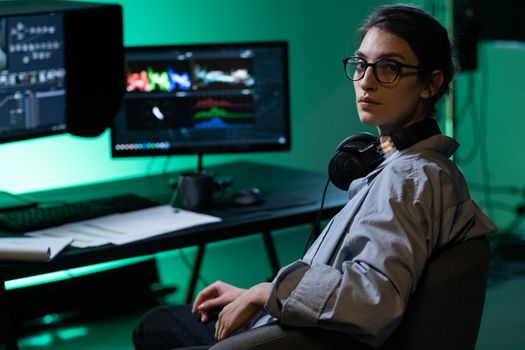
A focused young woman working with computer monitors in a modern tech environment. Photo: Ron Lach / Pexels
When searching for affordable 4K monitors for gaming, it's easy to get overwhelmed by the sheer number of specifications and jargon. However, focusing on a few core features will help you make an informed decision without overspending. The first, and arguably most important, feature after resolution, is the refresh rate. While premium 4K gaming monitors boast 144Hz or even higher refresh rates, affordable models typically hover around 60Hz. For many single-player, story-driven games, 60Hz is perfectly adequate, providing a smooth and enjoyable experience. If you're a competitive esports player, 60Hz might feel limiting, but for the average gamer looking to enjoy stunning visuals, it's a perfectly acceptable compromise to keep costs down. Next, consider the response time. Measured in milliseconds (ms), this indicates how quickly pixels can change color. Lower response times (1ms to 5ms GTG – Gray-to-Gray) are ideal for fast-paced games, reducing motion blur and ghosting. While 1ms is the gold standard, a 4ms or 5ms response time is often found on more affordable IPS 4K panels and is still very good for most gaming scenarios, especially when paired with a 60Hz refresh rate. Panel technology is another crucial aspect. The most common types are IPS (In-Plane Switching), VA (Vertical Alignment), and TN (Twisted Nematic). TN panels offer the fastest response times but typically have poorer color reproduction and viewing angles. VA panels provide excellent contrast ratios and deep blacks, making them great for immersive, dark-room gaming, but can sometimes have slower response times. IPS panels are often considered the best all-around choice for gaming due to their superior color accuracy and wide viewing angles, making them excellent for both gaming and general content consumption. Fortunately, many affordable 4K monitors for gaming now feature IPS panels, offering a great balance of features. Don't forget about adaptive sync technologies like AMD FreeSync and NVIDIA G-Sync. These technologies synchronize the monitor's refresh rate with your GPU's frame rate, eliminating screen tearing and stuttering for a much smoother gaming experience. FreeSync is generally more common and less expensive to implement, making it a prevalent feature on budget monitors. Even if your monitor is 60Hz, FreeSync can still significantly improve fluidity. Finally, look for HDR (High Dynamic Range) support. While true HDR performance often requires expensive monitors with specific backlight zones, many affordable models offer basic HDR compatibility. This can still enhance contrast and color vibrancy, even if it doesn't meet the stringent VESA DisplayHDR certifications. Understanding these core features will empower you to sift through the options and pinpoint the best value without being swayed by unnecessary premium features.

Beyond the Specs: Real-World Performance and Value
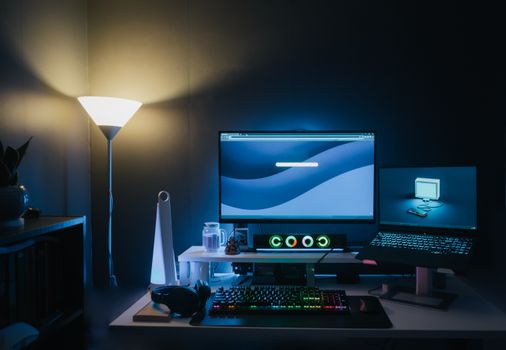
A stylish home office desk setup with dual monitors and ambient blue lighting. Photo: Pramod Tiwari / Pexels
When evaluating affordable 4K monitors for gaming, it's easy to get caught up in the numbers game – refresh rates, response times, and contrast ratios. However, real-world performance often boils down to more than just specifications on a sheet. The overall user experience, build quality, and connectivity options play a significant role in determining true value. An affordable monitor might have decent specs, but if its stand is flimsy, its on-screen display (OSD) menu is unintuitive, or it lacks essential ports, it can quickly detract from the gaming experience. Look for monitors that offer a sturdy stand with at least tilt adjustment, and ideally height and swivel adjustments for ergonomic comfort during long gaming sessions. VESA mount compatibility is also a plus, allowing you to use aftermarket monitor arms for even greater flexibility. Connectivity is paramount for a 4K display. Ensure the monitor has at least one HDMI 2.0 port (or HDMI 2.1 for higher refresh rates if available) and a DisplayPort 1.2 (or 1.4) to support 4K resolution at 60Hz. Some models might even include USB hubs, which can be incredibly convenient for connecting peripherals or charging devices directly from your monitor. The quality of the panel itself, beyond just its type, is also important. Look for reviews that discuss backlight bleed, uniformity, and dead pixels. While some minor imperfections can be expected in budget-friendly options, excessive issues can be a deal-breaker. Color calibration out of the box can also vary widely. If color accuracy is critical for you (perhaps you also do creative work), be prepared to potentially calibrate the monitor yourself or look for reviews that praise its factory calibration. Another aspect of real-world value is the manufacturer's reputation for customer support and warranty. Even the most affordable monitor is an investment, and knowing that the company stands behind its product can provide peace of mind. While you might not get the same level of premium features as a high-end monitor, many manufacturers are now producing excellent value-oriented 4K displays that offer a fantastic balance of performance, features, and price. It's about making smart compromises and understanding what truly enhances your gaming experience without paying for features you won't fully utilize. By focusing on these practical aspects alongside the technical specifications, you can confidently choose one of the best affordable 4K monitors for gaming that genuinely delivers a premium feel without the premium price tag. For more insights on optimizing your gaming setup, consider reading about essential gaming peripherals.

Maximizing Your Budget 4K Gaming Experience: Tips and Common Pitfalls
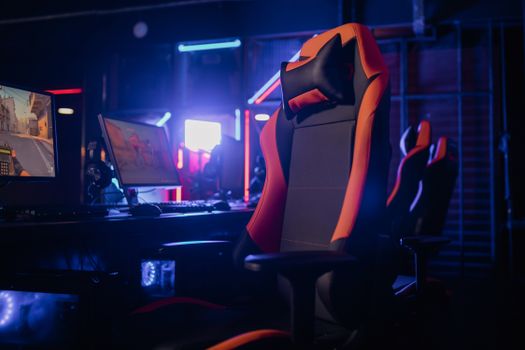
Modern gaming setup featuring a sleek chair and powerful PCs under neon lights. Photo: Alena Darmel / Pexels
Even with an affordable 4K monitor, there are strategies you can employ to get the most out of your investment and avoid common mistakes that can lead to disappointment. First and foremost, manage your expectations regarding frame rates. While 4K at 60Hz is certainly achievable with mid-range to high-end GPUs, expecting 4K at 144Hz on a budget setup is unrealistic. Be prepared to adjust in-game settings. Often, dropping a few graphical settings from 'Ultra' to 'High' or even 'Medium' can yield significant frame rate improvements at 4K without a drastic visual downgrade. The sheer pixel density of 4K often makes lower settings still look fantastic. Prioritize settings that impact performance most, like anti-aliasing (which 4K often needs less of anyway) and shadow quality, while maintaining texture quality to leverage the monitor's resolution. **Tips for Maximizing Your Affordable 4K Gaming Experience:** * **Optimize In-Game Settings:** Experiment with graphics settings to find the sweet spot between visual fidelity and frame rate. Remember, 4K makes even 'Medium' settings look impressive. * **Utilize Adaptive Sync:** If your monitor and GPU support FreeSync or G-Sync, ensure it's enabled. This dramatically improves fluidity by eliminating screen tearing and stuttering. * **Ensure Proper Connectivity:** Use high-quality HDMI 2.0/2.1 or DisplayPort 1.2/1.4 cables to ensure your monitor receives the full 4K 60Hz signal. * **Consider Downsampling:** For less demanding games, you might render at a higher resolution (e.g., 5K) and downsample to 4K for even crisper images, or for more demanding titles, render at 1440p and upscale to 4K if your GPU struggles. * **Keep Drivers Updated:** Always ensure your graphics card drivers are up-to-date. Driver updates frequently include performance optimizations for new games and hardware. **Common Pitfalls to Avoid:** * **Underestimating GPU Requirements:** The biggest mistake is pairing a 4K monitor with an underpowered GPU. Research your GPU's 4K performance benchmarks before buying. * **Ignoring Refresh Rate/Response Time:** While budget 4K monitors often have 60Hz, ensure you understand this limitation, especially for competitive gaming. Don't expect 144Hz performance on a 60Hz panel. * **Overlooking Panel Type:** If color accuracy or viewing angles are important, avoid TN panels. IPS is generally the best all-rounder for affordable 4K gaming. * **Forgetting Ergonomics:** A cheap monitor with a poor stand can lead to discomfort. Factor in the cost of a monitor arm if the included stand is inadequate. * **Buying Without Research:** Don't just pick the cheapest 4K monitor. Read reviews, compare features, and understand the compromises being made. A little research goes a long way in finding the best affordable 4K monitors for gaming that meet your specific needs.

Comparison

FeatureBest Value OptionMid-Range PerformerEntry-Level Pick
Resolution3840x2160 (4K)3840x2160 (4K)3840x2160 (4K)
Refresh Rate60Hz60-75Hz60Hz
Response Time4ms GTG1ms MPRT / 5ms GTG5ms GTG
Panel TypeIPSIPSVA
Adaptive SyncFreeSyncFreeSync PremiumFreeSync
HDR SupportHDR10 (Basic)HDR10 (Enhanced)No / Basic
ConnectivityHDMI 2.0 x2, DP 1.2HDMI 2.0 x2, DP 1.4, USB-CHDMI 2.0, DP 1.2
ErgonomicsTilt, Height, SwivelFull AdjustmentsTilt Only

What Readers Say

"I never thought I'd get into 4K gaming without spending a fortune, but this monitor proved me wrong. The visuals are incredibly sharp, and even at 60Hz, games like Cyberpunk 2077 look phenomenal. It's truly one of the best affordable 4K monitors for gaming I've found."

Alex R. · Austin, TX

"Upgrading from 1080p to this budget 4K display was a game-changer. The colors are vibrant, and the clarity is astounding. My productivity also improved with the extra screen real estate, making it a dual-purpose win."

Sarah J. · Orlando, FL

"For the price, the picture quality on this monitor is simply unbeatable. FreeSync works flawlessly with my AMD card, completely eliminating screen tearing. It feels like a premium experience without the premium cost."

Mark T. · Seattle, WA

"While the 60Hz refresh rate is a slight compromise for fast-paced shooters, the visual fidelity in 4K more than makes up for it in other titles. The stand could be better, but a VESA mount fixed that. A solid choice for affordable 4K monitors for gaming."

Emily C. · Denver, CO

"As a casual gamer and movie enthusiast, this monitor perfectly fits my needs. Movies in 4K look stunning, and single-player games are incredibly immersive. It's a fantastic value proposition for anyone considering affordable 4K monitors for gaming."

David L. · New York, NY

Frequently Asked Questions

Is 60Hz enough for 4K gaming on an affordable monitor?

For many single-player, graphically intensive games, 60Hz is perfectly sufficient and provides a smooth, enjoyable experience. While competitive esports players might prefer higher refresh rates, 60Hz allows you to appreciate the visual fidelity of 4K without breaking the bank.

Do I need a very powerful PC for affordable 4K monitors for gaming?

Yes, a relatively powerful graphics card (GPU) is crucial to drive 4K resolution at playable frame rates, even at 60Hz. While you don't necessarily need the absolute top-tier GPU, a mid-range to high-end card from the last few generations is recommended to avoid disappointment.

How do I connect my PC to an affordable 4K monitor for gaming?

You'll primarily use either an HDMI 2.0 (or newer) or a DisplayPort 1.2 (or newer) cable. Ensure your graphics card has the correct output ports and use high-quality cables to guarantee a stable 4K 60Hz signal.

Are affordable 4K monitors for gaming worth the investment over 1440p?

If visual clarity and immersive detail are your top priorities, and your GPU can handle it, then yes, the step up to 4K offers a noticeable improvement. However, if competitive frame rates are paramount on a tighter budget, a high-refresh-rate 1440p monitor might offer better value.

What's the difference between FreeSync and G-Sync on budget 4K monitors?

FreeSync is an open standard primarily supported by AMD GPUs and is more commonly found on affordable monitors. G-Sync is NVIDIA's proprietary solution, often requiring a dedicated module in the monitor, making it generally more expensive. Both aim to eliminate screen tearing and stuttering.

Who should consider buying affordable 4K monitors for gaming?

Gamers who prioritize stunning visual fidelity and immersive experiences over ultra-high competitive frame rates, those with capable mid-to-high-end GPUs, and individuals who also use their monitor for media consumption or productivity will find great value in these displays.

Are there any risks associated with buying a cheap 4K gaming monitor?

The main risks include potential compromises in build quality, panel uniformity, or limited ergonomic adjustments. Some budget models might also have less robust HDR implementation or slightly higher input lag. Always read reviews to mitigate these risks.

What are the future trends for affordable 4K monitors for gaming?

Expect to see more affordable 4K monitors offering higher refresh rates (75Hz, 120Hz), improved HDR performance with better local dimming, and wider adoption of USB-C connectivity. Mini-LED and OLED technologies will also gradually become more accessible at lower price points over time.

Ready to transform your gaming world? Dive into the incredible detail and immersion that only 4K can offer, without the hefty price tag. Explore our recommendations for the best affordable 4K monitors for gaming and elevate your setup today.

Topics: affordable 4k monitors for gamingbudget 4k gaming displaycheap 4k monitor gaming4k gaming monitor dealsbest value 4k monitor
Leo List
Brampton weed
Adultwork EstrelaBet Vai de Bet R7 Bet Betão Galera Bet Rainbet Bet9ja Shop SportyBet BetKing Sisal Loto Foot Hollywoodbets YesPlay Odibets RushBet Jugabet BetWarrior BetCity MSport betPawa Fortebet