
Unlocking the Future: The Benefits of 5G Technology
benefits of 5G technology

Unlocking the Future: The Benefits of 5G Technology

Experience unprecedented speed, reliability, and new possibilities with the next generation of wireless connectivity.

Explore 5G's Impact

Key Takeaways

  • ✓ 5G offers theoretical peak speeds up to 10 gigabits per second (Gbps).
  • ✓ Latency with 5G can be as low as 1 millisecond (ms), enabling real-time applications.
  • ✓ 5G supports a million devices per square kilometer, far exceeding 4G's capacity.
  • ✓ It's a foundational technology for IoT, AI, and autonomous systems.

How It Works

1
Enhanced Mobile Broadband (eMBB)

5G utilizes a wider range of spectrum, including millimeter-wave (mmWave), to deliver significantly higher bandwidth and faster download/upload speeds. This enables seamless streaming of 4K/8K video and instant file transfers.

2
Ultra-Reliable Low-Latency Communications (URLLC)

Through advanced coding and network slicing, 5G achieves ultra-low latency, crucial for mission-critical applications like autonomous vehicles and remote surgery. This ensures near-instantaneous response times.

3
Massive Machine-Type Communications (mMTC)

5G is designed to connect a vast number of devices simultaneously, supporting the exponential growth of the Internet of Things (IoT). It allows for efficient communication between billions of sensors and smart devices.

4
Network Slicing and Edge Computing

5G networks can be 'sliced' into virtual, isolated networks tailored for specific applications, optimizing performance and security. Edge computing brings data processing closer to the user, reducing latency and bandwidth usage.

Revolutionizing Speed and Connectivity with 5G Advantages
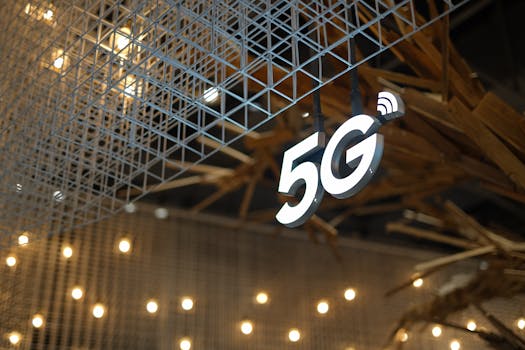
Illuminated 5G sign with modern geometric ceiling and warm lighting. Photo: Z z / Pexels
The advent of 5G technology marks a pivotal moment in the evolution of wireless communication, promising to redefine our digital experiences and usher in an era of unprecedented connectivity. At its core, one of the most immediate and impactful benefits of 5G technology is its capacity for revolutionary speed. While 4G networks offered respectable speeds, 5G takes this to an entirely new level, with theoretical peak speeds reaching up to 10 gigabits per second (Gbps) – a staggering 100 times faster than typical 4G connections. This isn't just about faster downloads; it transforms how we interact with digital content and services. Imagine downloading a full-length 4K movie in mere seconds, or experiencing virtually lag-free cloud gaming that rivals console performance. For businesses, this translates to rapid data transfer, accelerating operations and enabling real-time collaboration across distributed teams. The enhanced mobile broadband (eMBB) capabilities of 5G mean that even in densely populated areas or at large events, network congestion becomes a thing of the past. Users will enjoy consistent, high-speed access, making public Wi-Fi less of a necessity and reliable cellular connectivity the norm. Beyond raw speed, the expanded bandwidth of 5G facilitates a far more robust and reliable connection. This isn't just about how fast data travels, but how much data can travel simultaneously and consistently. 5G networks are designed to handle a massive increase in data traffic, supporting a million devices per square kilometer, a significant leap from 4G's capacity. This massive capacity is critical for the burgeoning Internet of Things (IoT), where billions of devices, from smart home appliances to industrial sensors, will constantly communicate. The ability to support such a high density of connected devices without compromising performance is a cornerstone of 5G's promise. It ensures that as our world becomes increasingly interconnected, the underlying network infrastructure can keep pace. This reliability also extends to critical communications, where consistent uptime and minimal packet loss are paramount. Whether it's emergency services relying on real-time data or businesses conducting vital transactions, the dependable nature of 5G provides a robust foundation. This enhanced connectivity isn't just a luxury; it's a fundamental shift that empowers new applications and services that were previously constrained by the limitations of older network generations. The consistent, high-speed, and reliable connection offered by 5G is not merely an upgrade; it's a paradigm shift that lays the groundwork for a truly connected future, enabling everything from advanced streaming to complex industrial automation. To understand more about the foundational elements of this technology, explore the broader context of new technological advancements that are shaping our world.

Enabling Real-Time Applications with Ultra-Low Latency
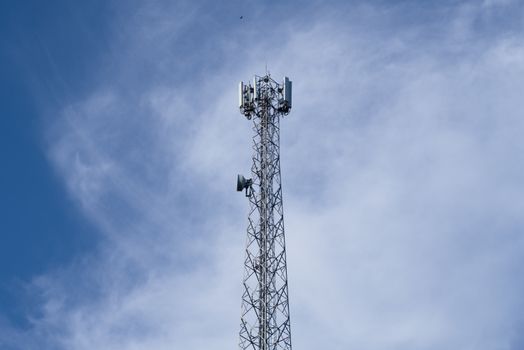
A tall metal communications tower stands against a backdrop of a clear blue sky with scattered clouds. Photo: Qeis Ismail / Pexels
While speed often captures the headlines, another equally, if not more, transformative benefit of 5G technology is its ultra-low latency. Latency refers to the delay between when a signal is sent and when it is received, and 5G significantly reduces this delay to as little as 1 millisecond (ms). To put this into perspective, the blink of an eye takes about 100-400 milliseconds, and 4G typically operates with latencies of 50-100 ms. This near-instantaneous response time is not just an incremental improvement; it's a game-changer that unlocks a whole new universe of real-time applications and services previously impossible. Consider the implications for autonomous vehicles. For a self-driving car to safely navigate complex environments, it needs to receive and process data from its sensors, other vehicles, and infrastructure with virtually no delay. A 1ms latency allows for immediate communication, enabling split-second decisions that are critical for accident prevention and efficient traffic flow. This level of responsiveness makes the vision of fully autonomous transportation a tangible reality. Beyond autonomous vehicles, ultra-low latency is fundamental to the development and widespread adoption of augmented reality (AR) and virtual reality (VR) technologies. Current AR/VR experiences can often be hampered by lag, leading to motion sickness or a disjointed user experience. With 5G’s minimal delay, AR applications can overlay digital information onto the real world seamlessly, making them incredibly immersive and practical for fields like education, design, and maintenance. Imagine a surgeon performing a complex operation remotely, guided by haptic feedback and real-time video streams – a scenario where even a slight delay could have catastrophic consequences. 5G’s ultra-reliable low-latency communications (URLLC) capability ensures that critical data packets are delivered consistently and without interruption, making such mission-critical applications feasible and safe. This also extends to industrial automation, where robots and machinery can communicate and coordinate in real-time, leading to more efficient, precise, and safer manufacturing processes. The ability to control machinery remotely with such precision opens doors for new operational models and allows human operators to manage dangerous or distant tasks from a safe location. The impact of low latency isn't just about faster entertainment; it's about creating a responsive digital ecosystem that can support the most demanding and critical applications, fundamentally reshaping industries and enhancing safety and efficiency across the board.

Transforming Industries and Daily Life with 5G Applications

Vibrant night scene of Shanghai's cityscape with dynamic light trails and skyscrapers. Photo: Nektarios Moutakis / Pexels
The combined power of high speed, vast capacity, and ultra-low latency means the benefits of 5G technology extend far beyond personal mobile device usage, poised to transform entire industries and profoundly impact our daily lives. One of the most significant areas of impact is the Internet of Things (IoT). With 5G’s massive machine-type communications (mMTC) capabilities, we can connect billions of devices, from smart city sensors monitoring air quality and traffic flow to connected agricultural sensors optimizing crop yields. This dense network of interconnected devices will generate unprecedented amounts of data, which, when analyzed, can lead to smarter infrastructure, more efficient resource management, and improved quality of life in urban and rural areas alike. Smart cities, for instance, will leverage 5G to manage public services more effectively, from intelligent streetlights that adjust illumination based on pedestrian traffic to waste management systems that optimize collection routes based on real-time bin levels. This level of pervasive connectivity creates a truly smart environment. Healthcare is another sector ripe for transformation. 5G enables advanced telehealth services, allowing doctors to consult with patients remotely, even conducting virtual examinations with high-definition video and real-time data transmission. Remote surgery, as mentioned, becomes a more viable option, connecting expert surgeons to patients in underserved areas. Wearable health monitors can continuously transmit vital signs and other health data to medical professionals, enabling proactive care and early detection of health issues. In manufacturing, 5G will power the Industry 4.0 revolution. Smart factories will utilize 5G to connect robots, automated guided vehicles (AGVs), and production lines, creating highly efficient and flexible manufacturing environments. Real-time data analytics will optimize processes, predict maintenance needs, and minimize downtime, leading to increased productivity and cost savings. Education will also see significant advancements, with immersive AR/VR experiences becoming more accessible, allowing students to explore complex concepts in engaging ways, from virtual field trips to interactive anatomy lessons. The entertainment industry will evolve with seamless 4K/8K streaming on the go, and new forms of interactive content, esports, and cloud gaming will flourish thanks to 5G's robust capabilities. Furthermore, the ability to deploy private 5G networks allows enterprises to create custom, secure, and high-performance networks tailored to their specific needs, enhancing operational efficiency and data security. This deep integration of 5G across various sectors underscores its role as a foundational technology for future innovation, moving beyond simple mobile broadband to become the backbone of an intelligent, connected society. For more insights into how these technologies are converging, consider reading about the broader implications of digital transformation in modern business.

Navigating the Future: Tips for Adopting 5G and Avoiding Pitfalls

Hand writing 'ETH' on a whiteboard, highlighting Ethereum concept. Photo: RDNE Stock project / Pexels
As the promise of 5G technology unfolds, understanding how to best adopt it and avoid potential pitfalls is crucial for both individuals and businesses. The transition to 5G isn't just about getting a new phone; it involves a broader understanding of its capabilities and limitations. Here are some tips for maximizing the benefits of 5G and navigating the landscape effectively. **Tips for Adopting 5G:** * **Check Coverage:** Before investing in 5G-specific devices or plans, verify that 5G coverage is available and robust in your primary locations (home, work, common travel routes). Coverage is still expanding, and performance can vary significantly. * **Upgrade Your Device Wisely:** Ensure your smartphone or other connected devices are 5G-compatible. Many new devices support 5G, but older models will not be able to leverage the new network. Consider devices that support multiple 5G bands (sub-6 GHz and mmWave) for broader compatibility and future-proofing. * **Understand Your Data Needs:** 5G's speed means you can consume data much faster. If you plan to stream 4K content or download large files frequently, ensure your data plan can accommodate this increased usage to avoid overage charges or throttling. * **Explore Fixed Wireless Access (FWA):** For homes and businesses, 5G FWA can be a compelling alternative to traditional fiber or cable internet, especially in areas where wired broadband is slow or unavailable. It offers high speeds and low latency over the air. * **Consider Private 5G Networks for Enterprises:** Businesses looking for enhanced security, control, and performance for their critical operations should explore deploying private 5G networks. This is particularly relevant for manufacturing, logistics, and healthcare facilities. * **Experiment with New Applications:** Actively seek out and try applications that leverage 5G's unique capabilities, such as advanced AR/VR, cloud gaming, or real-time IoT dashboards, to fully experience its transformative potential. **Common Pitfalls to Avoid:** * **Assuming Universal Performance:** 5G performance isn't uniform. mmWave offers incredible speeds but has limited range and struggles with obstructions, while sub-6 GHz has wider coverage but speeds closer to advanced 4G. Don't expect peak speeds everywhere. * **Overlooking Security:** With more devices connected, the attack surface expands. Implement robust cybersecurity measures, especially for IoT deployments, and ensure your 5G devices and network are configured securely. * **Ignoring Battery Drain:** Early 5G modems and continuous high-speed data usage can lead to faster battery drain on mobile devices. Be mindful of this and adjust settings or carry a portable charger if needed. * **Falling for Misleading Marketing:** Be critical of marketing claims. While 5G is powerful, real-world performance depends on numerous factors, including network infrastructure, device capabilities, and environmental conditions. * **Not Planning for Scalability:** For businesses, ensure your 5G adoption strategy accounts for future growth and evolving technological needs. A phased approach might be more effective than a sudden, large-scale deployment. By carefully considering these tips and avoiding common mistakes, individuals and organizations can effectively harness the immense benefits of 5G technology, positioning themselves at the forefront of the next wave of digital innovation.

Comparison

Feature5G4G LTEWi-Fi 6
Peak Speed (Theoretical)10 Gbps100 Mbps - 1 Gbps9.6 Gbps
Latency1 ms50-100 ms2-20 ms
Device Density1M devices/km²10K devices/km²30-50 devices/router
Mobility SupportExcellent (cellular)Good (cellular)Limited (fixed)
Network Slicing
Cost to DeployHighModerateLow (per device)

What Readers Say

"The speed of 5G is absolutely incredible! My downloads are instant, and streaming 4K video on the go is seamless. It's truly transformed how I use my mobile device, making everything faster and more reliable."

Sarah J. · Austin, TX

"As a remote worker, the low latency of 5G has been a game-changer for my video conferencing and cloud-based applications. There's no more lag, and collaboration feels much more natural and immediate, a significant benefit of 5G technology."

Mark D. · Seattle, WA

"Our business deployed a private 5G network for our warehouse automation, and the increase in efficiency is astounding. Robots communicate in real-time, reducing errors by 30% and speeding up inventory management significantly. The benefits of 5G technology are undeniable for industrial applications."

Jessica L. · Denver, CO

"While the speeds are amazing in certain areas, I've noticed coverage can still be a bit spotty in some parts of the city. However, when it works, it's truly next-level. I'm excited to see the network expand further."

David P. · Miami, FL

"For gaming and AR apps, 5G has made a huge difference. The responsiveness is fantastic, and experiences that used to feel clunky are now incredibly immersive. It's clear the benefits of 5G technology are just starting to be realized."

Emily R. · San Francisco, CA

Frequently Asked Questions

What are the primary benefits of 5G technology over 4G?

The primary benefits of 5G technology over 4G are significantly higher speeds (up to 10 Gbps vs. 1 Gbps), ultra-low latency (1 ms vs. 50-100 ms), and massive capacity to connect a million devices per square kilometer. These improvements enable new applications like advanced IoT, autonomous vehicles, and immersive AR/VR experiences that 4G cannot reliably support.

Is 5G safe and does it pose health risks?

Leading national and international health organizations, including the World Health Organization (WHO) and the FCC, have consistently stated that there is no scientific evidence to support claims that 5G technology causes adverse health effects. 5G operates within radiofrequency bands that have been extensively studied and are well within established safety limits.

How can I access 5G technology?

To access 5G technology, you need a 5G-compatible device (like a smartphone or router) and a service plan from a carrier that offers 5G in your area. Ensure your device supports the 5G bands deployed by your chosen carrier for optimal performance. Coverage varies, so check your carrier's coverage maps.

Is 5G more expensive than 4G?

Initially, 5G-compatible devices tend to be more expensive than their 4G counterparts. However, many carriers now offer 5G access as part of standard plans or with minimal additional cost, especially for their premium tiers. The overall value proposition, considering the enhanced capabilities, often justifies the investment.

How does 5G compare to Wi-Fi 6?

While both 5G and Wi-Fi 6 offer significant speed and capacity improvements, they serve different purposes. 5G is a wide-area cellular network designed for mobility and broad coverage, managed by carriers. Wi-Fi 6 is a local area network technology, typically used indoors or within a limited range, managed by the user. They are complementary, with devices often seamlessly switching between both for optimal connectivity.

Who stands to benefit most from 5G technology?

Almost everyone stands to benefit, but key beneficiaries include consumers seeking faster and more reliable mobile experiences, businesses relying on real-time data and automation (e.g., manufacturing, logistics), healthcare providers for telehealth and remote surgery, and smart city initiatives for improved urban infrastructure and services. Developers of AR/VR and IoT applications will also find 5G transformative.

What are the main challenges or drawbacks of 5G deployment?

Main challenges include the extensive infrastructure build-out required, particularly for millimeter-wave (mmWave) deployments which need many small cell sites. Cost of deployment, ensuring equitable access across all regions, and addressing cybersecurity concerns with an expanded attack surface are also significant considerations for widespread 5G adoption.

What does the future hold for 5G technology?

The future of 5G technology involves continuous evolution, with enhancements like 5G Advanced and eventually 6G. We can expect even more sophisticated network slicing, deeper integration with AI and edge computing, and further improvements in energy efficiency and sustainability. This will unlock increasingly complex and intelligent applications, creating a truly ubiquitous and intelligent connectivity fabric for our world.

Embrace the future of connectivity today. The benefits of 5G technology are reshaping industries, revolutionizing daily experiences, and unlocking unprecedented potential. Explore how 5G can transform your personal and professional world, driving innovation and efficiency like never before.

Topics: benefits of 5G technology5G advantagesfuture of connectivity5G applicationsnext-gen wireless
Leo List
Brampton weed
Adultwork